|
Music Anonymous for PROVENCE
|
|
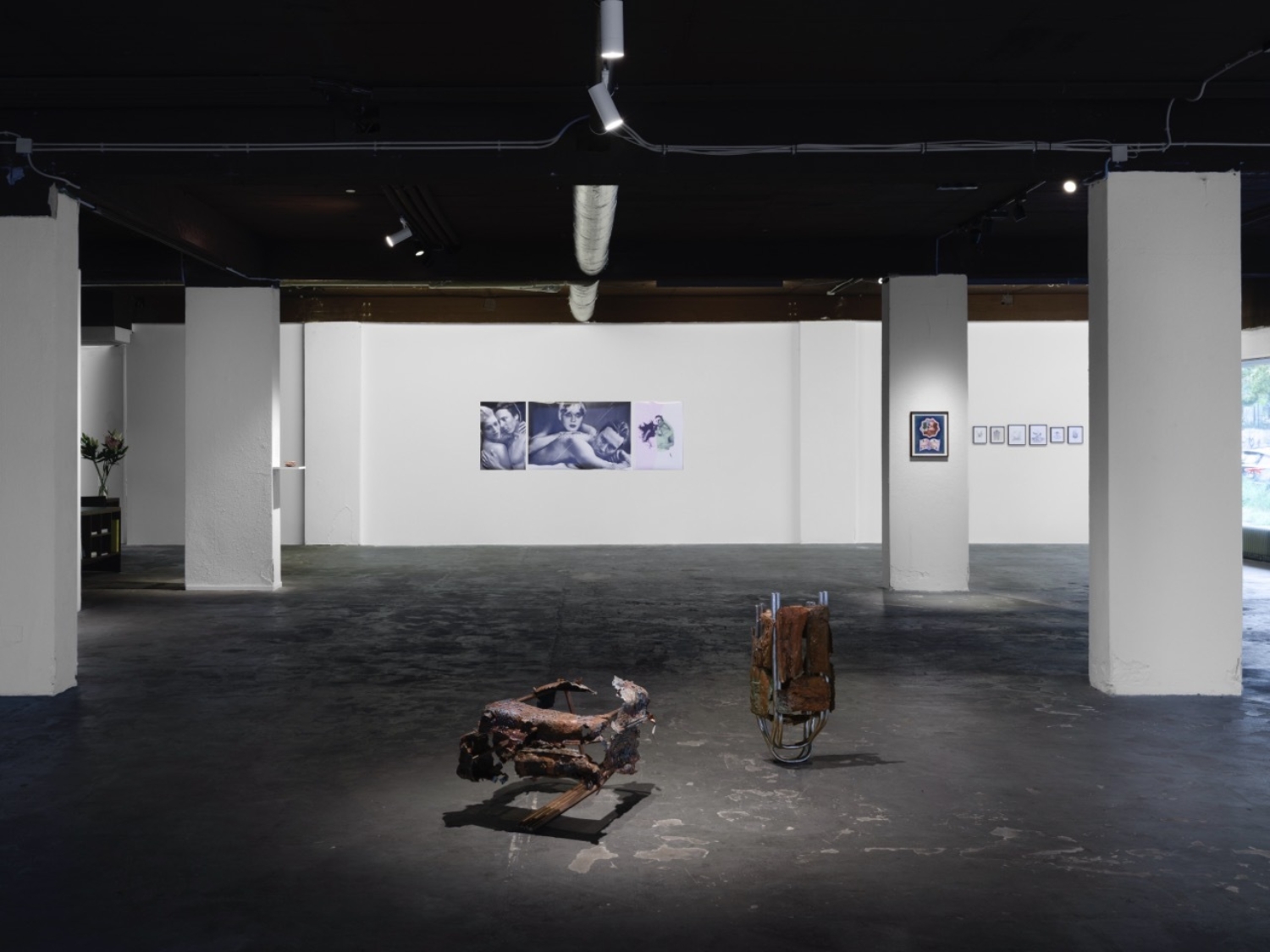
Installation view: Symbolic Exchange, Heidi Gallery, Berlin.
|
|
|
“What is an object that you would take to your grave?” This question underpins Brianna Leatherbury’s ongoing series of sculptures which are part of the group show Symbolic Exchange at Heidi Gallery. Constructed from layered copper castings, her works evoke fossilized relics or archaeological artefacts. Closer examination reveals the original contours of mundane objects – a suitcase, a calculator, a travel bag – items emblematic of capitalist utility that, in the context of the grave, are stripped of their functionality and reduced to empty signifiers. Each sculpture reproduces personal belongings of stock investors, which Leatherbury returns to their owners after the casting process. This cyclical gesture highlights even more the repressed notion of decay within a system that valorizes perpetual accumulation and reproduction. Addressing death as an equal participant in exchange seems to be a lost skill in post-capitalist society. Instead, Leatherbury’s fragile yet gleaming sculptures oscillate endlessly between past and future.
|
|
“Addressing death as an equal participant in exchange seems to be a lost skill in post-capitalist society.”
|
|
|
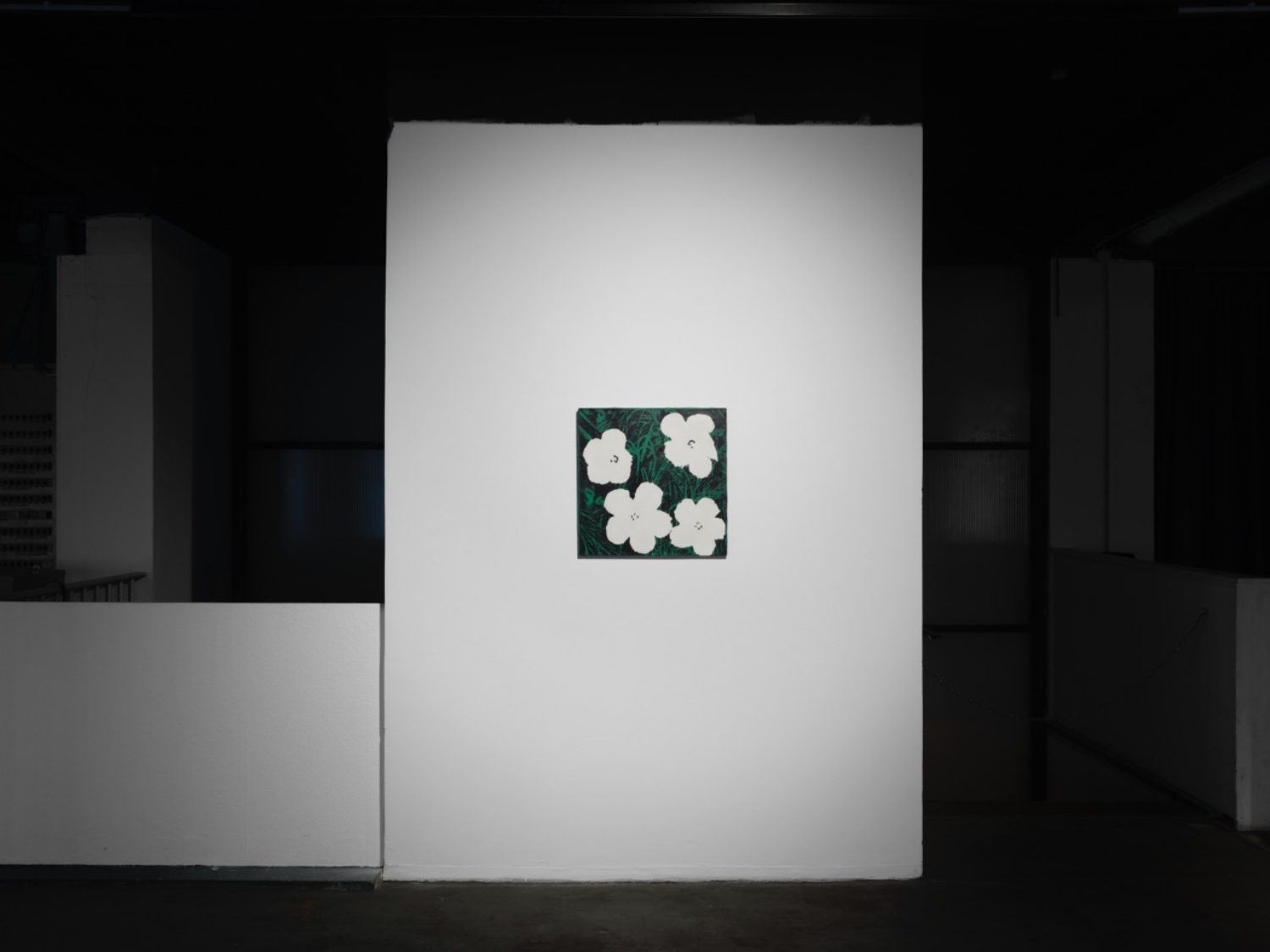
Above all, it is the sense of temporal detachment or resistance that connects Leatherbury’s sculptures to the other contributions in the group exhibition. Time, for example, expands in multiple directions in Sturtevant’s work, creating a paradoxical relationship between presence and absence. Over fifty years ago, Sturtevant began recreating works by prominent fellow artists, starting with Andy Warhol’s iconic Flowers series, in order to investigate their contextual significance. Her approach foregrounds the discursive nature of art without divorcing it from the original, thereby introducing an element of ambiguity. What, then, is the viewer confronted with, if not the familiar image they believe to see? Sturtevant’s Flowers, included in this exhibition, establishes a historical arc within the conceptual framework of the group show Symbolic Exchange, which, as the accompanying press release notes, draws inspiration from Jean Baudrillard’s essay collection The Symbolic Exchange and Death (1976). Resonating with the philosopher’s famous dictum: “Production is dead, long live reproduction!” – referring to the erosion of reality in favor of referenceless signs – Sturtevant’s work today joins a cultural landscape, marked by viral marketing, meme culture, and doomscrolling. She also prefigured the absurd entanglement of politics and entertainment in her 2002 video I Love Arlette (also featured in the exhibition), where a fabric mouse dances in a loop to a rap song against garishly colored wallpaper – a bizarre tribute to the Marxist politician Arlette Laguiller, who achieved her best result as a French presidential candidate in 2002 with 5.7% of the vote.
|
|
Sturtevant, Flower (After Warhol), 1971. Installation view: Symbolic Exchange, Heidi Gallery, Berlin.
|
|
|
The low-tech aesthetics characteristic of the 2000s, as seen in Sturtevant’s video, are echoed in Sabina Maria van der Linden’s digitally altered stock photographs, where the artist inserts herself alongside prominent figures. In her series C+Moi (2012), van der Linden positions herself intimately close to the smooth body of the artist Cyprian Gaillard, yet her gestures go unreciprocated. This attempt at intimacy – evident in the meticulously retouched images – emphasizes the absence of her counterpart, whose pixelated digital form becomes so abstract that it no longer signifies a physical body but rather an ideological construct of a body. Van der Linden’s self-ironic, one-sided communication with a hyperreal body alludes to Baudrillard’s concept of the power of signs, articulated in The Symbolic Exchange and Death. According to Baudrillard, the perpetuation of signs in our society is sustained by an obsessive pursuit of infinity and immortality.
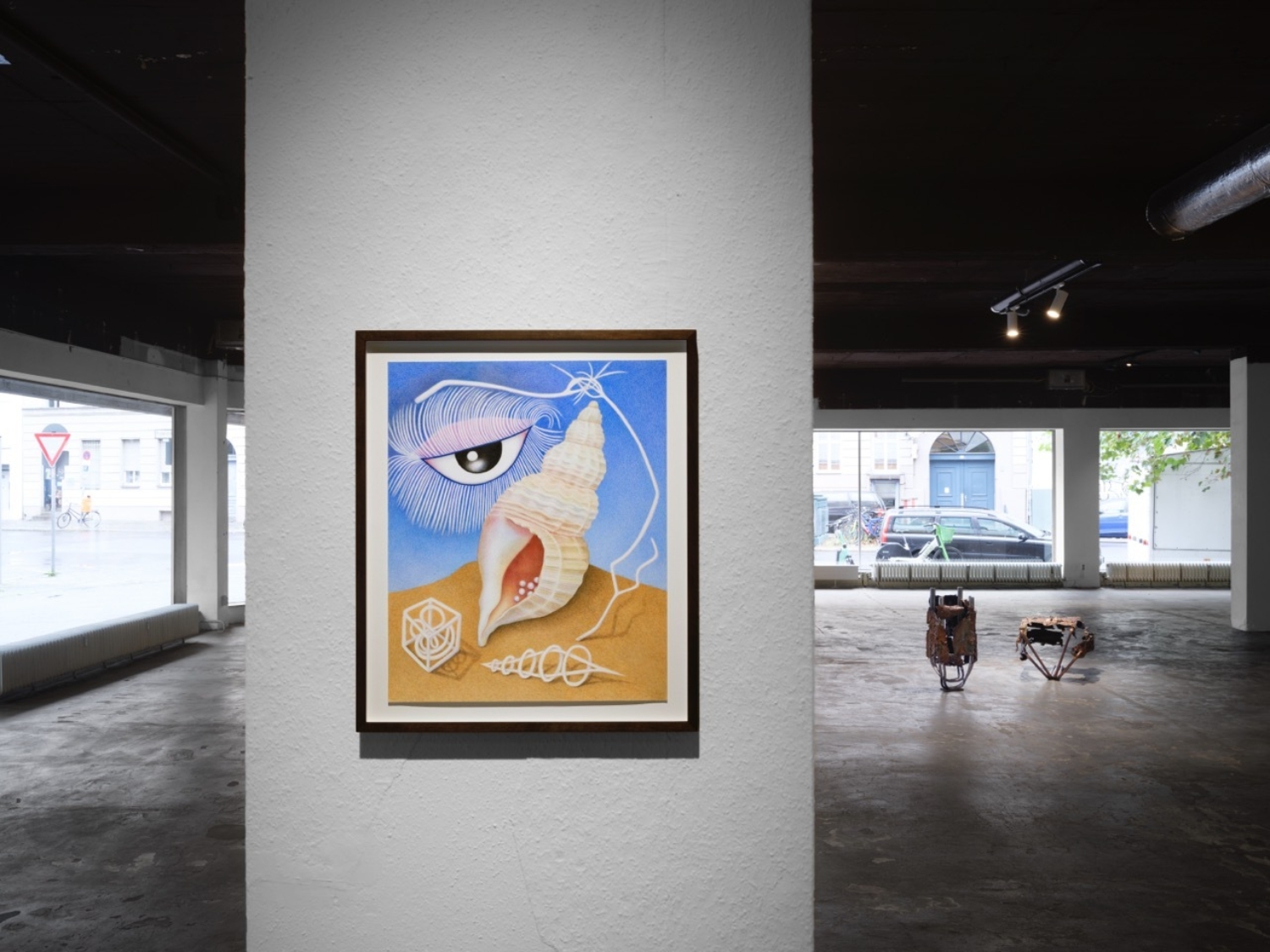
Raina Hamner’s vividly colored drawings depict an array of psychological landscapes that spatialize subconscious states. In these works, oversized sensory organs such as eyes and mouths float above symbolic objects – shells, snail houses, and anthropomorphic house facades – evoking access to deeper, concealed layers. These bodily openings facilitate an alternating process of entry and exit, sometimes reversing their roles, such as when an eye secretes a dark liquid to feed the valvular shape of a smaller eye. Within Hamner’s cosmos, object categories dissolve as body fragments and natural objects appear as equivalent metaphors.
|
|
Raina Hamner, Head in the Sand, 2024. Installation view: Symbolic Exchange, Heidi Gallery, Berlin.
|
|
|
Given the exhibition’s focus on artistic practices that subvert conventional logics of production and transaction, Hamner’s works occupy a distinctive status. For over fifteen years, she exchanged these drawings as a form of payment for therapy sessions. Upon concluding her analysis, Hamner received most of the drawings back as gesture of acknowledgement for her personal growth. This process encapsulates the essence of symbolic exchange: a cycle of giving and receiving that fosters a social relationship where the value of the counter-gift is not governed by any economic system but follows the principle of generosity. What comes to the fore: the symbolic, derived from the Greek meaning “that which is joined together,” inherently involves mutual recognition of the other.
|
|
Susanne Mierzwiak is a curator and writer based in Berlin.
|
|
|
|
|
|
|