|
Gigiotto Del Vecchio and Daniele Milvio
|
|
Stato Reale. Legitimate Needs
|
|
Courtesy Francesco Zorzi/NM3.
|
|
|
Gigiotto Del Vecchio: How can we define a conversation on a subject so potentially fraught with pitfalls for two persons such as ourselves? “Real Estate.” What’s your take on it, Daniele?
|
|
|
Daniele Milvio: Owning real estate is perhaps the only one of the low earthly ambitions that I can understand, not only because of the mental deformation typical of my fellow countryman (in Italy you don’t normally rent), but also because if we get rid of all the fierce desires of plutocracy, it remains a legitimate instinct. If we wanted to reduce real estate to a less speculative and more towards the human need for a sheepfold, then we would have to think about what the primary human needs are. Are they free from any kind of social revenge or instinct to deceive others? But do we really want to do this? It is difficult to define which needs are legitimate and which are not, isn’t it?
|
|
|
GDV: I think the legitimate needs are linked to survival. But now we have to examine the meaning of survival.
|
|
|
DM: If we talk about survival, we go too far off course. I would speak of legitimate needs and legitimate desires.
|
|
Courtesy Francesco Zorzi/NM3.
|
|
|
GDV: Let’s talk about it!
|
|
|
DM: I have to admit that architect Franco Albini’s social housing in Milan is particularly useful for defining a shared standard: large windows, 3 meter high ceilings, a bathroom with a window, a bedroom, a living area with a balcony, and a kitchenette with a window. Small but separate. Nothing else should be needed; this is the minimum need, multipliable according to the members of the household. Given this definition of a minimum form, would it now be fair to ask how property speculation can be exploited to our advantage and our practice? Years ago you told me about Douglas Gordon’s fixation with bricks and mortar— how he bought a whole block in Berlin early on. This is the kind of action I would focus on: the desire to utilize real estate as any other financial instrument. Artists and sportspeople, more than others, need to consolidate their earnings so that they can withstand the undulations of their careers and potential periods of inactivity. As an artist, every hour, every day for a year is worth less than the financial advantage that could be gained from a single successful real estate purchase. I would always rather pay less than earn more. This is true in every area of life. In the property market, the difference between market price and a particularly profitable purchase is a margin that we, as artists and artworkers, cannot afford to overlook. You have to search for the smell of blood and go for it.
|
|
Courtesy Francesco Zorzi/NM3.
|
|
|
GDV: So the image of the artist as a figure above all human weaknesses, closed up in their poetic shell without being influenced by these baser things for ordinary mortals, focused on nothing but their art, is a false image or at least an outdated one?
|
|
|
DM: Definitely. A life in seclusion is impossible nowadays, you can’t escape bureaucracy. You can’t escape the tedium of fines, bills, taxes, commissions, excise duties, etc., not even as a hermit. Until a few years ago, the choice of anti-sociality was feasible, now every attempt to get away from it corresponds to a stronger grip of the production system. You might as well exploit it.
|
|
|
GDV: The subject of our conversation reminds me of Patrick Goddard’s exhibition at Seventeen in London, I think it was 2019, which had the title Real Estates. His attempt was to denounce the systems in which he felt involved by using only tools designed to support those systems, thus being forced to hijack, redirect, and turn them against himself. I believe that the “production systems” you speak of are probably the systems Goddard is referring to, but he also proposes the possibility of overturning them. So here is my doubt: should we still keep an active hope of overturning, if not rebelling, despite the fact that our involvement with “production systems” is almost total? Is it still worth keeping an active component of disagreement, or is adapting to the “real estates” our only possibility?
|
|
|
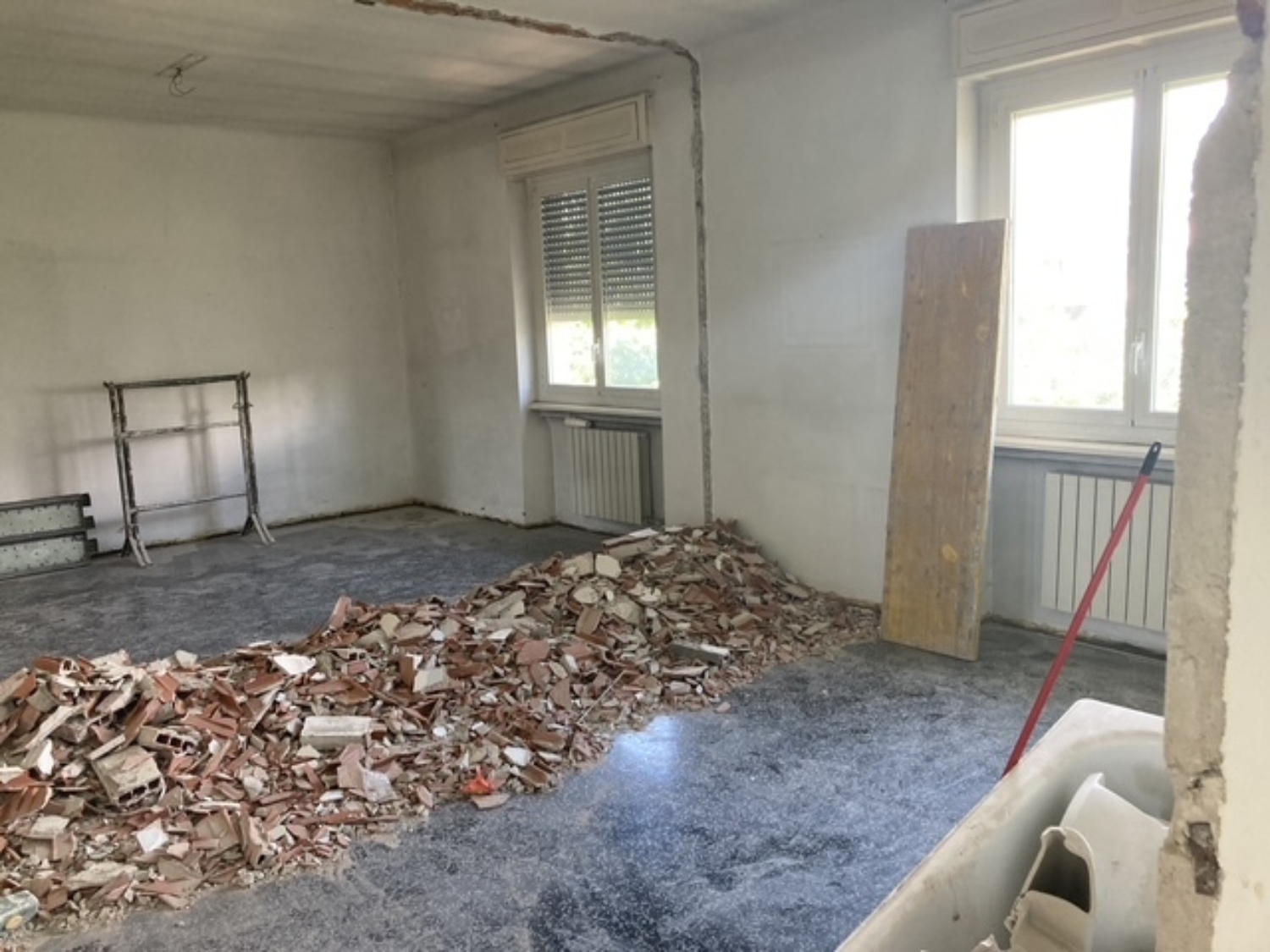
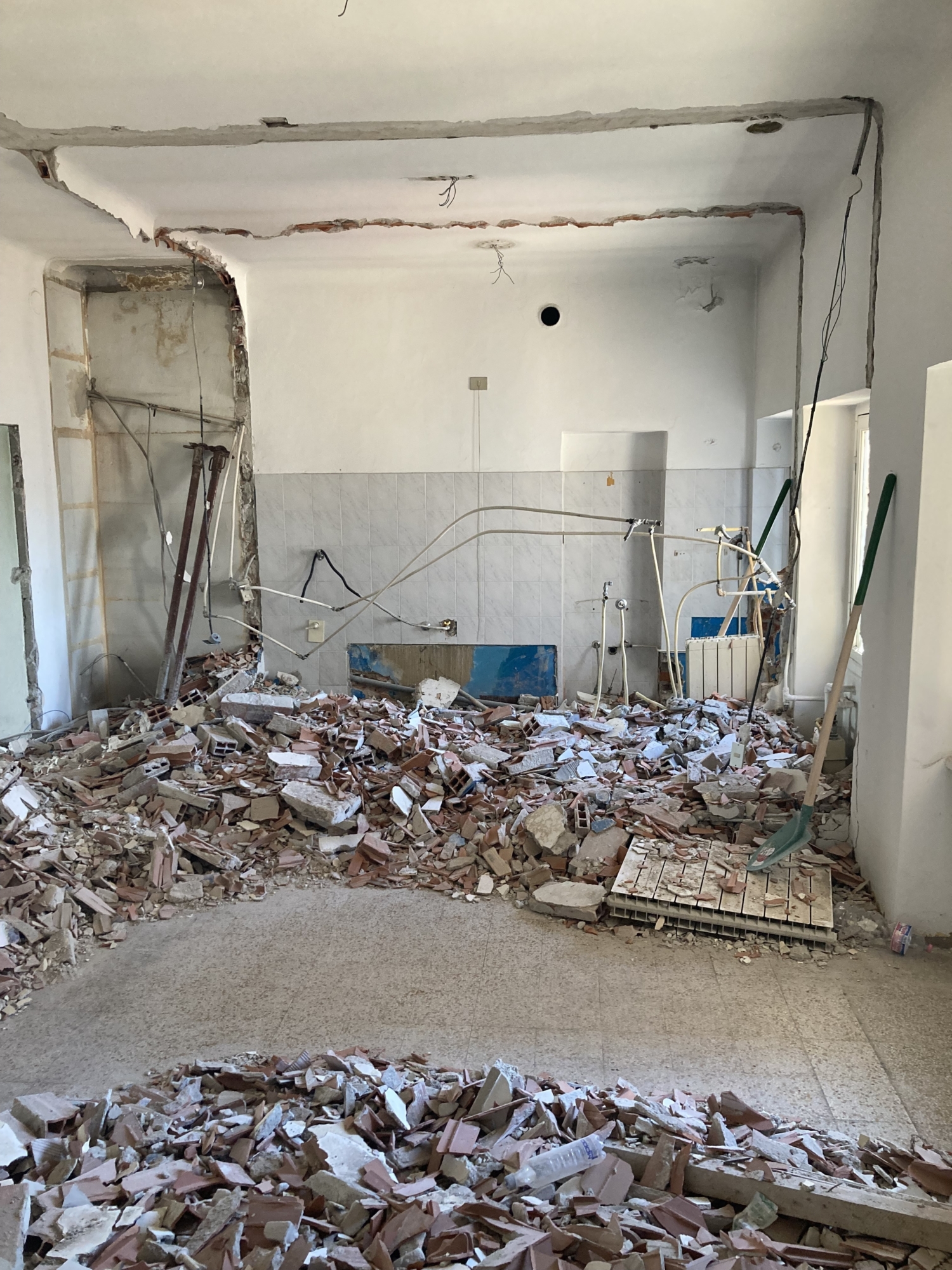
DM: The conception of real estate is the real point on which you can quantify a person’s socialism, but I think there is room for reversal and my conviction already leads me to want to defend this idea. You can work seriously on a social housing plan, but you can’t think of eliminating the primary driver of human activity in a democratic society—building a proportionate shelter. If you want to destroy the economic powers of real estate, you first have to change the production system. Owning real estate is perhaps one of the oldest professions in the world, but nowadays nobility is worth less than money. I don’t know if that’s a bad thing, probably not. When I think back to the first time I saw Karl Marx Allee, I feel despondent. I am still convinced that the most entropic moment of European urbanism is the communist age; vertical development, function, density, aesthetic relevance — what more do you want? My new house in Milan, like the entire block, follows the line of the ancient city walls. After the demolition of the city walls, they started building on the same foundations. The idea of looking out of the window, as if I were a sentinel, exalts me. But perhaps it’s the desire to buy the house that has fried my brain. As a journalist who was interviewing Mario Monicelli in his living room once said, “How can a declared communist like you live in such a beautiful house?” Monicelli answered, “I live there now because I like it, but if the revolution comes I’ll give away the house.” I used to believe Monicelli, but today less so.
|
|
Courtesy Francesco Zorzi/NM3.
|
|
|
|
|
|
|