|
When Roland Barthes, in his 1980 classic Camera Lucida, developed his theory of the punctum, he was talking about images, not products. The philosopher proposed that the punctum is that almost accidental detail in a photograph which pierces the viewer with surprising yet palpable force—as opposed to the studium, which aligns more squarely with cultural meanings and intentions (usually the photographer’s). By comparison, nothing is ever random in product design, a modern art form both hyper-intentional and thoroughly systematized. Sophisticated consumers will tell you that when some minor detail on a product shines only “for you,” it is usually due to an individualizing factor beyond the designer’s intention—a scuff, a manufacturing quirk, a subtle patina.
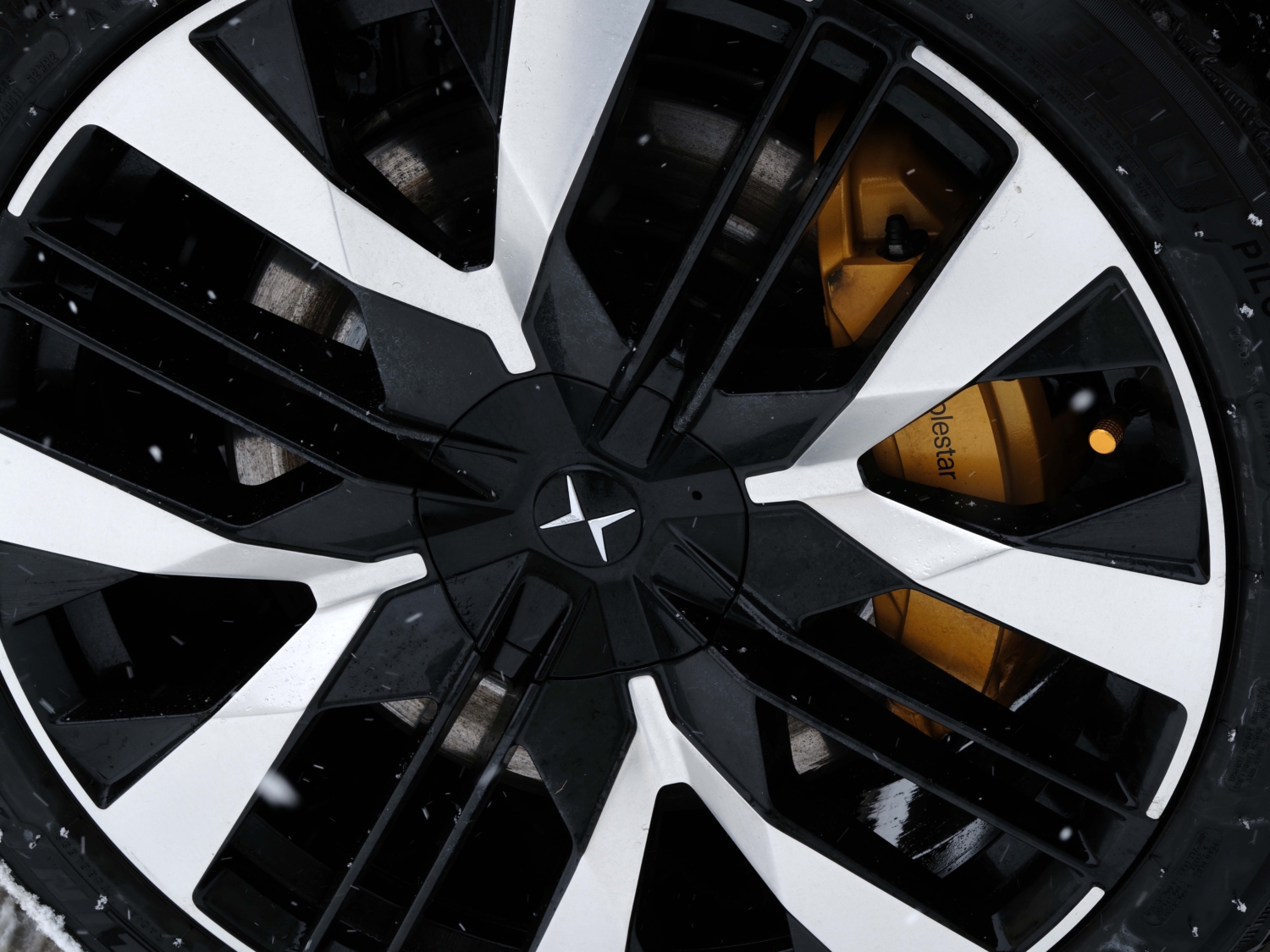
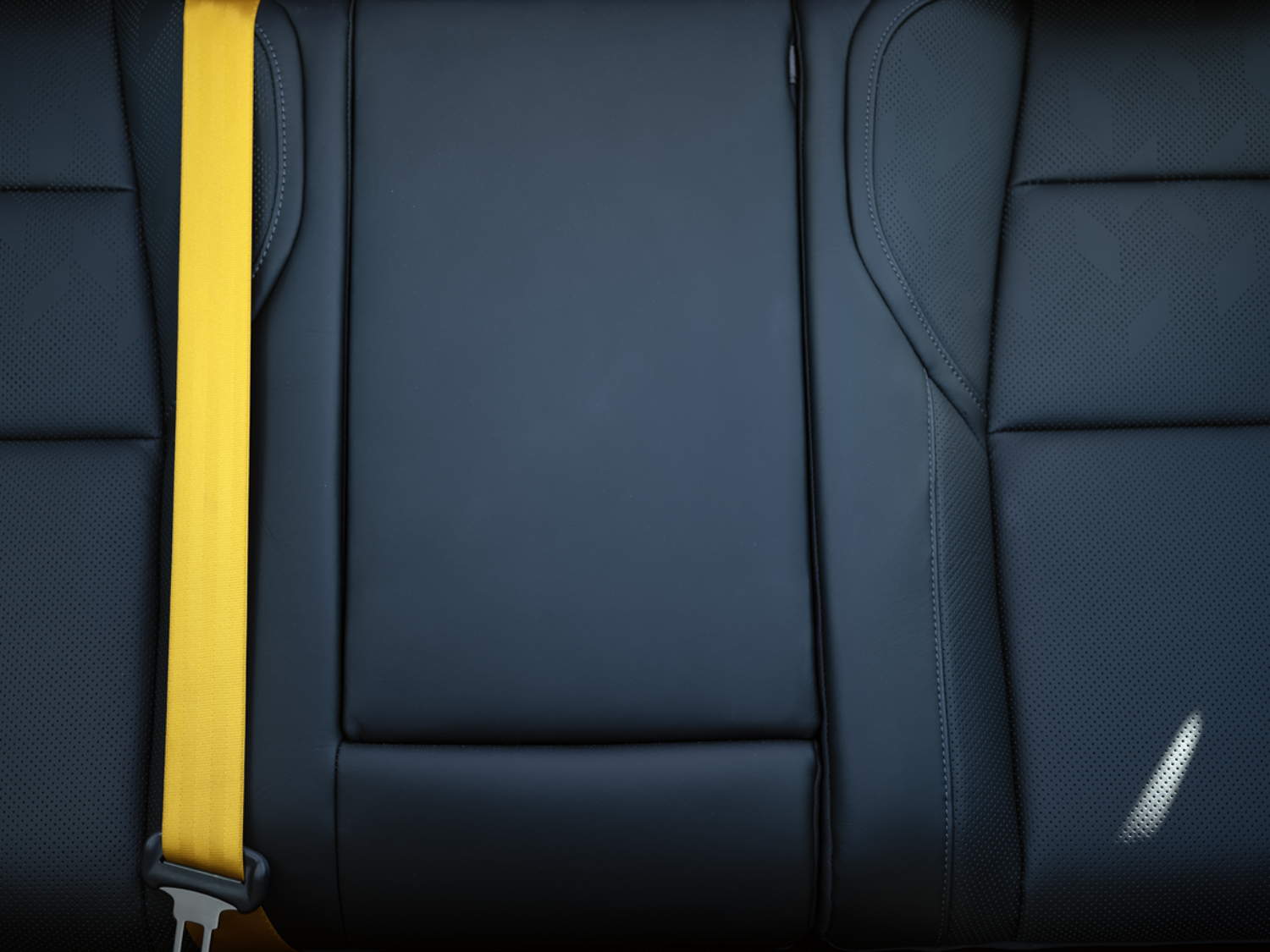
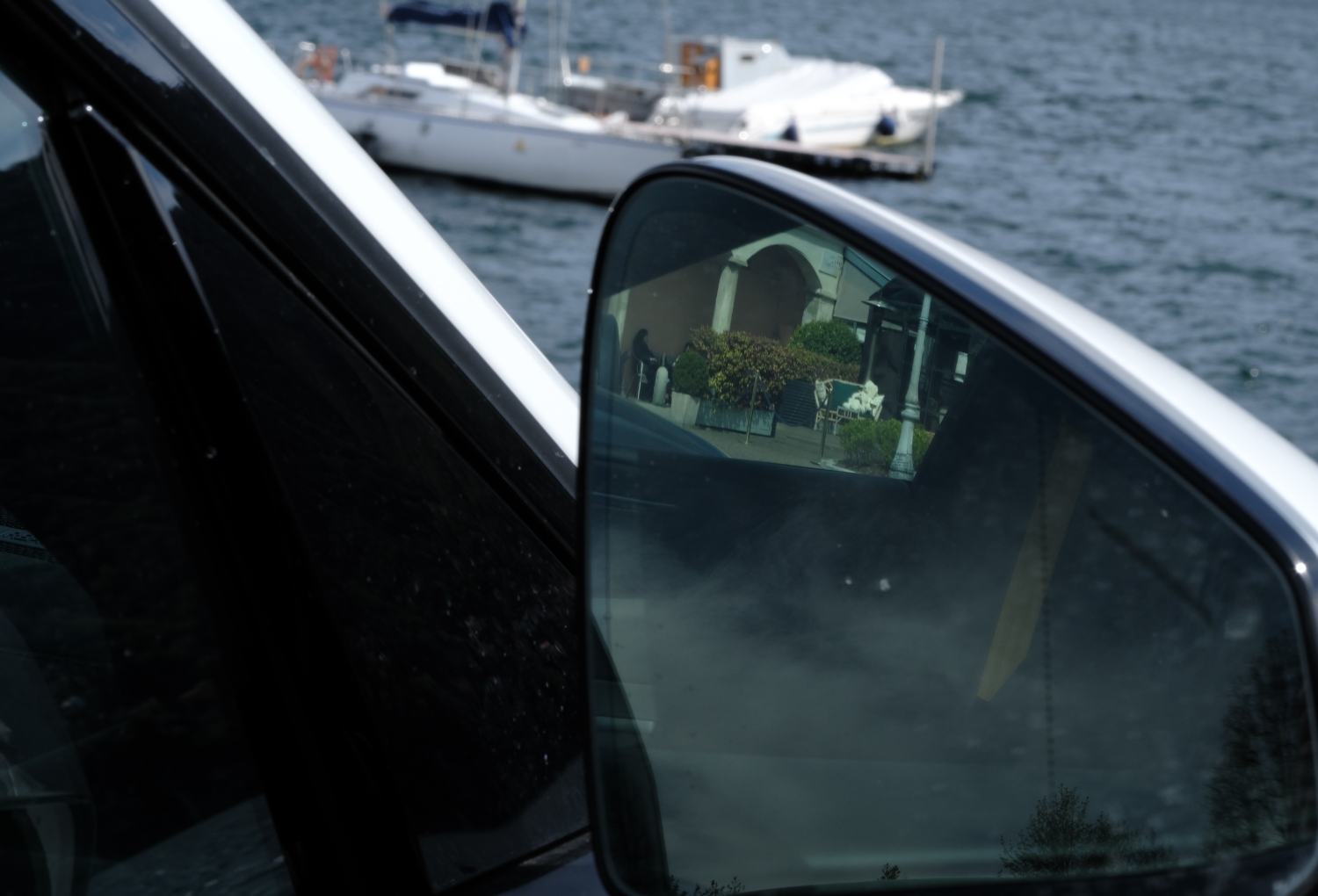
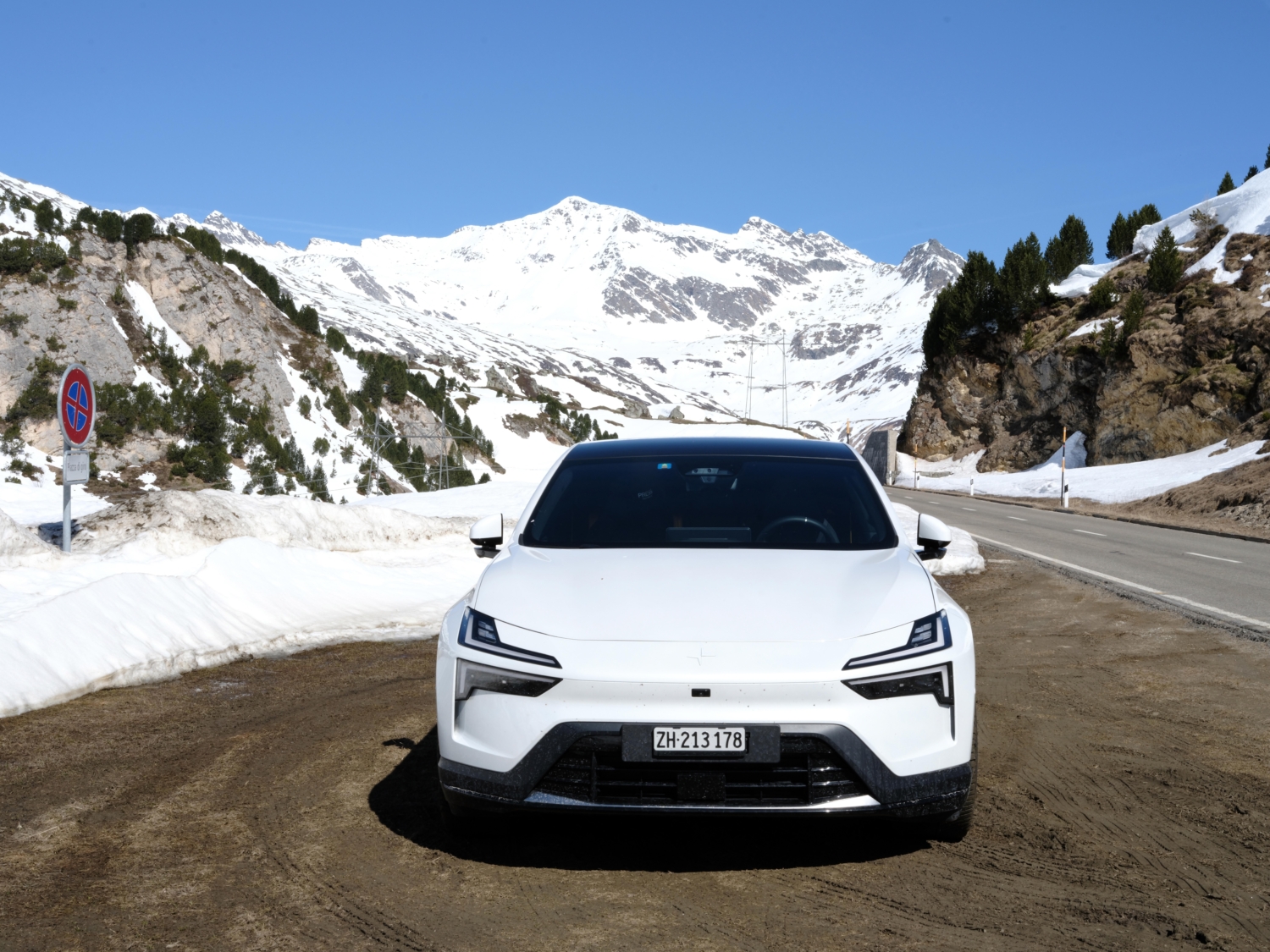
And yet the allure of the orange brake caliper in Polestar’s series of sports cars hits its beholder frontally, forcefully, and without language. Tucked behind a meticulously designed rim, its characteristic amber hue does not “speak” an intention nor emphasize some dazzling feat of engineering (all cars have calipers, after all), but rather sits there, insistently calling attention to itself for no apparent reason. The result is first shocking, then disorienting and intensely exhilarating—particularly when you realize it repeats inside the car in the generously sized seat belts. Glossing over the modernized lines and morphology of the vehicle—in which design details are often too muted to cohere into a distinct image beyond ergonomic and formal sleekness—the eye zooms in on this seemingly arbitrary detail, only to be semiotically disappointed. There is no logo, no monogram, no sign to be “read” or decoded in the conventional terms of luxury product design; and yet, it is remembered. What it shows so dramatically is the gravitational pull of the punctum itself: it makes you look, reflecting back nothing but the force of looking as such. Confronted with this logic of perception—forcefully redirected from image to merchandise—the viewer is unsettled, if slightly aroused. One keeps walking, or rather driving, but even a Polestar owner can hardly refrain from returning intermittently to this almost erogenous zone of the commodity.
|
|
|
Barthes was far from ignorant of the phenomenological power of merchandise—consider his breakthrough text, Mythologies—but if he pioneered the idea that products are also signs, even he could hardly have predicted how deeply images would become integrated into contemporary consumer culture. Merchandise today no longer arrives solely through billboards, magazines, or television commercials; it emerges from the diffuse image networks of the socialized internet, where fractured signs—motifs, shapes, fragments of symbols, or indeed a hue—circulate with an apparent randomness that exceeds the logic of classical “promotion.” Celebrities, influencers, films, memes, and cat videos comprise some of the more powerful nodes in this network, where such signs are circulated, perceived, and eventually rendered legible—but more often, they originate in obscure media spaces, traveling without names or markers of identification. I recently watched a video of Gwyneth Paltrow monologuing about grocery shopping while driving around Los Angeles. If I’m not mistaken, it was in a Polestar; certainly, the video contained a trace of orange, calling attention to itself. But I could be wrong. That is the power of the punctum in mass circulation: one sees it nowhere in particular, yet one experiences it intensely.
|
|
|
The orange caliper and seat belts in Polestar’s vehicles seem to substantiate this updated theory of the image, which is, of course, highly economizable—particularly for designed objects. One could argue that the design industries anticipated this phenomenon through the widespread use of the “accent,” for instance in clothing or furniture, where it functions as a signal of formal precision and a subtle marker of taste. The highest achievement of the accent is to become a “signature,” not in the form of a trademarked name or logo (a technology that now appears almost crude by comparison), but as something monopolized yet immediately recognizable—if not iconic. One recalls Christian Louboutin’s decade-long struggle over his red-soled stilettos, or closer still, the single orange stitch in millennial Hugo Boss line “Boss Orange.” Similarly, Polestar’s orange has a name: “Swedish Gold.” As such, Polestar’s punctum should perhaps be understood first and foremost as a much-needed gut punch—a challenge to contemporary automobile design, which for too long has leaned lazily on the formal erotics of streamlining and, in the process, seems to have abandoned a culture of detail altogether. In the mid-twentieth century, car designers sought to approximate the forms of wild felines such as panthers, invoking metaphors of efficiency and elegance, mastering them to such a degree that car design itself nearly disappeared as a conditional art. The result is that cars today, like men in suits, are elegant—even sexy—but not expressive. This makes moments of interruption all the more impactful. Like a well-placed boutonnière in the left lapel of a tuxedo, visual punctuation justifies itself precisely through its contrasting superfluousness—its total self-awareness.
|
|
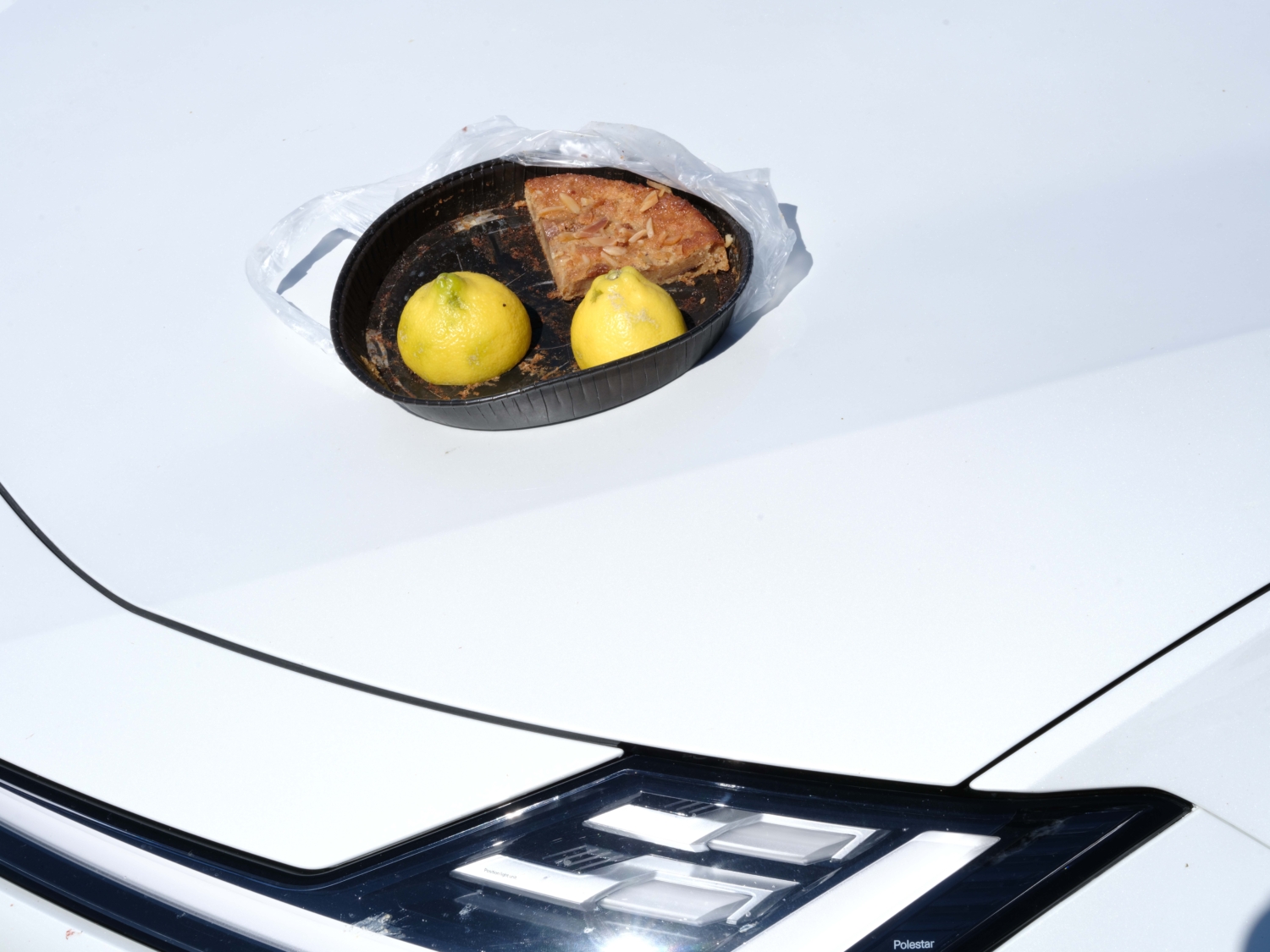
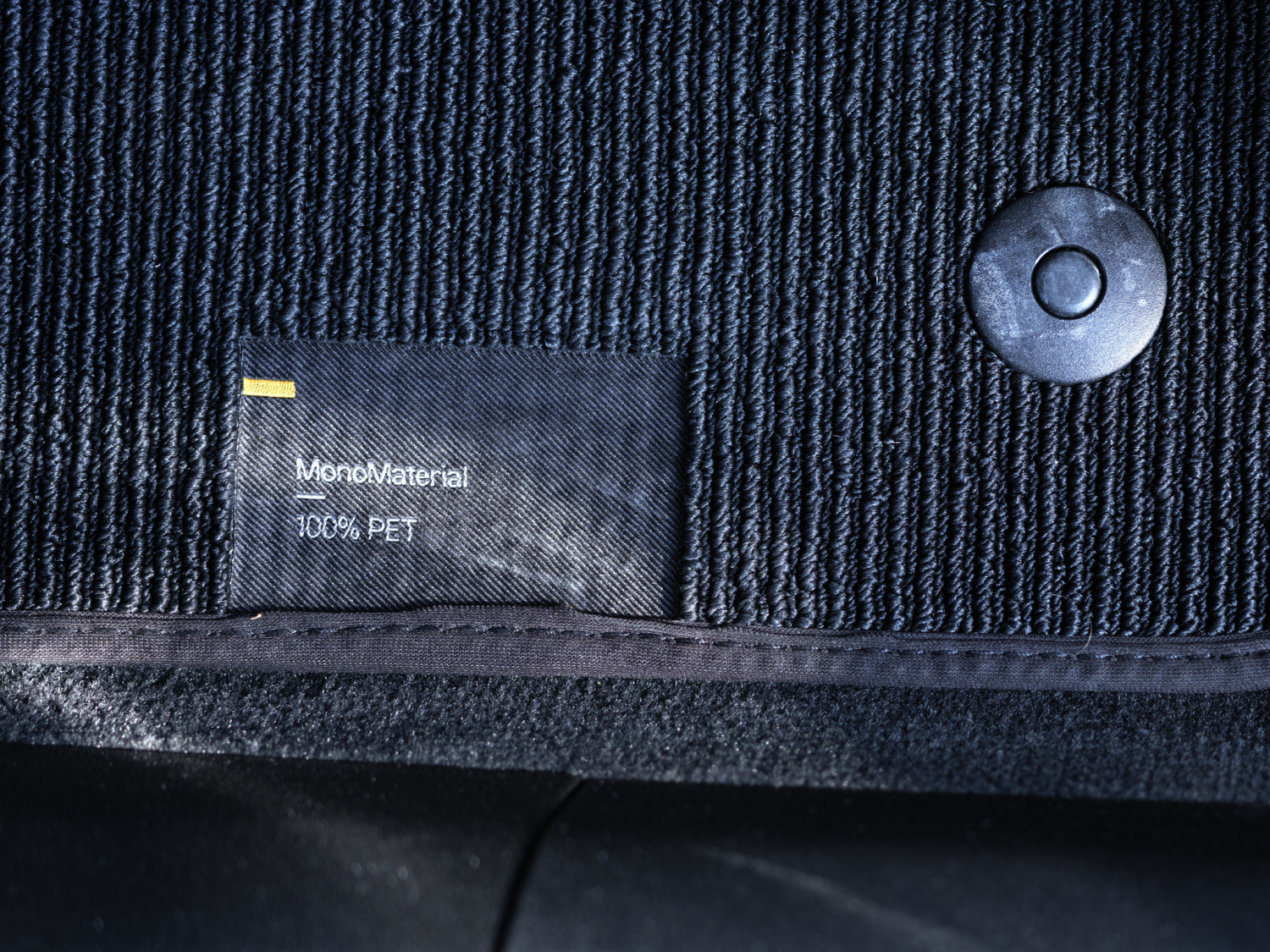
All photographs: PROVENCE.
|
|
|
Works (c.2010-2018), a.SQUIRE, London
Franco Bellucci
28.03 – 09.05.2026 Who's Afraid of ___?, Hans Goodrich, Chicago
Zaid Arshad, Anna-Sophie Berger, KP Brehmer, David Diao, Andrea Fraser, Joseph Grigely, Ronald Jones, Ghislaine Leung, Puppies Puppies (Jade Guanaro Kuriki-Olivo)
08.04 – 31.04.2026 Warning Signs, Karma International, Zurich
Merlin Carpenter
27.03 – 23.05.2026 the wheel, FANTA, Milan
Angharad Williams
11.04 – 06.06.2026 Racetrack, for, Basel
Roman Selim Khereddine
25.04 – 20.06.2026 'An Incomplete Survey on Portraiture'. Vol.1, Galerie Hussenot, Paris
Kelly Akashi, Marc Asekhame and Taylor Thoroski, Christophe Hamaide Pierson, assume vivid astro focus, Fabienne Audéoud, H.M. Baker, Stefania Batoeva, Costanza Candeloro, Drake Richard Carr, Shannon Cartier Lucy, Désirée Nakouzi De Monte & Andrea Parenti of Collezione Nancy Delroi, Stephan Dillemuth, Ana Viktoria Dziniz, Pé Ferreira, Nicole Gravier, Dario Guccio, Sunil Gupta, Samuel Haitz, Graham Hamilton, Nina Kettiger, Isaac Lythgoe, Miltos Manetas, Emanuele Marcuccio, Sabina Mirri, Raffaela Naldi Rossano, Martin d’Orgeval, Vincenzo Ottino, Matthew Peers, Cameron Platter, Tobias Rehberger, Winnie Mo Rielly, Will Sheridan Jr., Tobias Spichtig, Timothy Lee Standring, Konrad Zukowski
organized by Toto
29.04 – 20.06.2026 Elie Nadelman, Peter Fischli David Weiss, Galerie Buchholz, Cologne
Elie Nadelman, Peter Fischli David Weiss
10.04 – 27.06.2026 Counter City, Galerie Neu, Berlin
Cosima von Bonin, Jana Euler, Pippa Garner, Hannah Quinlan & Rosie Hastings, G.B. Jones, Klara Lidén, Reba Maybury, Sophy Rickett, Anita Steckel, Lena Tutunjian
curated by Juliette Desorgues
02.05 – 04.07.2026 Jochen Klein, Between Bridges, Berlin
Jochen Klein
01.05 – 05.07.2026 Burning the Days, WIELS, Brussels
Lutz Bacher
28.03 – 09.08.2026 Plastic Newspaper, CRAC, Sète
Lucy McKenzie
curated by Marie Canet
21.03 – 06.09.2026 Grant Mooney: sum, Museum Abteiberg, Mönchengladbach
Grant Mooney with Laura Aguilar, Olga Balema, Joseph Beuys, Patricia L. Boyd, Wisrah C. V. da R. Celestino, Hanne Darboven, Melvin Edwards, Niloufar Emamifar, Flint Jamison, Jannis Kounellis, Grant Mooney and Winona Sloane Odette, Robert Morris, Ulrich Rückriem, Karin Sander and Takis
29.03 – 20.09.2026
|
|
|
|
|
|
|