|
Daniel Canogar and PROVENCE
|
|
|
PROVENCE: Your exhibition Panoramic, as the double meaning of the word suggests, is both a visual experience and a historical reflection on the pictorial spectacle and popular success of 19th-century panoramic paintings—works that captivated audiences in Europe and the United States and foreshadowed many of today’s “immersive” experiences. What motivated you to begin from this reference? Daniel Canogar: I have been interested in the origins of our contemporary culture since the beginning of my career, with a particular focus on the evolution of certain 19th-century inventions—such as the camera obscura and the universal exhibitions—and their influence on how we, as audiences, relate to artistic works and, in particular, to immersive environments. With the recent rise of social media and digital surveillance, this topic has become even more gripping for me and has led me to investigate the historical foundations and underlying structures that shape our current technological realities. During this research, I encountered striking parallels between the 19th-century panorama and certain digital spaces today. In both cases—whether in the panoramic halls of Paris in the past century or within the vastness of the internet—audiences situate themselves within similarly enveloping, immersive contexts, becoming the main subject, and most recently, active participants, in these represented spaces.
|
|
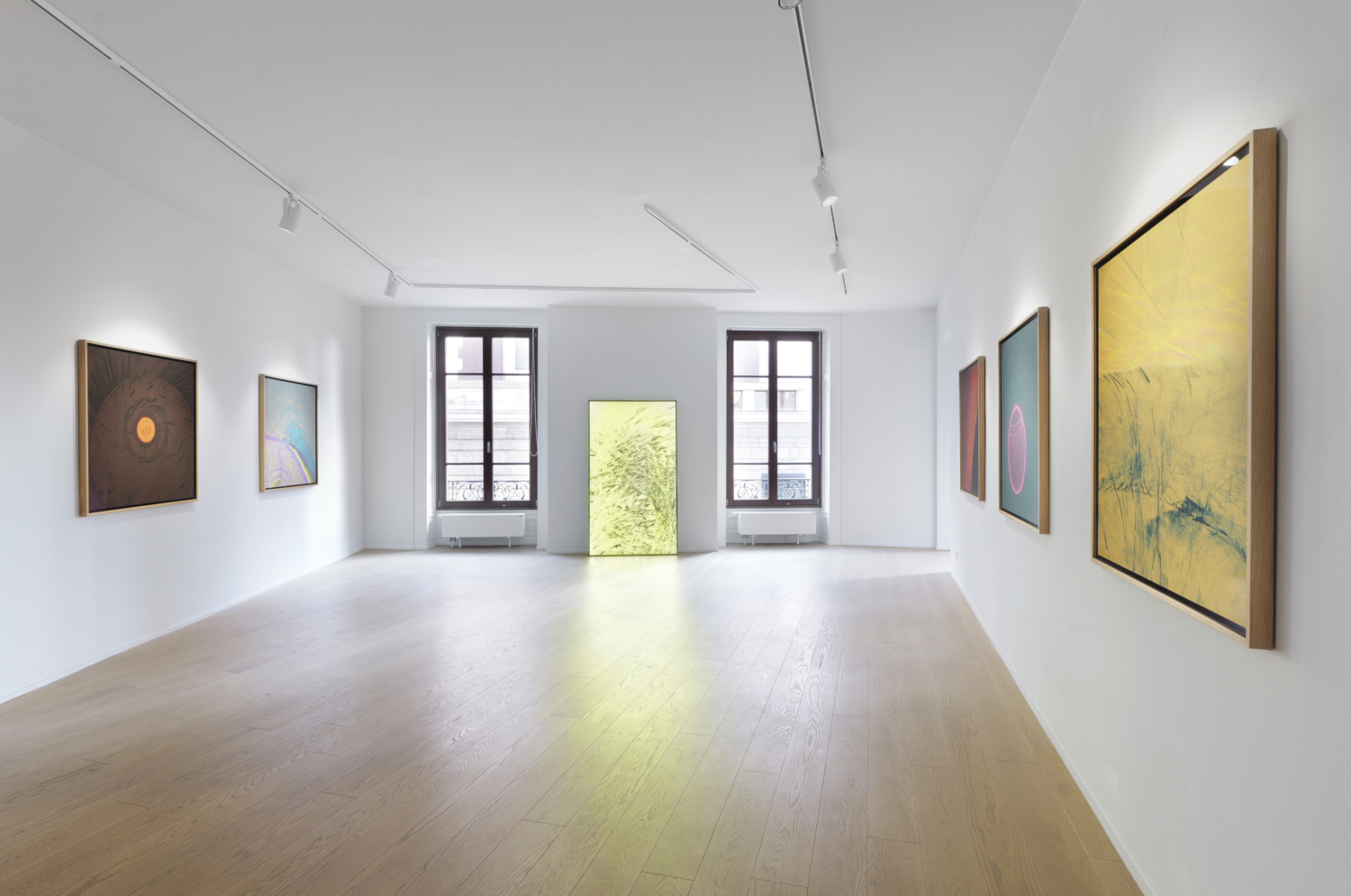
Exhibition view: Daniel Canogar, Panoramic, Wilde, 13.11.2025-08.01.2026. Photo: Studio Eric Bergoend
|
|
|
PR: This interest in spectacle seems driven by a desire to locate its weak points. It is evident in Grove (2025), a generative sculpture made of vertical LED-screen rods that appear to sprout from the ground. The screens display real-time animations based on data from the IODA website, which monitors global internet activity and its disruptions. The work’s natural allusiveness—resembling a segmented forest—insisting on the ever-present possibility of technological failure within our increasingly interconnected world? DC: Yes, definitely. That work was actually inspired by the digital blackout we experienced in Spain this past May, which brought all our systems to a standstill for almost 24 hours. Events like this make us reflect on what might happen if our technologically dependent society were to suffer a complete collapse. In Grove, the contrasts between technological and natural forms are both utopian and dystopian, serving as a speculation on whether natural forces might ultimately take over in such a scenario.
|
|
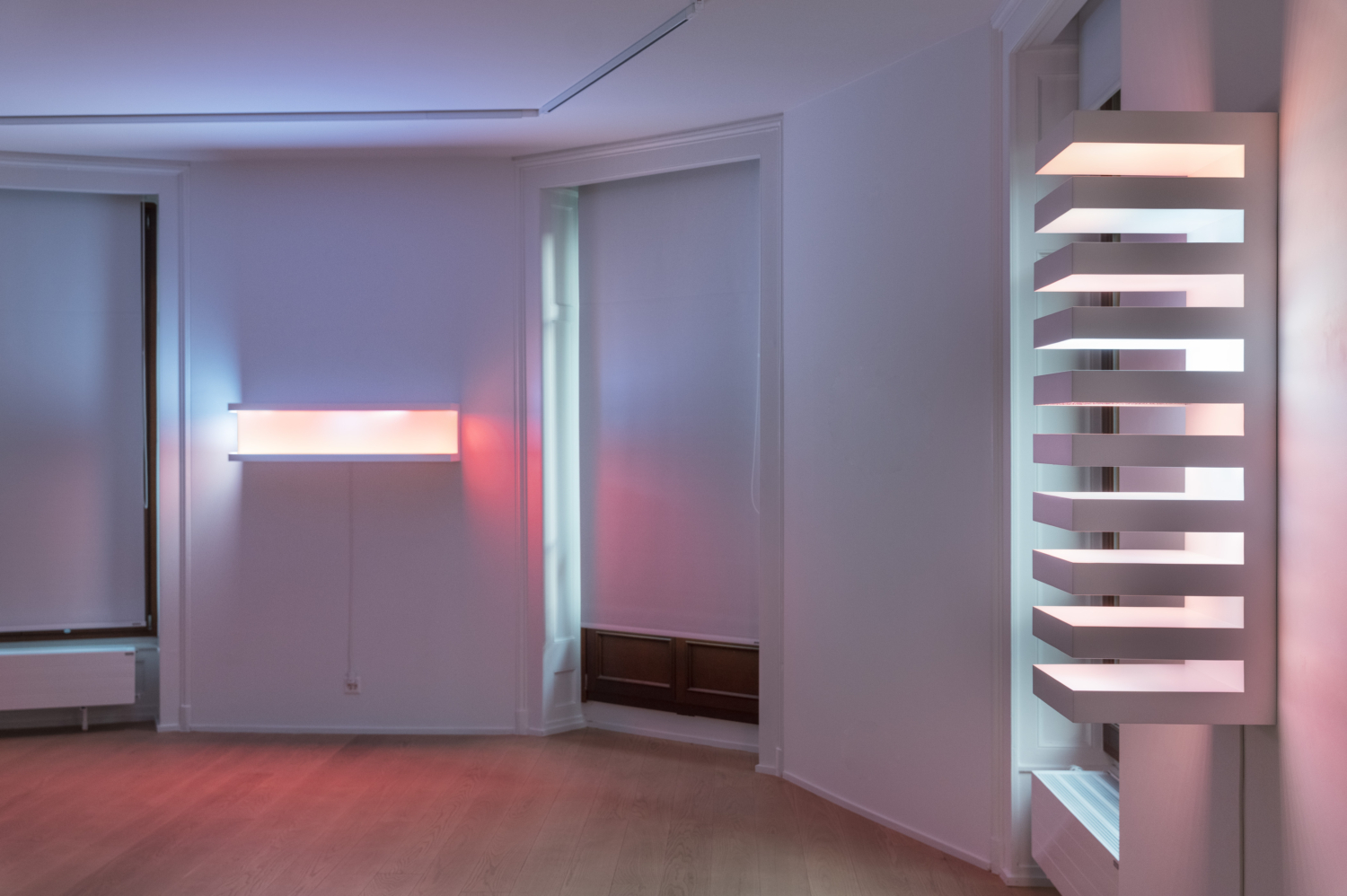
Installation view: Daniel Canogar, Diorama II, 2025 (left) and Margins, 2024 (right), Wilde. Courtesy Daniel Canogar & Wilde. Photo: Studio Eric Bergoend
|
|
|
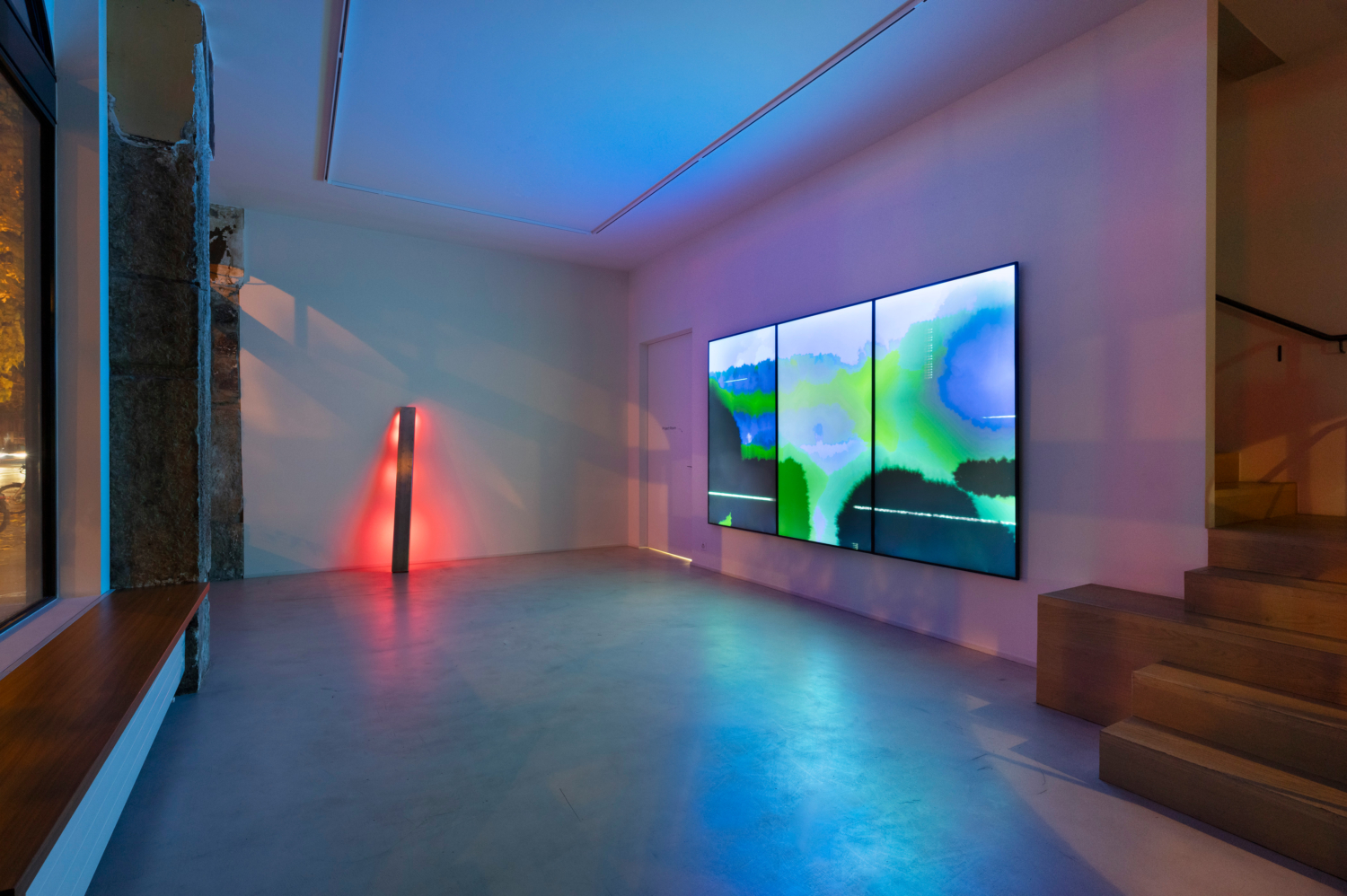
PR: This conception of nature and your broader “geological” approach quickly lead us toward a genealogy of critical thought examining technological progress and its impact on the Earth. This interest is evident in Diorama I and II (both 2025), generative sculptures that respond in real time to various environmental and climatic data. Just as panoramic painting translates reality into the experience of spectacle, to what extent might the diorama offer a way to reflect on our fetishized relationship with nature? DC: By translating abstract data into a visual experience, Diorama II transforms statistical information into an evolving digital landscape. It draws data from meteorological events and presents them in an abstract, visual format. In this sense, the work can be understood as a digital evolution of landscape portraiture, a genre that has long explored the relationship between human beings and nature. Likewise, Diorama II invites viewers to consider how technological mediation shapes—and sometimes distorts—our understanding of the natural world. In that sense, the artwork explores how our contemporary, data-driven ways of “seeing” nature can become fetishized.
|
|
Installation view: Daniel Canogar, Levels, 2025, Wilde. Courtesy Daniel Canogar & Wilde. Photo: Studio Eric Bergoend
|
|
|
PR: Today, this line of critical thought is often discussed in relation to capitalism and its structuring power, particularly through the notion of accelerationism. You address this question of acceleration, or of “the next stage,” in Levels (2025), which draws on video games and live-streaming platforms. Gamification becoming the new order of spectacle? DC: This is definitely a question that arises with Levels: the idea of life as a sequence of stages that must be overcome in order to reach higher or more satisfying positions. Gaming today is a highly controversial form of spectacle, one that is widely consumed and yet debated. It has become a major component of contemporary “pop” culture, and yet we are still understanding the potential consequences that this type of content may have when it is over-consumed.
|
|
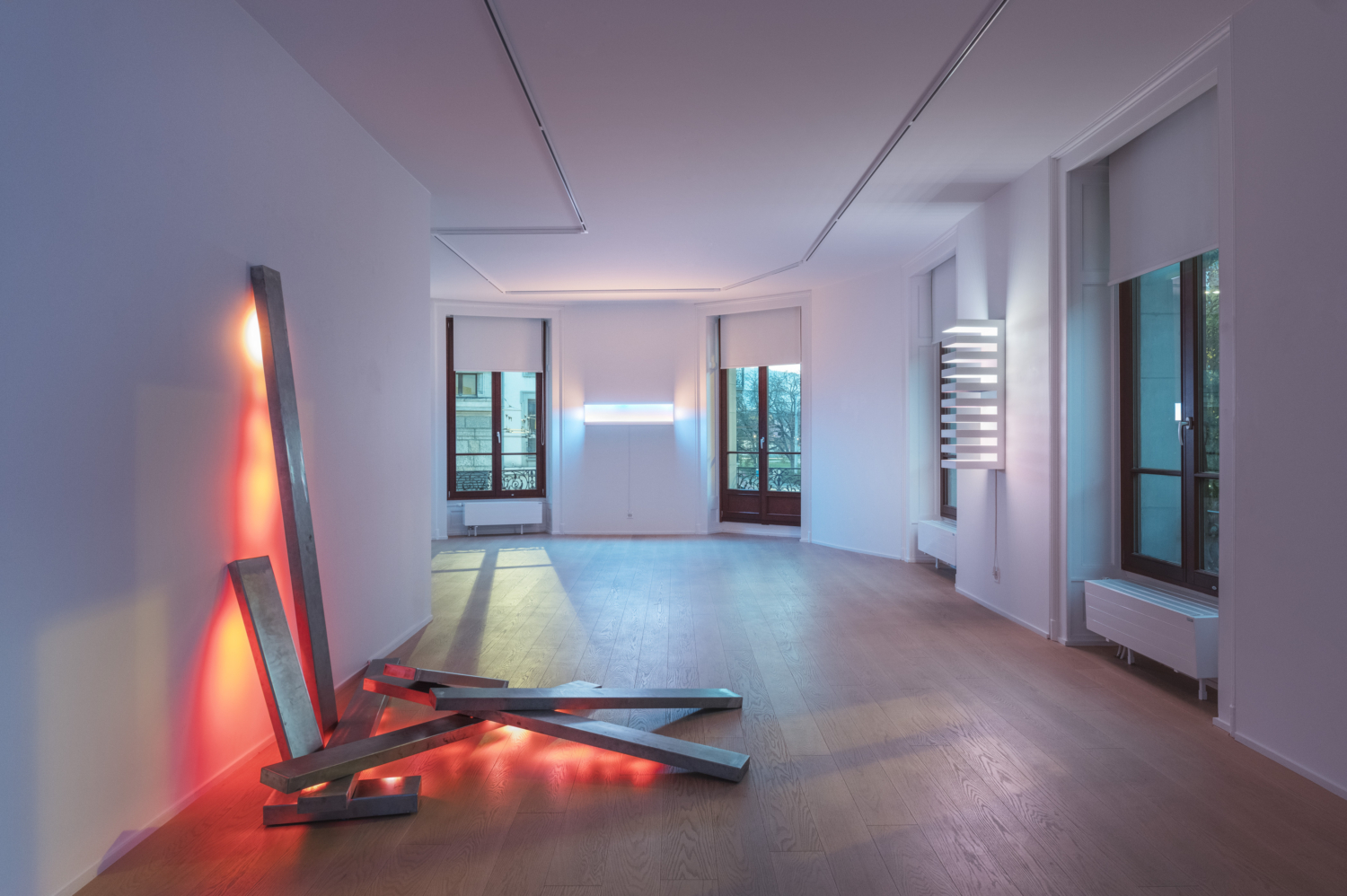
Installation view: Daniel Canogar, Blaze I, 2025 (foreground), Wilde. Courtesy Daniel Canogar & Wilde. Photo: Studio Eric Bergoend
|
|
|
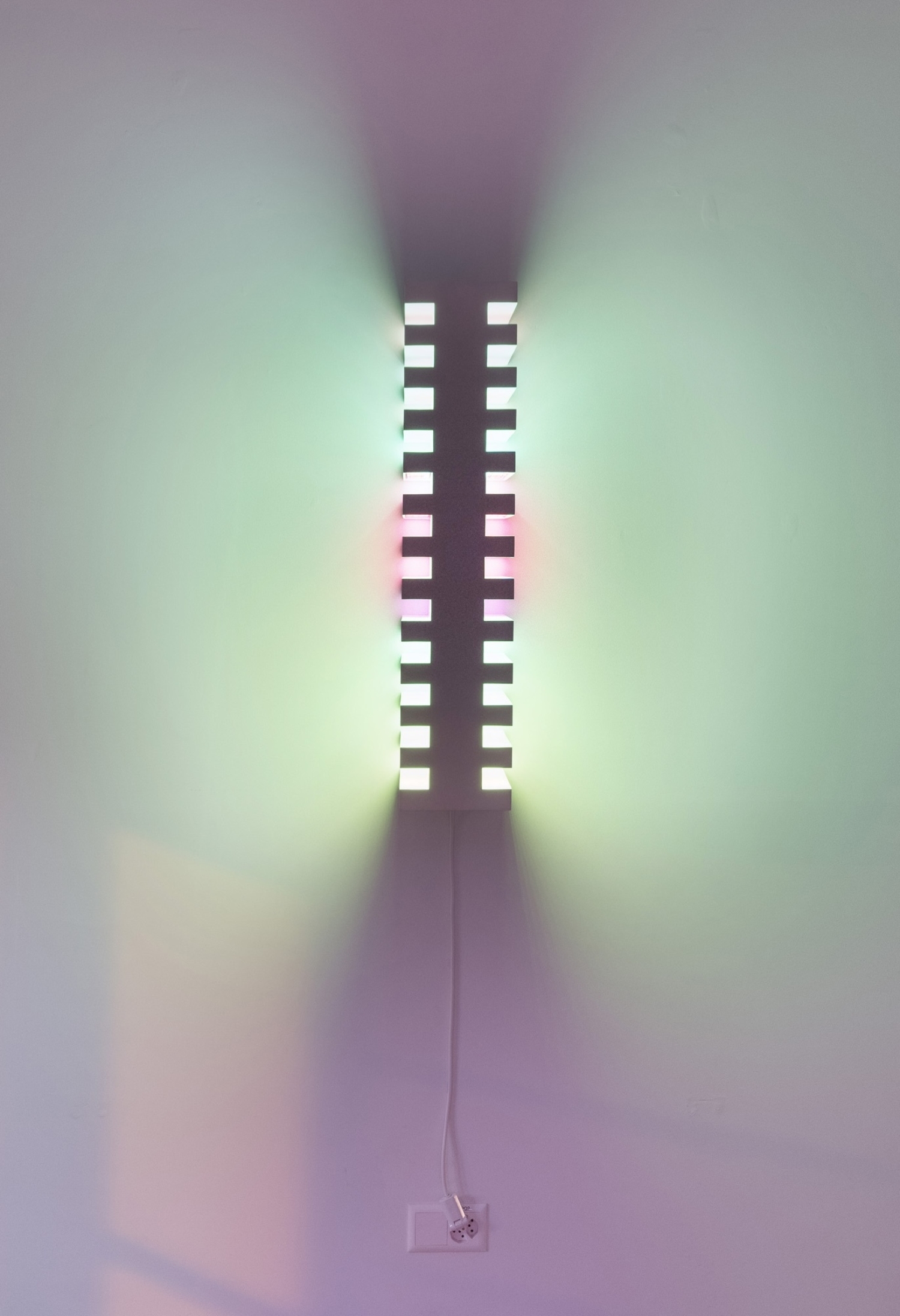
PR: The question of over-consumption brings me to the idea of interconnectedness, and how it extends beyond the technological realm to resonate within other structures. Some of your works—such as Margins (2024) and Blaze I and II (both 2025)—directly reference Minimalism: Donald Judd’s 1960s “stacks” in the former, and Dan Flavin’s signature gesture of turning a light source toward the wall in the latter. How is Minimalism’s phenomenology useful to you? DC: In my work, I often reference major artists from the past century and beyond. I am very interested in establishing a dialogue between key art-historical precedents and digital tools, as I believe this is one of today’s most relevant artistic languages—one that still needs to be more fully integrated into the canonical art-historical narrative. Minimalism attracts me for its cleanliness and visual precision, but I wanted to adjust it, to make it somewhat “trashy,” so to speak. My aim was to create a strong contrast: preserving Minimalism’s visual neatness while infusing it with more transgressive content, such as pornography and video games.
|
|
Exhibition view: Daniel Canogar, Panoramic, Wilde, 13.11.2025-08.01.2026. Photo: Studio Eric Bergoend
|
|
|
PR: As if you were yourself embarking on a strategy of contamination, or pirating a system from within? DC: Those are big words. I believe my work, in this case, is essentially a reinterpretation of certain art-historical currents through a contemporary lens. I’m interested in revisiting key artistic references from the perspective of today’s digitalized society, and in exploring how far these works can be pushed—what new forms they can take—within our current context. PR: Human agency emerges as a recurring element throughout your works—paradoxically so, since much of your practice seems to operate within a theory of fractality, where the micro and the macro mirror one another, and everything in between is compressed within logics of expansion. How do you make sense of this paradox? DC: Visually and technically, my work may appear highly technology-oriented, but that is merely a pretext to address deeply human concerns. The underlying motivation behind my practice is always to understand how, and in what ways, technology is shaping us—as a society and, ultimately, as individuals.
|
|
|
|
|
|
|