Modernization - An interview between PROVENCE and Philippe Daerendinger
|
|
Exhibition view, Modernization, Circuit, 19.10-23.11.2024, Photography: Aude Mayer
|
|
|
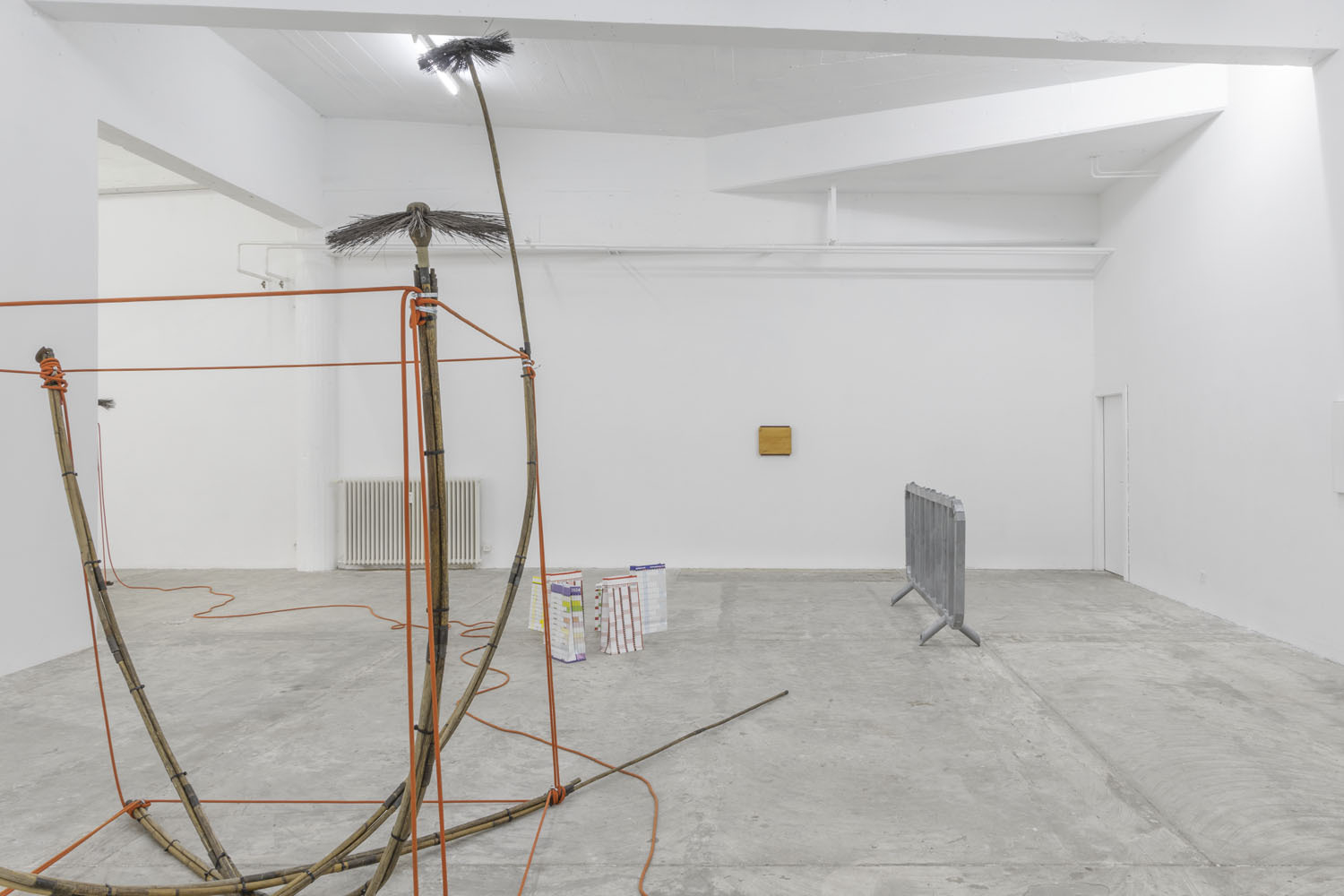
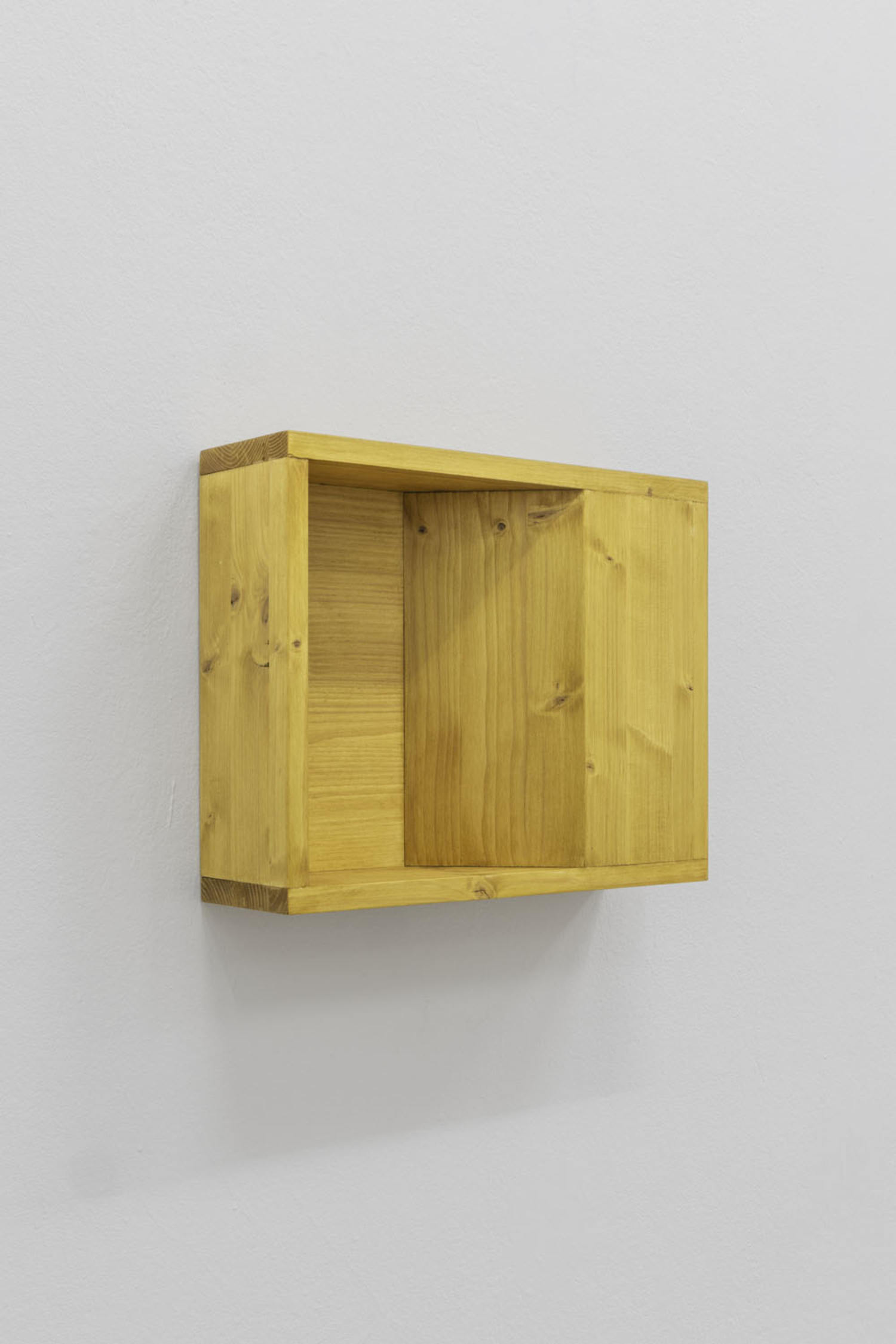
PROVENCE: The press release quotes Mark Fisher’s Capitalist Realism. Is There No Alternative? (2009), the British theoretician’s critique of a postmodern culture which he defines as marked by a certain taste for nostalgia and a future cultural production only made of old stuff served on a new platter. Fisher asks what can come out of this condition, precisely when it seems nothing can happen. How does the show relate to this stalemate, which is, interestingly, not a sterile state in Fisher’s mind, but rather a potential source of renewal? Philippe Daerendinger: I was really drawn to Alain Badiou’s definition of the the word modernization which Fisher quotes in Capitalist Realism. Badiou describes Modernization as a series of reorganisations in the public sector that aim to introduce a corporate mindset into governmental institutions. Reforms which end up drastically reducing the services provided- less staff, partial or total privatisation and the introduction of new technologies. These reforms were introduced earlier and more brutally in the UK than in the rest of Europe, and although they’re advertised as modernising, they actually tend to make public and residential spaces look older, more dilapidated. This phenomenon has been described a lot by British film-maker Patrick Keiller whose work and writing I looked at during the development of this project. In the show, the problem of political decisions affecting domestic spaces is very directly addressed in Marta Riniker-Radich drawings of mouldy walls. Lawrence Leaman’s sculptures also tap into what we could call an aesthetic of austerity.
|
|
Lawrence Leaman, untitled, 2024, wood, varnish, screws, 41 × 33 × 12 cm, Photography: Aude Mayer
|
|
|
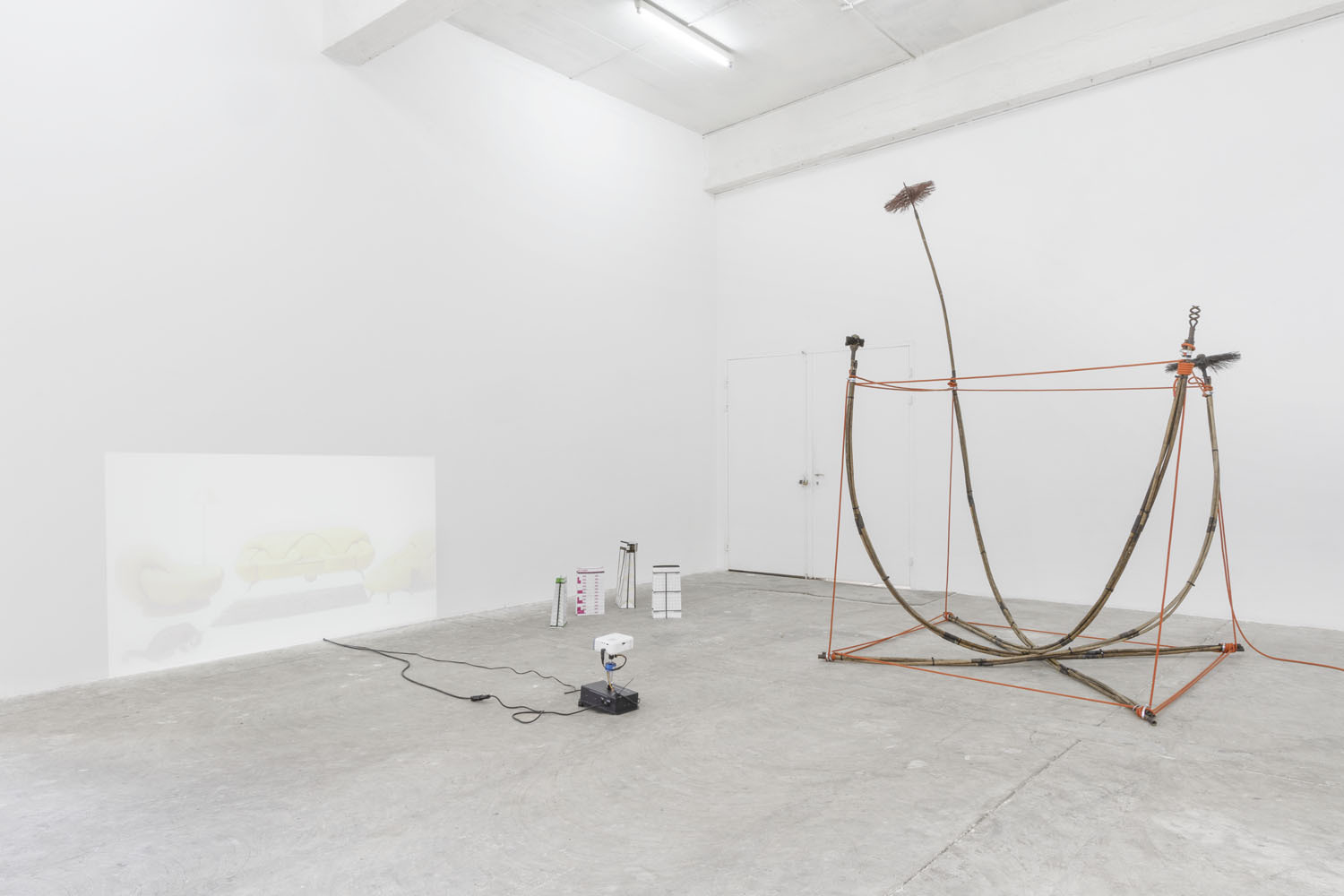
PROVENCE: Framing a group show under the narrative of the pressures of modernization can appear as a difficult talk, considering modernization as the ever-increasing gulping of personal space in the workings of capital, and in contrast the role of a curator in a group exhibition, who is supposed to leave appropriate space to each work while at the same time encouraging dialogue. Two works in the exhibition seem to directly deal with this issue, Sara MacKillop’s fashionable grocery bags made of calendars, her Wall Planner Bags (2022-24), collapsing different forms of representation and structures of organization together, and Morag Keil’s No Clock Is More Regular than the Belly (2024), a projector mounted on the turning mechanism of a disco ball. The small projector sends out his screen around it, sometimes passing over neighboring works, and - when it points to the wall in front of it - shows a scene of an animated cat licking its paw in a living room. What does it signal? PD: I think all the works in the show cope with this narrative and respond to it in interesting, singular ways but there is an otherworldly or existential element about the two artworks you mention: Sara MacKillop’s paper bag sculptures are to be arranged on the gallery floor like a miniature cityscape, introducing another scale within the show and a notion of contemplation. Morag Keil’s installation performs like a rudimentary metaphysical system showing the illusion of a static inhabited space created by the mutual annulment of two movements in opposite directions, namely the rotation of the disco ball motor and the horizontal panning of the tracking shot.
|
|
Exhibition view, Modernization, Circuit, 19.10-23.11.2024, Photography: Aude Mayer
|
|
|
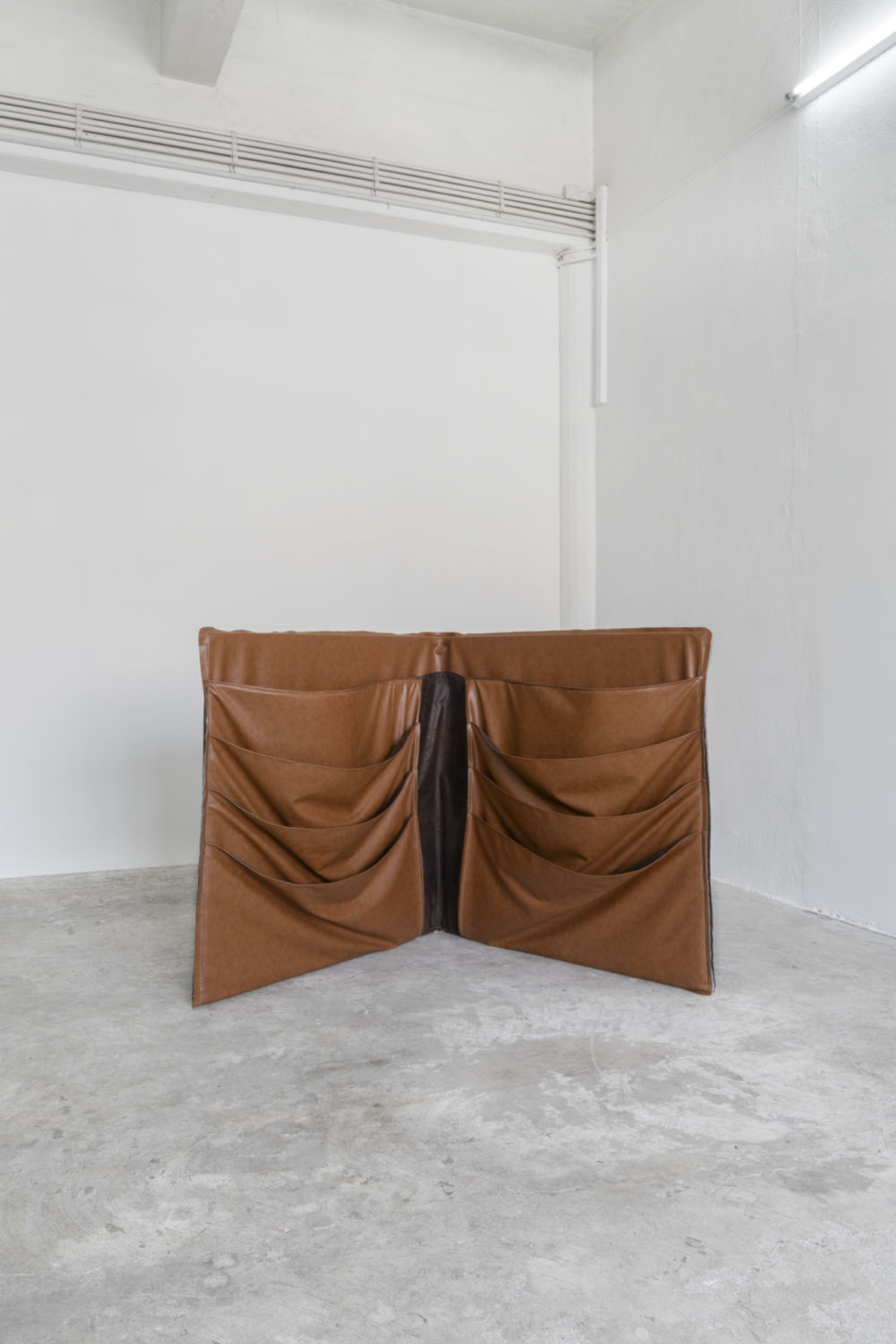
PROVENCE: How did you imagine coming to Lausanne, Switzerland, to present a group exhibition whose art scene and neoliberal framing is closely related to London and the UK - although neoliberal tendencies are surely global? Lausanne - and more generally the whole region of the Canton of Vaud - actually presents strong ties to neoliberalism, something another artist who recently passed by Circuit, Alfredo Aceto, tackled himself in his exhibition around the figure of Sergio Marchionne, the Italian industrial mogul and ex-Fiat boss who lived in the region. In the context of Modernization, I am particularly thinking of Kate Mackeson’s work, Inflation (2024), a human-scaled faux leather wallet. PD: I only saw Alfredo Aceto’s show online, but I believe that both in his show and in Kate Mackeson’s piece, garments and accessories are used to introduce questions of gender and power. The sleeve - used as motif in Aceto’s show- and the wallet convey an array of gestures and styling decisions. I imagine this Sergio Marchionne character, looking at the mountains from his villa by the lake with his jumper on his shoulders and the sleeves tied loosely at the front, in a “riviera” style that channels a certain kind of Mediterranean masculinity. The leather wallet is an object that is almost obsolete now, increasingly regarded as a luxury item. In Modernization, its inflated state gives it a comical fleshliness. It nods towards sculptural formlessness and the faux-leather gives it a 70’s feel. The two dachshund shaped draught stoppers placed along the back of the sculpture endow it with a reverse side, the side of penny-pinching middle-class quirky England.
|
|
Kate Mackeson, Inflation, 2024, faux leather, fabric and frame, caulking rods, 130 × 240 × 25 cm, Photography: Aude Mayer
|
|
|
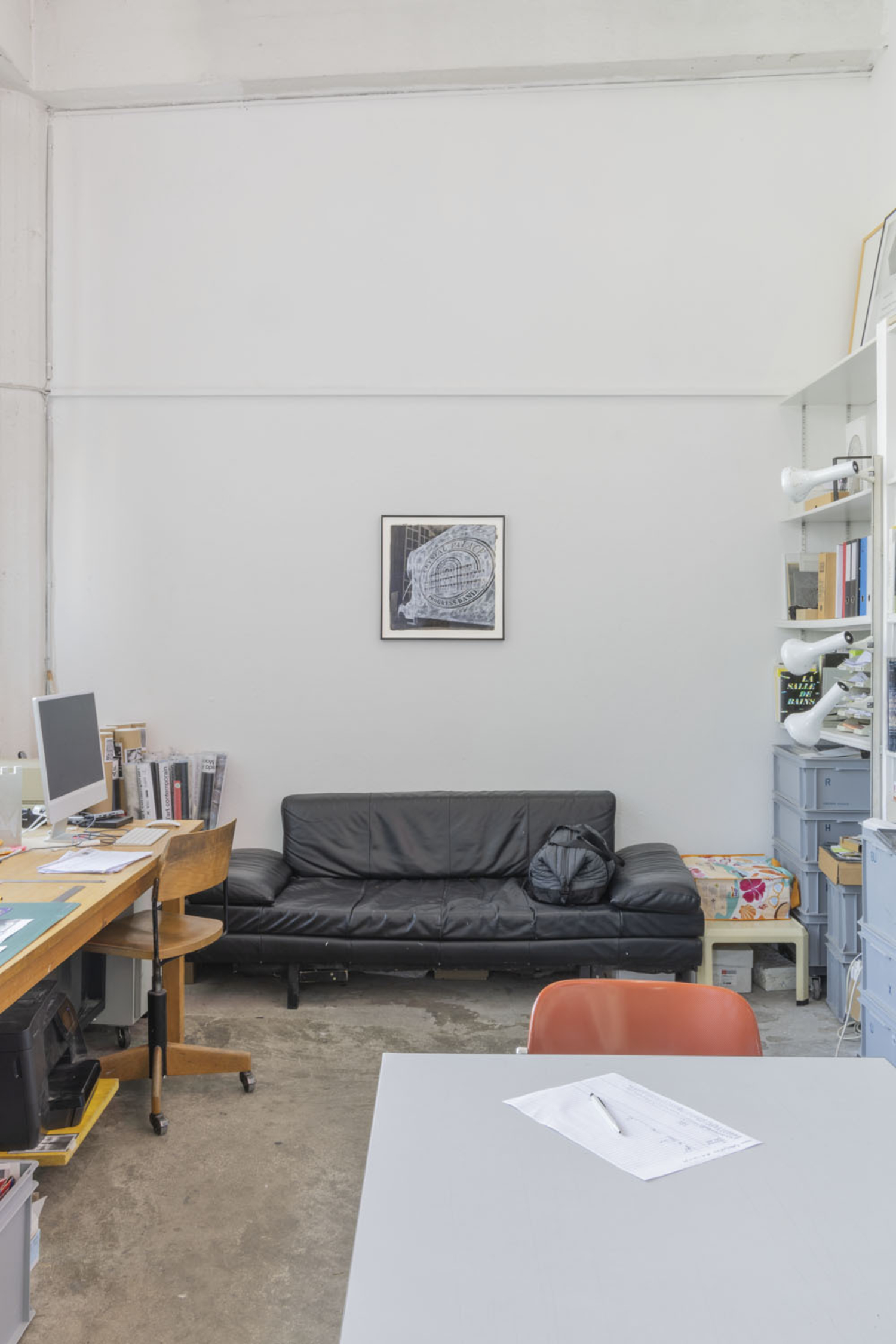
PROVENCE: You personally show two bodies of works in the exhibition, one of them being ink, pencil and watercolor on paper showing moving trucks in austere landscapes. This is connected to your work as a courier, is this correct? How do you find yourself as an artist in this socio-economical context which functions as backdrop for the exhibition? PD: I began this series of drawings during the covid-19 lockdown. At the time, I was driving part time for a small art transportation company and started taking pictures of the empty roads, crossings and interchanges that were usually congested with traffic to show to my colleagues. I started using these pictures to make landscape drawings, then adding a single fictional ghostly van flanked with the logo of an amateur orchestra from the area the picture was taken. I wanted to do something that would link my day job with my art practice, but I was doing it with a slightly ironic distance, trying to convey a feeling of dread and absurdity towards the situation and my own aspirations. PROVENCE: One of your drawings shows a white faded truck, almost phantomatic, on which we can read the brand, “Crystal Palace Progress Band”. It encircles a representation of what we understand as the Crystal Palace, a monument for the UK’s industrial revolution destroyed in a fire in 1936. As far as I know, there’s recurring aspirations in the UK to build it anew; something Mark Fisher could have surely envisioned? PD: Apparently the latest of these aspirations had come from a Chinese investment group interested in rebuilding the Crystal Palace. From what I could read on the subject, the project has been deemed logistically impossible because the transport network around the area wouldn't handle it. Also, reviving a building that was solely dedicated to the bombast of the British empire would probably come with a few ethical problems. Now Crystal Palace is first and foremost the name of a neighbourhood and a park in south London and the Crystal Palace Progress Band is a small amateur orchestra that would gather a few times a year, especially at Christmas. I like their logo as it depicts the façade of the now destroyed monument resembling a choir in tight formation with each window section looking like a human figure.
|
|
Exhibition view, Modernization, with Philippe Daerendinger, Amateurs: Crystal Palace Progress Band, 2022, ink, pencil and watercolor, 56 × 56 cm, Photography: Aude Mayer
|
|
|
|
|
|
|