|
Jacob Fabricius: How have you worked with NFTs in the past?
David Robbins: A few years ago The Green Gallery presented an NFT of a short video called Retrospective, at the June Fair at Art Basel. It was a good experience. No shipping, no storage, no fuss. Leaves the hands free to do other work.
Jacob Fabricius: Adapting a question posed by an early Richard Hamilton work, just what is it that makes today's NFTs so different, so appealing?
David Robbins: The NFT has survived its very public boom and bust. What is it now? Is an NFT a trading card, a casino chip, an artwork? All three at once? The NFT may be a nervous form but it isn’t going away. Digital technology has been too widely distributed, people are not going to stop innovating digital communication, and it’s logical that there be some way to digitally value a digital creation, whether or not we end up titling it by as awkward an acronym as the current one.
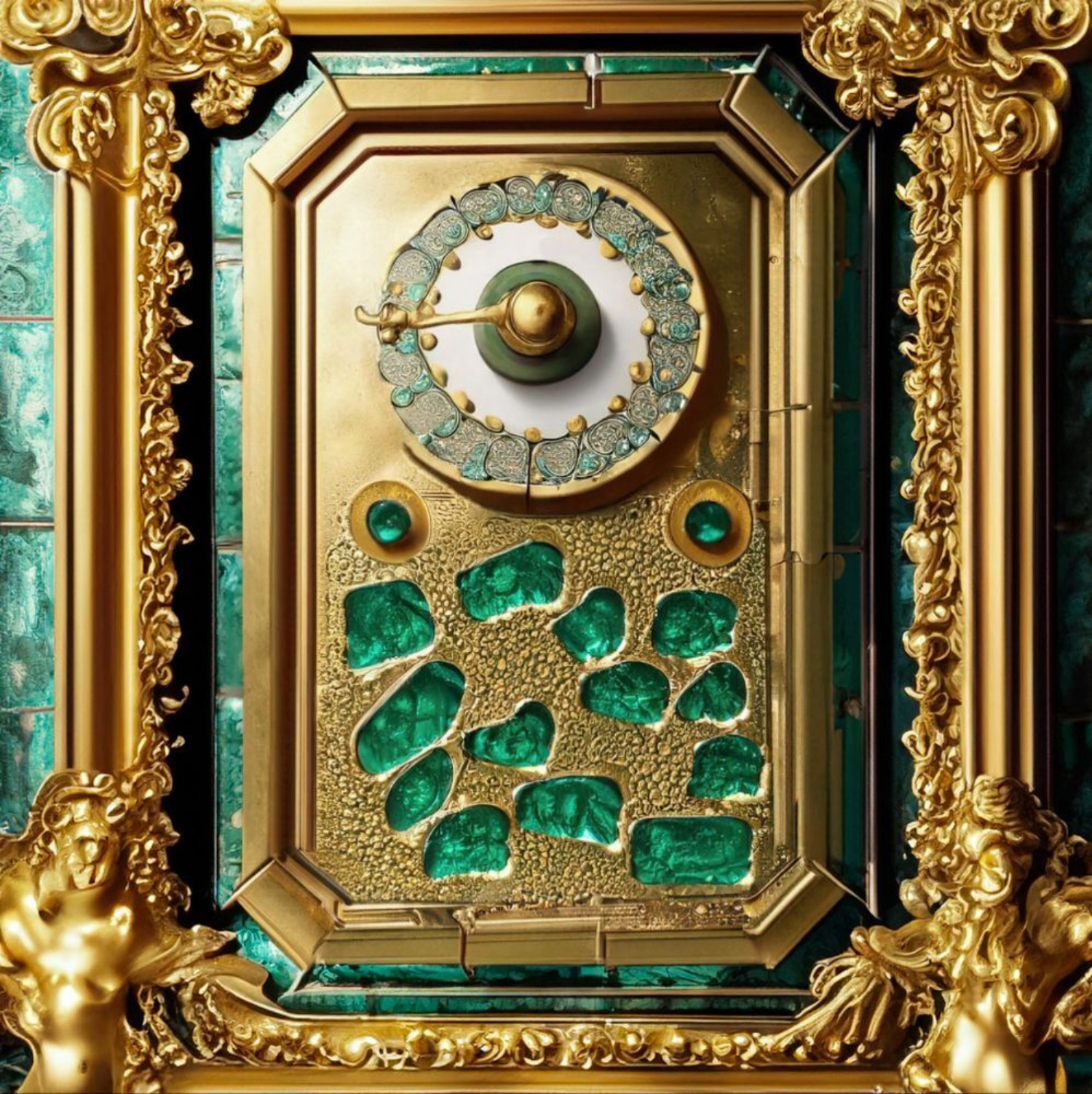
Jacob Fabricius: The Wall Safes are very inexpensively priced. I take it that’s part of the content?
David Robbins: Sure. First off, they could be assigned to another, art-adjacent category of invented communication — as you know, I’m interested in high entertainment and concrete comedy; see my books about them — and the pricing ought to reflect that ambiguity. Secondly, the Wall Safes are priced to participate in two economies. Where the pop economy looks to sell as many affordable units as possible and the fine art economy wants to sell the unique thing for the highest possible price, the point of intersection of the two economies is unstable. That instability appeals to me.
Selling art for a lot of money — personally I was never comfortable with that. Even in the early days, when I was at the white hot center of things in downtown New York, after working for Warhol, then educating myself by doing interviews with artists, eventually finding my way to Nature Morte in the East Village, mid-‘80s, very happy years, the market side of art never inspired me. I sold things, sure, but I was in it for the intellectual fun — an attitude toward the art game that used to be common then but, due to the cost of an art education today and the cost of real estate, is more rare now.
Jacob Fabricius: How does this series relate to your previous work?
David Robbins: The Wall Safes relate to early works like Talent and The Art Dealers’ Optical Tests and the lesser known Demographics series – all instances of comedic anthropology. When I think about art I tend to identify a pattern in the art system and freeze it in a form that displaces the pattern. From the beginning, the role of the artist was my material; I’ve always been more interested in the mortar than the brick. What Talent did forty years ago, crystalizing the contemporary artist’s role in business civilization with the entertainer’s headshot, the Wall Safes may well do for assetization!
Jacob Fabricius: We collaborated on your book Concrete Comedy: An Alternative History of Twentieth-Century Comedy. How does the idea of Concrete Comedy relate to this new body of work?
David Robbins: The Wall Safes are concrete comedy. I’m positioning real-world systems to produce comedic theater. Concrete comedy is the comedy of doing rather than saying. And it’s not make-believe. Happily, concrete comedy can be adapted to the new digital conditions, it’s not just an analog thing. I’m not concerned to contribute to art history, I’m about contributing to and extending the history of comedy. I’m not in cynical relation to art, I’m in sincere relation to comedy. It’s there my refinement is located, and my artistry, such as it is.
Jacob Fabricius: You have been in and out of the art game for a very long time.
David Robbins: That’s a larger conversation but yes, after very active participation I withdrew from the art system, more than a dozen years ago now. I wanted to find out what my imagination did on its own, without its being constantly formatted to think in terms of exhibitions, as is the way of the “professional contemporary artist,” a model I inherited from my time in New York but ended up rejecting. The artist doesn’t just make art, he or she also makes a model of the artist. Turns out that, unprompted, I wrote books and made videos, which I think of as personal television. Any modern person is deeply imprinted by many kinds of synthetic experience – TV, movies, pop music – not just art, and this entertainment imprinting, when not suppressed in the name of art, results in a very different kind of imagination, one which I consider to be more free than the artist’s, whose goal is, invariably and to my mind narrowly, art. My mind has generated other imaginative categories – concrete comedy, high entertainment.... I don’t identify as an artist but as a one-man entertainment company, approaching entertainment through material culture rather than traditions of performing or story-telling. My fidelity is to my own imagination, as everyone’s should be, and I accepted long ago that no professional context exists for the way my imagination works. I well know what the art world can and can’t give me. I’m not angling for a comeback! From long experience I know that the art world and I don’t see eye to eye, pun intended.
Jacob Fabricius: How do you see the art circuit now? Clearly you’ve taken note of the changes in the gallery’s role within the art market and in the way collectors purchase works for their investment value.
David Robbins: I see the situation in terms of supply and demand. What in the art equation has permanently changed? Supply. Fifty years ago contemporary art was a fragile thing made by a few dozen people in a few cities, and supported by a handful of museums, colleges, and alternative spaces. Today we have a guaranteed supply of the stuff, with thousands of self-identified contemporary artists around the globe, each of whom is producing dozens, in many cases hundreds of artworks a year. With the supply guaranteed, power moves out of the hands of artists and up the food chain, into the hands of non-artists – dealers, curators, collectors, investors – who direct an unceasing flow of product. Art becomes whatever best serves their aims, which has the effect of reinforcing a narrow definition of the “artist” as someone who makes marketable objects for the art system. Which development, I contend, warps the organic evolution of the artistic imagination. Assetization, where the art’s principal “meaning” is its value in the commercial marketplace, is a symptom of control having moved out of artists’ hands and up the food chain. A “buy low, sell high” narrative, of going from less to more – art as the land of opportunity! – has become the narrative that overrides all others. Is that what art is for? Maybe we ought to view assetization as a tax on the acceptance of modern art and its progeny, contemporary art.
Who or what are the Wall Safes mocking? Well, who is it that has directed the assetization of the art object? The poor? Of course greed isn’t limited to the rich, they just get more times at bat! Assetization, financialiization — call it what you will, it has infected everyone’s perception.
We now look at art self-consciously, through the prism of market value. Mocking the prism is the least favor we can do ourselves.
|