|
PROVENCE and iLiana Fokianaki
|
|
Kunsthalle Bern's Code of Conduct
|
|
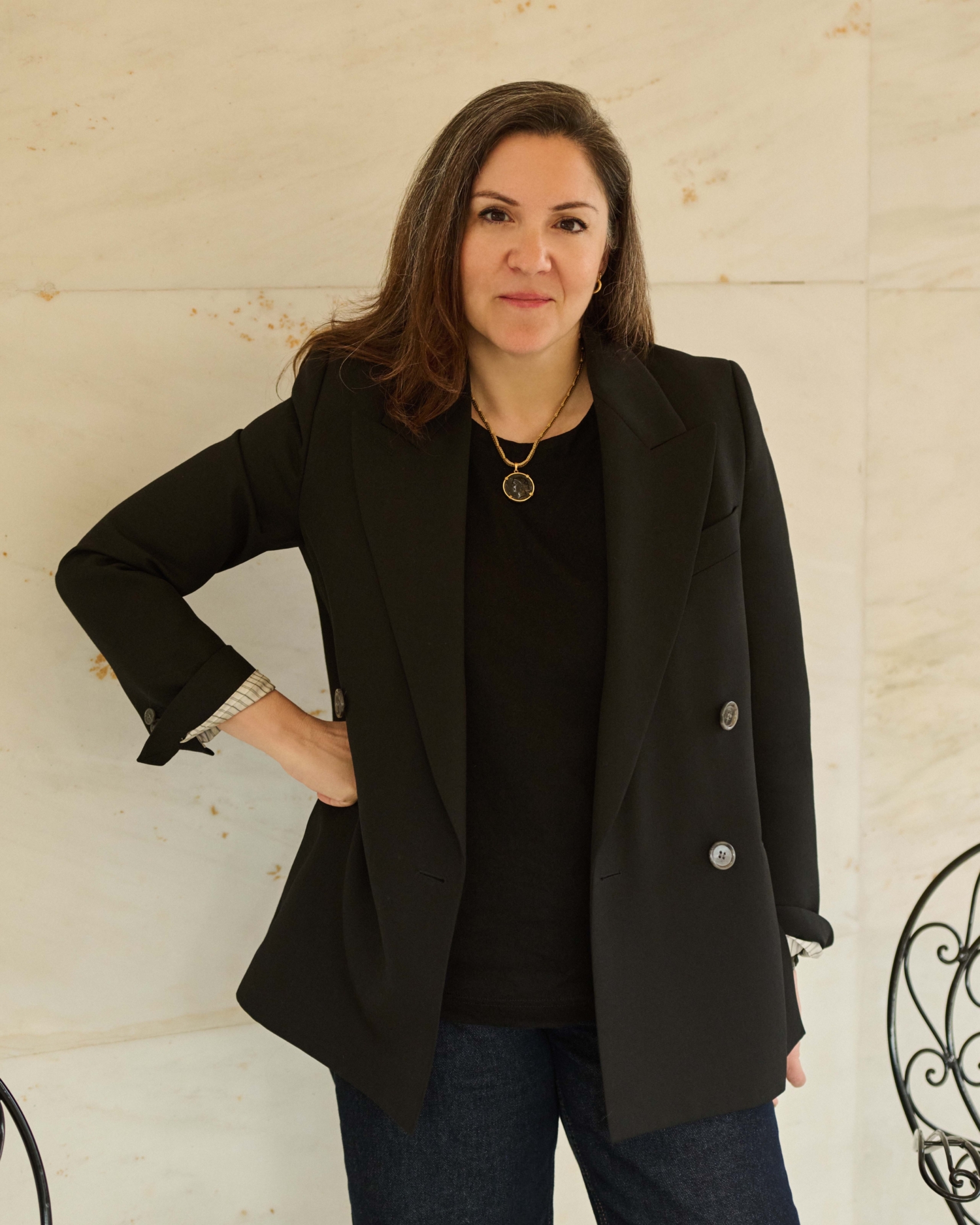
Portrait iLiana Fokianaki, director Kunsthalle Bern. Photo: Panos Davios.
|
|
|
PROVENCE: Before discussing the details of the Code of Conduct, I am curious about its origins. You have invested considerable time and energy into developing this document, which clearly goes far beyond a formal institutional requirement. Was there a particular experience, observation, conflict, or moment that convinced you such a Code was necessary? I read your interview in Frieze last year, but it remained somewhat unclear to me what initially motivated this process. What problem were you trying to address, and why did it feel urgent enough to dedicate more than a year of work to it?
|
|
|
iLiana Fokianaki: I have been in conversation with the professional who assisted us to write the Code, and we have worked together in the past, organising a symposium at the National Museum of Contemporary Art of Greece, in Athens, that discussed ways to rethink what ethical conduct means in our field, from the perspective of museums, artists and collectors. Overall, what we once called institutional critique has been part of my ongoing research and interests, but my approach is to think of it introspectively, through my own work and conduct as a director of an institution. I have spoken in the past about “instituting” as a verb, an active way of leading institutions that I would like to think begins with self-critique above all. We took a long-time preparing this document, and there was a reason for that, to not fall into the trap of just ticking a box. But I must say there was no requirement or request about the code; we collectively felt as a team that framing our conduct would benefit us, artists and audiences alike.
|
|
|
PROVENCE: Much of the Code focuses on responsibilities, procedures, and institutional safeguards. From an artist’s perspective, what are the concrete advantages of such a document? How does it improve the relationship between Kunsthalle Bern and the artists, curators, and collaborators it works with? And what impact has it had on your own team and daily institutional practice?
|
|
|
IF: Well, primarily, I think it sets a tone, in regard to how we want to work, which presupposes checks and balances, and I think many artists approach institutions with understandable scepticism, often because of previous experiences of opaque decision-making, delayed payments, or unequal power relations. The impact is on many levels, and as we say, the code is a living, breathing thing that grows or withers with us and from us. We think differently about transparency, and about how to be not only efficiently sustainable but also respectful in other ways. It might make us pause here and there, but I would say it has not slowed down our process; it was more of a reset.
|
|
|
PROVENCE: Kunsthalle Bern has historically been a place where artists challenged institutional structures and conventions. Today, the institution itself publishes a 26-page Code of Conduct. What does this shift tell us about the changing role of art institutions in the twenty-first century?
|
|
|
IF: Kunsthalle Bern has historically been a place where institutions themselves became sites of experimentation. I see the Code as part of that lineage—not because ethics replaces artistic experimentation, but because institutions themselves should remain open to critical reinvention. This Code speaks of the legacy of the Kunsthalle and to it. It is in dialogue, if you will. I think the Kunsthalle differs from all other Kunsthalle in Switzerland exactly because these institutional structures were challenged not only by artists, but its directors. Apart from Szeeman, I also think Jean Huber Martin, Loock, and Fibicher contributed to this direction and were thinking “through” the institution. Also, I believe the code is a comment regarding the art world itself currently, where so many undefined gray zones allow for shady behaviours. And I am glad that this conversation is on the table. We saw recently the article by Marc Spiegler, the former director of Art Basel, in the NYtimes, and the article by Marc Glimcher of Pace Gallery. There is a desire, this is clear, to rethink how we have been working until now. And there have been initiatives in recent years in this direction, and I feel this can only be a good thing.
|
|
|
PROVENCE: In your introduction, you describe ethics as a language without which the institution would fall silent. At the same time, the Code outlines a remarkably detailed framework of rules and procedures. How do you balance institutional regulation with trust in the judgment of staff, artists, curators, and collaborators?
|
|
|
IF: I dont think it is either or. Yes ethics is a language that institutions can speak and without them, especially the humans within the institutions, are silent. Because let's not forget institutions are not abstract ideas, or just brick and mortar, they are composed by people, who define them. It is funny you describe it as detailed, we think it is a general overview and outline of how we want to work, a guideline rather than anything else. Institutional regulation and the trust in the judgement of staff, artists, curators, and so on, somehow go hand in hand. Trust without shared principles easily becomes arbitrary. The purpose of the Code is not to substitute individual judgement but to provide a common ethical language through which judgement can be exercised. The regulations are not legislation; they are proposals towards a direction. But them being said out loud if you will, in a document, that sets the tone.
|
|
|
PROVENCE: Compared to more conventional codes of conduct, such as the recently published one by Bühnen Bern, the Kunsthalle Bern document reads almost like a governance and compliance manual. To what extent does this reflect a broader tendency for art institutions to adopt management structures and corporate forms of accountability?
|
|
|
IF: Hmmm, that is a great question. I think I will respond with a story our specialist Piergiorgio Pepe told us, that he was approached by a massive conglomerate in Germany to look over their code of conduct, which was roughly one A4. When he pinpointed what needed to be elaborated and changed in regard to conflict of interest, they said: “Ah, no, here in Germany we do not have corruption; all these things are unnecessary too managerial”. A few months later, the Volkswagen scandal broke at the European level. So, traditionally, I would say that the heads of corporations are forced to have codes of conduct, corporations have codes because regulation requires them. Our motivation is different. The Code is not about legal risk management; it is about ethical accountability. It is actually not a management structure; it is a pathway to provide equity, respect and ethical ways of working. And I would say that there is nothing managerial about that, on the contrary, I would say this is a radical way of working, daring to want checks and balances.
|
|
|
PROVENCE: PROVENCE has repeatedly published texts addressing precarity, unpaid labour, and economic inequality within the art world, for example in our Exhibition Rider. Although the code commits the Kunsthalle Bern to fair artist compensation in accordance with the standards set by Visarte, the professional association representing the interests of visual artists in Switzerland - do you think this goes far enough? Should institutions be thinking more radically about redistribution and economic justice within the cultural field?
|
|
|
IF: This is an excellent question. Without culture, we are a dying society, and the more we invest in culture, the better life is for everyone. I think COVID taught us this much. And we are at a point where we all demand things from institutions, and surely there is so much and so many different things that an institution can do with X amount of funds, but primarily, an institution needs to compensate fairly so that its team and collaborators are happy. The art world is generally one that thrives on unpaid labour. I personally come from the Global majority and know that well. Institutions can redistribute only what they are resourced to redistribute. If governments expect ethical institutions, they must also fund them ethically.
|
|
|
PROVENCE: In the Theory of the Young Artist, PROVENCE argued that we are witnessing an increasing bureaucratization of cultural production. One could argue that artists today spend an extraordinary amount of time adapting themselves to funding criteria, application formats, reporting structures, and institutional frameworks. PROVENCE has often argued for the opposite approach: fewer administrative barriers, less paperwork, and even forms of basic income that would allow artists to focus on producing work rather than justifying it. At the same time, the art world has become a highly professionalized global industry. Does such an industry inevitably require instruments like a Code of Conduct? Or are there aspects of artistic life that become diminished when they are subjected to the same logic of governance, compliance, and accountability that increasingly structures other sectors of society?
|
|
|
IF: Generally, I think the idea behind this question does not distinguish between bureaucratization and ethical accountability. The art world today, and especially the art market, thrives due to the lack of rules, codes, and ethical conduct. So, looking at a code of conduct as “professionalisation,” I think, is missing the point. A code of conduct is a leap of faith and a protection mechanism in a fully wild landscape where the “wolves of Wall Street” have been roaming free. Maybe that is a better way of thinking of it.
|
|
|
PROVENCE: The Code contains numerous hypothetical case studies accompanied by clear and definitive answers. One example specifies under which circumstances employees may travel premium economy, while another explicitly prohibits accommodation in five-star hotels. How come you believe ethical questions can be standardized in this way? Or the other way around: has your institution in the past witnessed misconducts in this field that now make you feel it's necessary to put this into a code?
|
|
|
IF: These examples are not unusual. Similar guidance exists in universities, public institutions, and many nonprofit organisations. I think you are seeing the code as a legislative document, but it is not. It is saying what we have collectively thought is fair and careful conduct. We won't be offering five-star hotels to journalists who write articles about us. The point is to avoid creating situations that could reasonably be perceived as compromising independence. But if we are hosting an 89-year-old artist or someone with health conditions, they can get a five star hotel and a business airplane ride.
|
|
|
PROVENCE: Reading the Code, one senses a desire to reduce uncertainty through clearly articulated principles and procedures. Contemporary art, on the other hand, often thrives on ambiguity, contradiction, and unresolved questions. Do you see these two impulses as complementary or fundamentally in tension with one another?
|
|
|
IF: A code of conduct reduces uncertainty in the procedural part of a collaboration, not the content and process of a creative process where we do not interfere. So the “contemporary art thriving on ambiguity, contradiction and unresolved questions” that you just described, as in: the practice itself, the research process, the final result, the aura of the artwork, etc etc etc., that we have nothing to do with, nor does the code. If anything, ethical institutional practices protect artistic ambiguity by ensuring artists are not distracted by preventable contractual or financial insecurities.
|
|
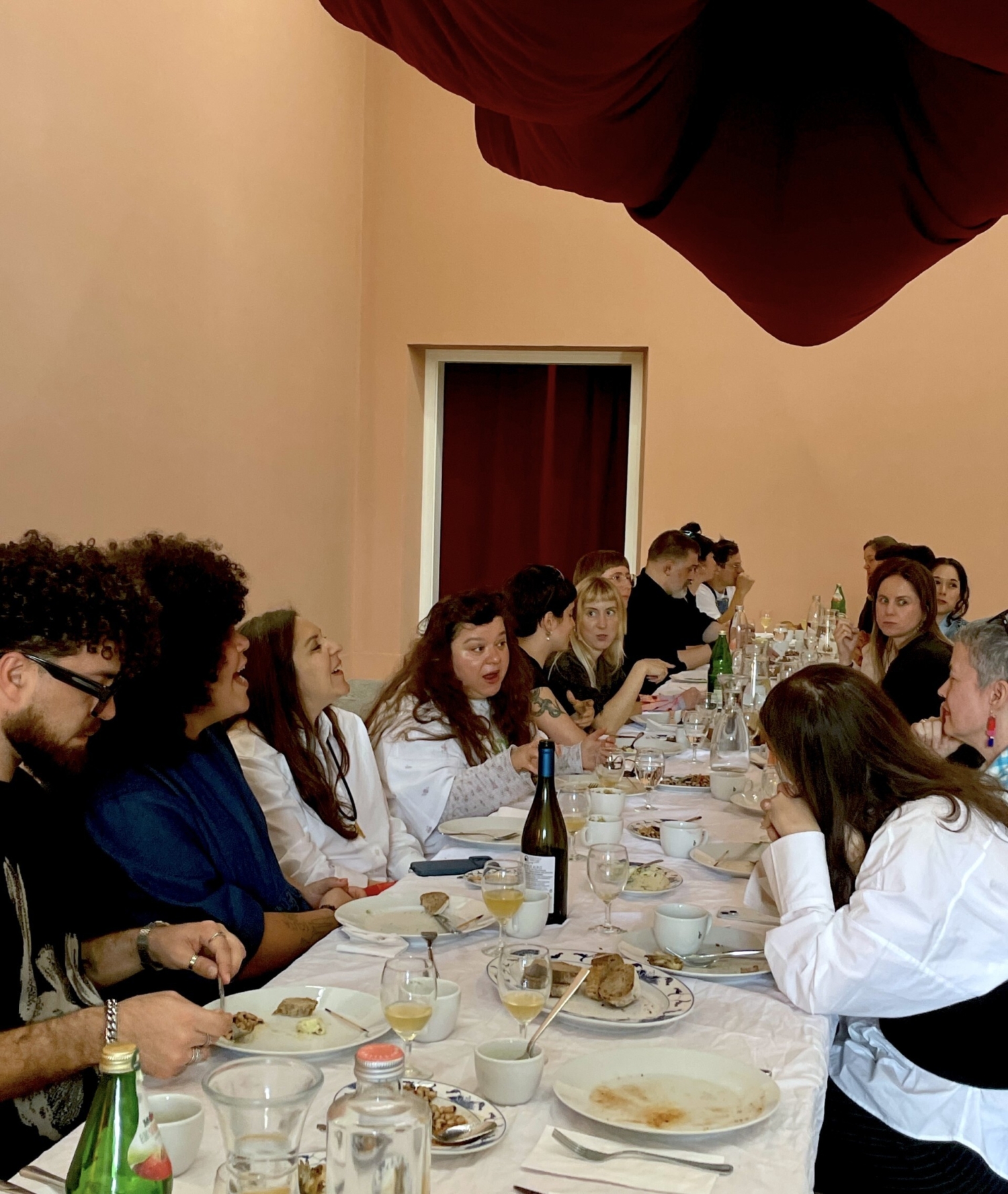
Collective lunch at the opening of the summer exhibitions at Kunsthalle Bern. Photo: Cedric Mussano.
|
|
|
|
|
|
|