Editorial Meeting Gone Public:
A Re-Mixed Re-View
|
|
|
No Nostalgia
“The shrinking of many subcultures, ... this idea of the globalized art world, that independent writing is completely consumed or digested through this kind of global mechanism that takes the whole space somehow.” (Paolo)
“There’s no lack of magazines, there was no lack of magazines in 2009.” (Jeanne-Salomé)
but yet we’re in “a decentralized art world, where the notion [of “the”/one art world] doesn’t exist anymore in the same way it did.” (Sabrina)
(Museums pretend it does, though? Just not in magazines? Also Criterion Channel and NTS are two approaches to successful platforms, one “the canon” and the other plurality-with-quality. In terms of magazines, does Vogue still work? idk, yea maybe?)
“Platforms seem always to be constructed with that idea of resolving a lack. And all three of you talked about something that was missing when you created your magazines as a way to resolve it.” (Paolo)
Personal trajectories vs. historicization
Magazines as outreach; where ppl find their place in the art world / in the discourse. We didn’t talk much about generations but magazines play a key role in that.
“It’s often a role taken by galleries to provide a familial landscape or an anchorage for the work to be read in a specific discursive field.” (Paolo)
“When I was maybe 13, Artforum was expensive ... it was a big thing to get for Christmas.” (Mitchell)
His gateway drug was David Rimanelli on Roni Horn; Sabrina’s her discovery of Rhonda Lieberman in the 1990s. (Both great, both in Artforum.)
“We were coming out of school and we’re like, How are we going to make it? Oops, what are you going to do with a master’s in arts given our personal situations: not owning real estate to the brim or anything like that? ... Just being like ‘Okay, are we going to go work at the library now?’ It was difficult.” (Jeanne-Salomé)
“We literally did the thing we thought we needed, hoping it would save ourselves.” (Jeanne-Salomé)
|
|
|
“The thing about the artist’s voice” (Anya)
“I think that the artists are the most important.” (Mitchell)
As Mitchell puts it: they may not always know it but they are the centre, without whom nothing holds: curators, galleries, institutions. Hauser & Wirth also says that “artists are at the centre of everything we do.” I said I saw a danger in the mythical heroic position of the artist who sometimes even doesn’t want to, or isn’t the right person to, speak. “The cultural demand that is put on the artist is also to legitimize the system in which they are mainly unwillingly part.” (Alex)
“I don’t think the artist is the most trustworthy person to talk about the work, or, possibly, not the best.” (Mitchell)
“Authenticity”
—Matthias: “I have a question. You’ve now mentioned several times “authenticity”.
—Melanie: “Yes, it’s not my favorite word”
“Maybe we can move closer to a PROVENCE idea where authenticity seems like a good value to sell today.” (Paolo)
Melanie’s interviews at Kunsthaus Glarus (and before, I learned) are great. But as artists are required to publicly narrate (or defend or justify) their work, I worry that they also perform the identity of “the artist” more broadly.
“Are they sometimes staging that authenticity, or sort of mimicking something, or play with that, being hyper-alert to the situation?” (Tobias) (we see you TK)
Writers!
“Nobody has yet, in almost an hour, mentioned writers at all” (Sabrina) → the role of the writer, as someone who has the role “to pivot to that central thing, which is the narrativity of art, the sort of responsibility to moving to, contributing do discourse with. It’s complicated to have the understanding of where it’s coming from while at the same time knowing where it needs to be going” (Sabrina again)—and the difficulty of the writer’s role—given that the addressee has become more vague? But aren’t they always a fiction, le peuple qui manque?
|
|
|
Community, Scene>Audience
“We were not particularly satisfied with the intellectual stimulation that we were having and we saw this as something quite common in our generation.” (Rubén)
“We got a hundred people writing us from all around the world, and that really creates this sort of very positive energy and very nice sense of community that has opened many, many opportunities for us as editors, but also for many of the people that have worked with us.” (Rubén)
In the art world I sometimes think almost everyone “follows” almost everyone on the cursed socials but also it’s easy, almost compulsory, to meet real people through the concomitant infrastructure of openings and semipublic discussions like this one.
Readers
Attention wrought back from the overkill/flooded zone is a form of grace. Relearn how to read! (Mitchell, ok: “On the first of the month I read Artforum cover to cover before 10 am. Every magazine that comes in, I read cover to cover.”)
Apparently average screen time in the US is now 42 hours a week of “content.” No wonder I am still only on page 78 of Barbara Tuchman’s A Distant Mirror: The Calamitous 14th Century (1978).
|
|
|
Language
“The more creative direction, the more editorialization, the more branding and in-house private-sector publication a thing becomes, the more the language moves towards Frieze, towards the house style, towards something.” (Sabrina)
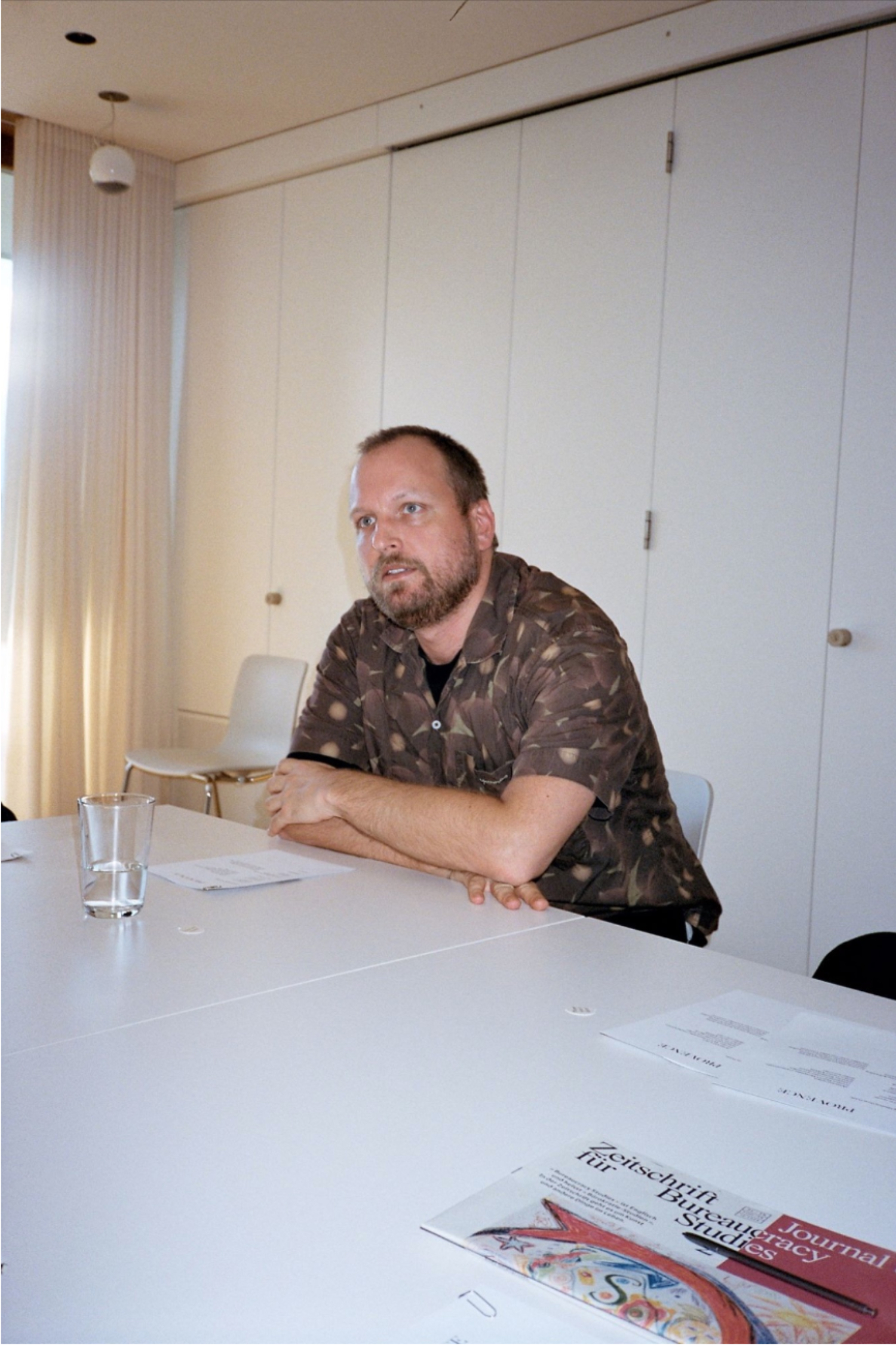
Matthias Sohr’s Journal of Bureaucracy Studies is super interesting to think about and hear explained. It brings so much up short: the art world’s explicit and implicit framing, not least mine here. Its takes on “art and other things in life” in multiple simplified languages: French “facile à lire et à comprendre,” “Leichte Sprache” German, “easy-to-read” English, and “lingua facile” Italian, yet is situated (partly) within the supposedly sophisticated, wordy art world, where it exists as a disruptive force, a conceptual intervention as well as what it says it is: a journal focused on the language and aesthetics of accessibility. (In the history of the contemporary art, says Mitchell, “Part of the cost to gain more money was pushing out the public.”)
Editing
“Sometimes we have texts that are really not so well written, but we try to read them as best we can.” (Rubén)
“We strongly focus-direct what people are going to write about.” (Rubén)
“The editing is important. Not only editing of direct speech, but accessing something that’s maybe more true in the process of editing and figuring it out.” (Sabrina)
The dialogue of writer and editor as a site of meaning generation, even of greater truth! <3
|
|
|
Branding and (self-)marketing
“I have to say, I know I feel like I’m the capitalist in the room, I’m representing that despite my full will.” (Jeanne-Salomé)
“In this incestuous kind of system, I think it’s about being transparent and smart about it, and in a way everybody knows.” (Jeanne-Salomé)
Ursula magazine and the gallery Hauser & Wirth: “If it seems like you’re reading marketing, then it loses its function.” (Alex)
“The magazine is sort of the portfolio piece, the business card.” (Tobias)
Precedents (“in-house”): Colors from United Colors of Benetton; Acne Papers.
Re Novembre: “The idea was never the audience, it was really us wanting to do shit and being able to pickup the phone to call the cousin of Miuccia Prada maybe.” (Jeanne-Salomé)
Content
“We’re talking about the aesthetics, we’re talking about the advertising or the maintenance of sustainability, but we’re not talking much about the content.” (Brit Barton)
[Aside: Carly Busta from New Models, not present, later, phone-a-friend: “‘content’ is in zombie mode because the creative act happens either an order higher (at the level of an engineer setting the parameters for a platform or of a scene developing a posting style; anything that sets the substrate and protocol for communication)—or it happens an order lower (at the level of the erstwhile ‘audience’ or ‘viewer’) via fanfic, commentary, any response or further iteration/metabolization of the content.”]
The new issue of Novembre that Jeanne-Salomé brought to La Becque was almost without text, despite/via the upcycled Natasha Stagg quotation on the cover: “We have always had the same problems which means we have not solved them with the advice offered by magazines.”
Money and Freedom
Does writing for less money give you more freedom, as Mitchell claims? Perhaps yes?
“I don’t know about looking around for some mom and dad to be like ‘Good job. Here’s some cash for doing something no one asked you for.’” (Mitchell, to laughter)
“I think the thing that really scares me about art writing these days is that there are so many places where it’s just becoming very confined to something” (Sabrina)
“The fact that we constantly have to show products, it’s a necessary evil. I also love products. I always did.” (Jeanne-Salomé)
“The main motivation to still do it it’s to meet people who work on things—I mean, to do things I wouldn’t otherwise.” (Jeanne-Salomé)
|
|
|
Habermas Whack-a-Mole
He kept coming up only to get knocked down: boo Habermas! The world is too far from his idea of reasonable people convincing one another through the persuasive force of better arguments; everyone agrees that’s not how the (our? their?) world works.
The Attractive Center
Magazines as a centering force for cultural energies—loose enough, tightly focused enough.
“There can be a sort of attractive center to each issue with a theme. And that brings in people who are vested in whatever that subject might be, vested in that world , and also vested in the larger sort of proposition of the magazine. But with that, there’s also freedom.” (Sabrina to Rubén)
“I like that these [older?] magazines function to generate an aura around something that’s not actually visible or concrete, but it’s in a relationship to value and to access and it can be leveraged.” (Alex)
|
|
|
Doom I
“Artforum, Mousse, Kaleidoscope, Frieze: magazines that have no idea any more who should read them or for whom they’re being produced.” (Tobias)
“I think the danger is that the magazines lose relevance, that art loses relevance, that writing loses relevance. So there’s this constant battle to renew the legitimacy structurally.” (Alex)
Doom II
Signs of the panicked urgency inflicted (or programmed) by our accelerationist present were largely absent, curiously. Sure, it ain’t easy, there’s not lots of money in magazines, but it was always like that everywhere outside the mainstream. But what about that we are living through collapse and everything is moving so fast and it’s about figuring out what things to hold on to and what to abandon during that process? Is that real?
Endings and New Beginnings
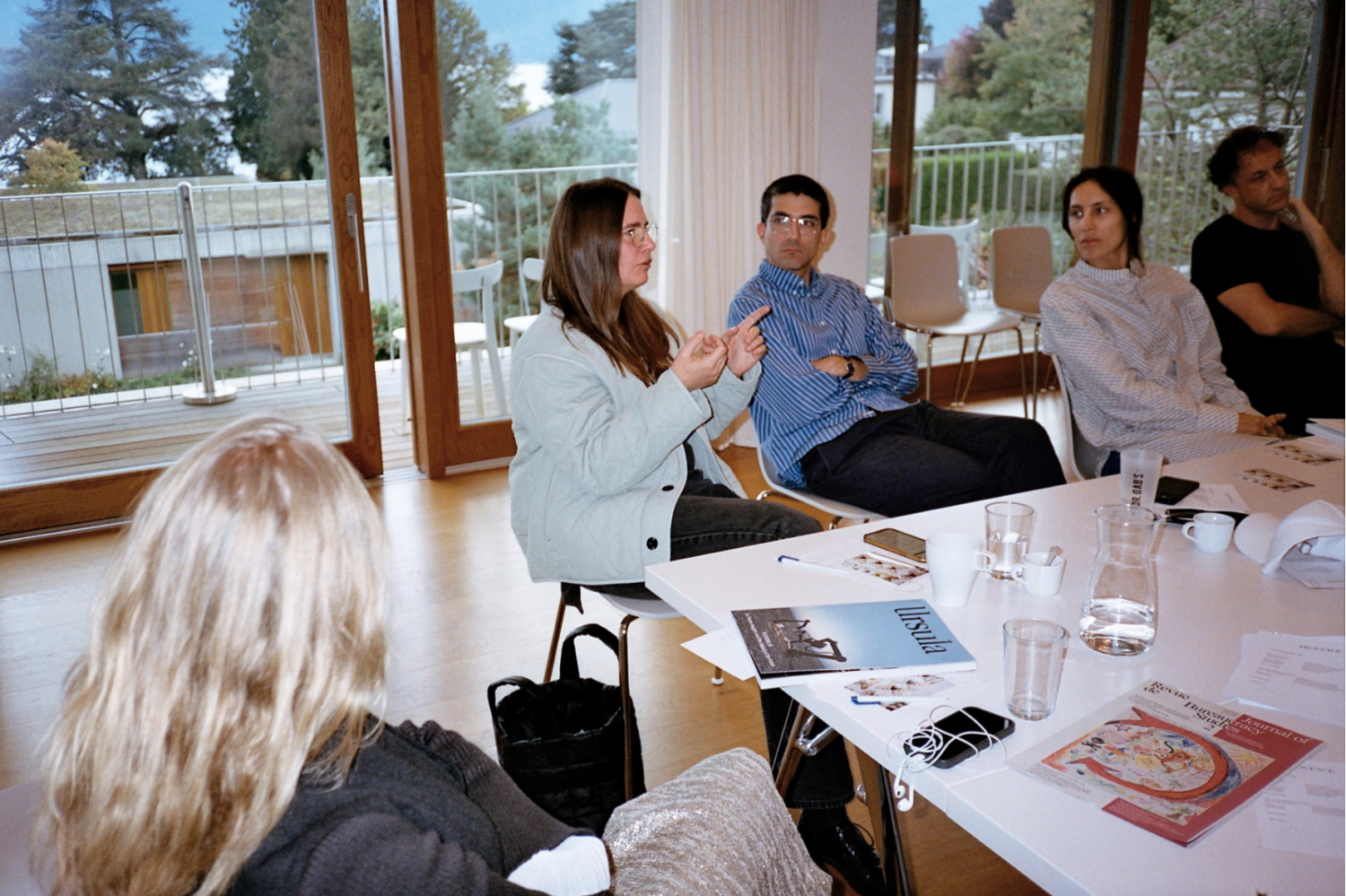
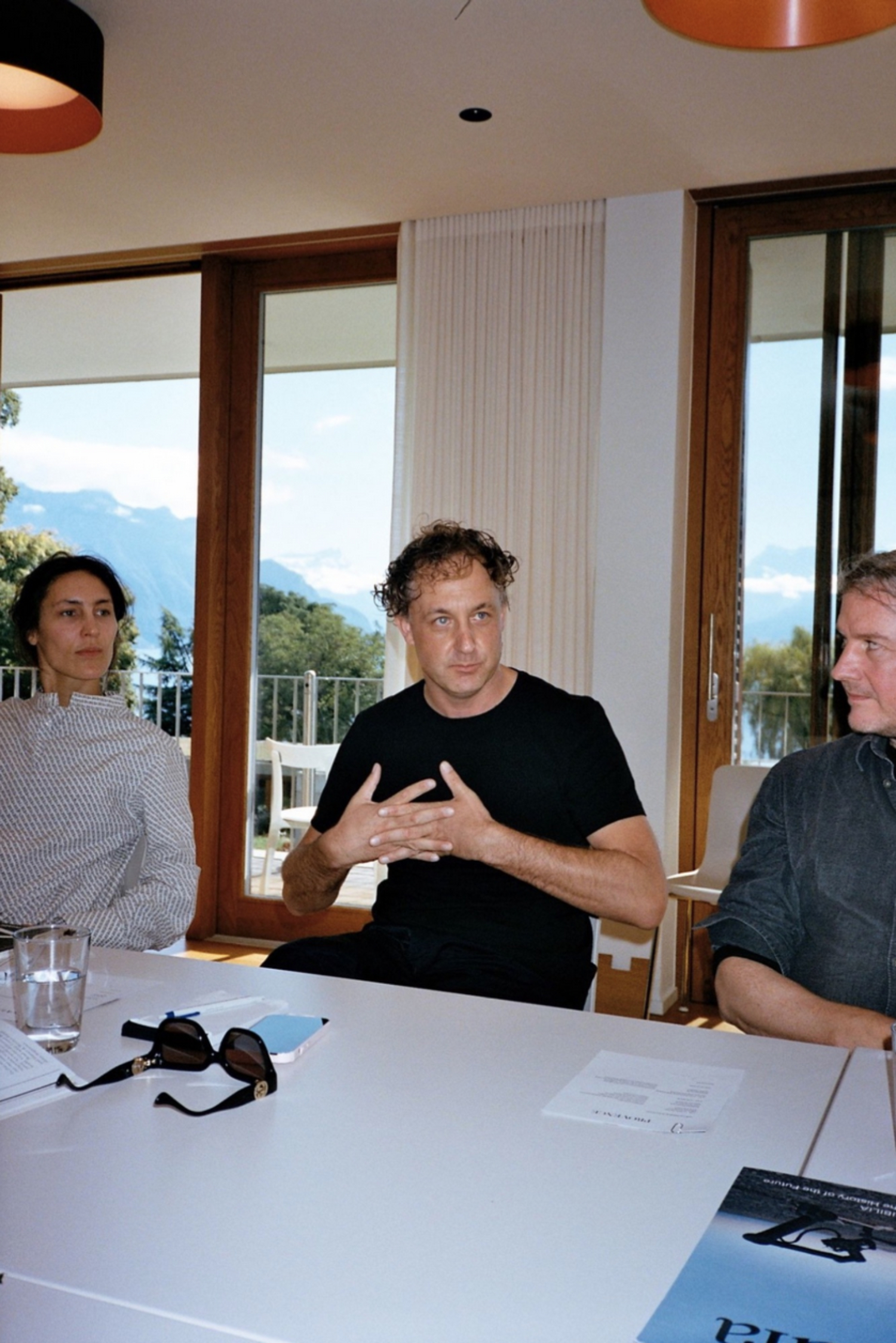
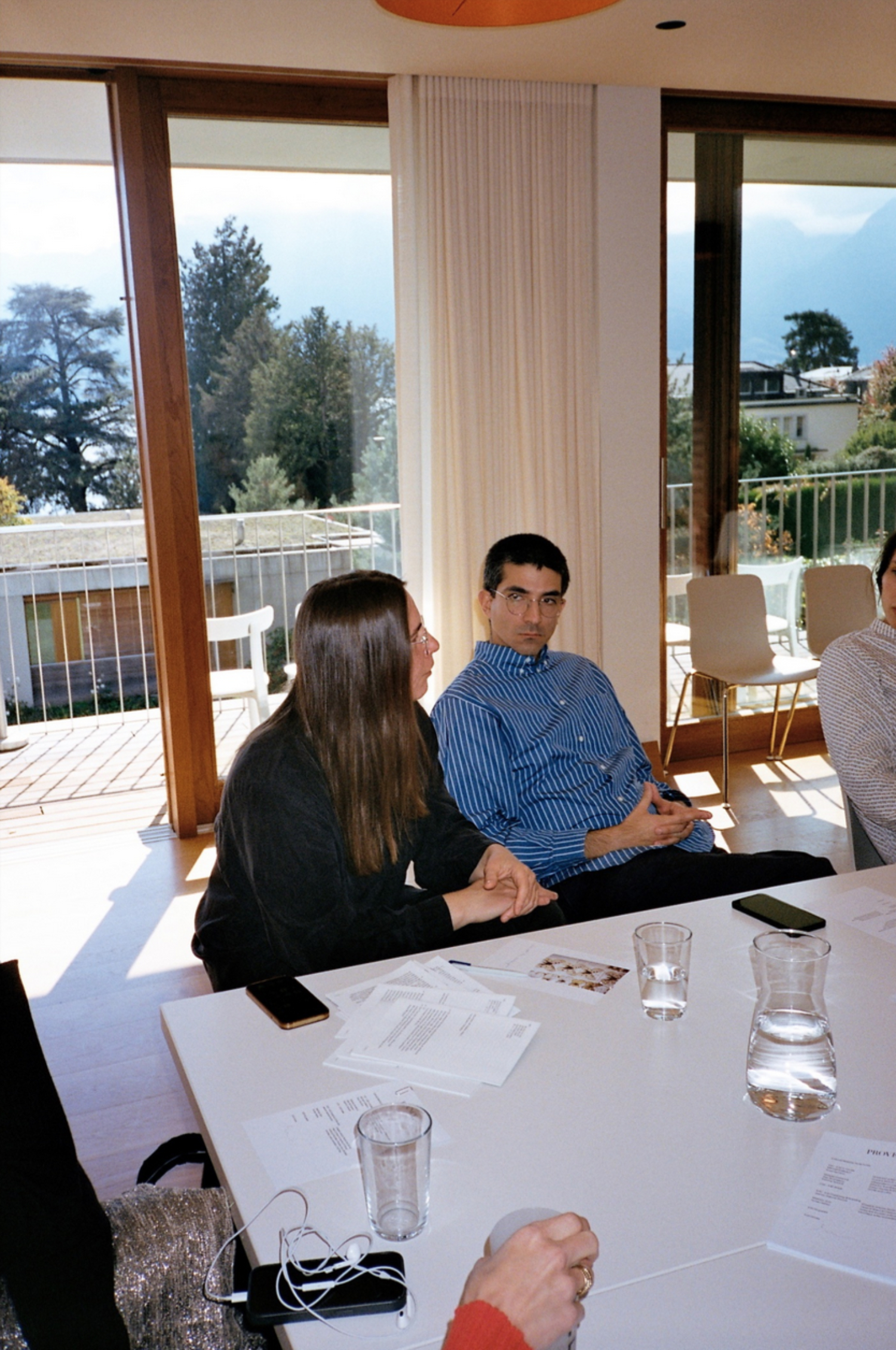
While it was very lovely to have “our own” version of Swiss art-discourse luxury—the view, pix of Nabokov’s butterflies at the local nat. hist. museum courtesy of PROVENCE’s own Samuel Haitz, beautiful La Becque and its setting, smart ppl., wine on the terrace, the event overall, itself (thank you!)—I wondered at the time if we were avoiding confronting the harder-to-talk-about shitshow beyond this frame. Art often seems hardly to matter; its content even less. Can its machinery be repurposed; should it be? Cultural criticism has, for now, eclipsed art criticism. I hope both thrive. For these days, though, I’d recommend Ben Davis’s take on the contemporary mixture between the horrible and the stupid here, and K Allado McDowell’s Am I Slop? Am I Agentic? Am I Earth? on the emergent era of “intimately hybrid, human-AI selfhood.” And Apollinaire's “Little Car,” and more poetry in general.
In the meantime I am also convinced that the lure of the dark attractor is part of the danger; we need to make a practice of looking elsewhere, at what might grow in the shadows, to stay sane.
“Given that the conditions of art writing are so horrible for most people, you focus too much on that you start to crumble.” (Sabrina)
“I think we haven’t spoken about failure enough,” Mélanie Letoré said late in the afternoon.
“Let’s get drinks now” (Tobias)
|
|
|
|
|
|
|