|
Anna Avent and Ella Rumpf
|
|
A conversation between Anna Avent and Ella Rumpf
|
|
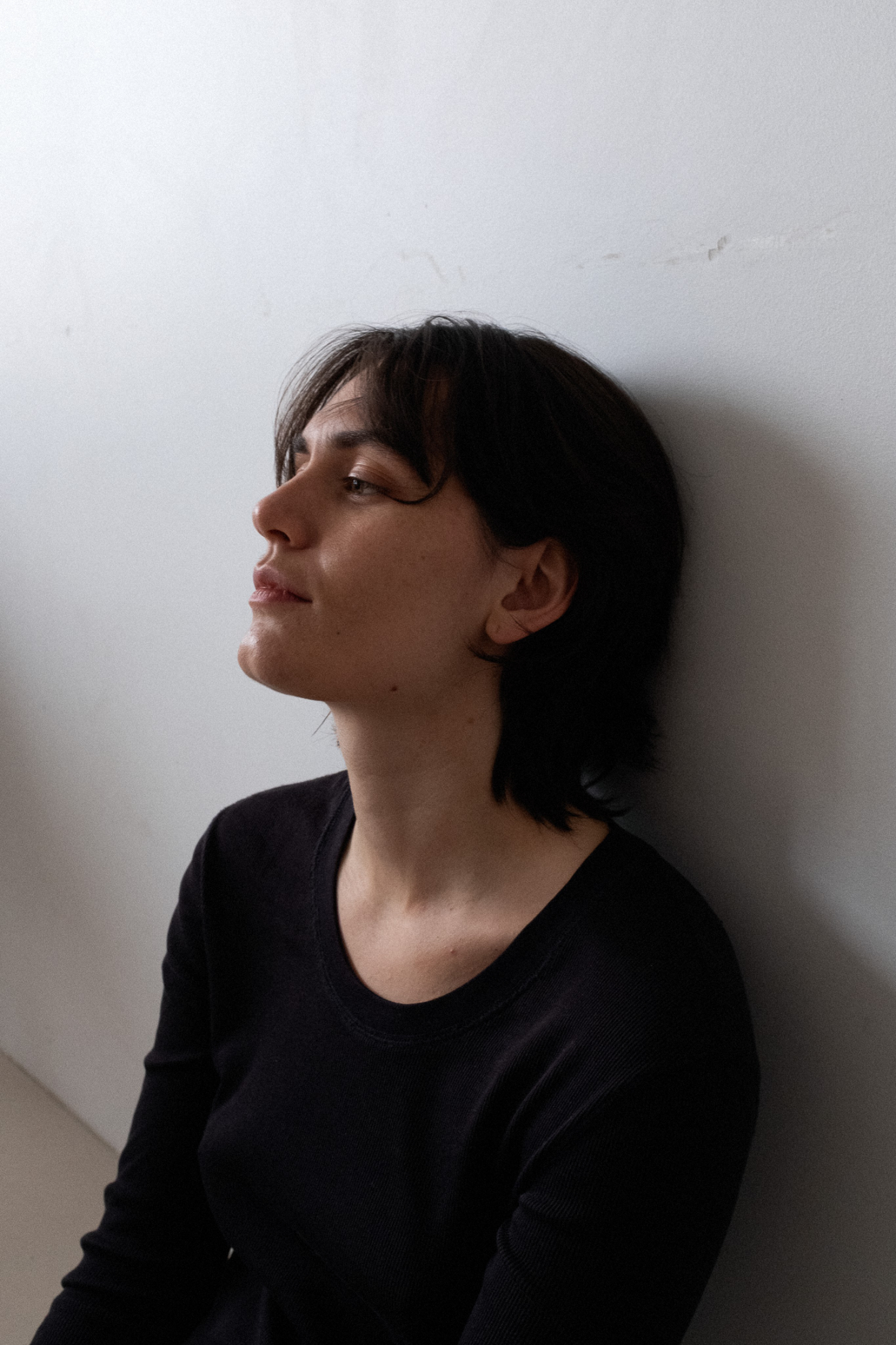
Ella Rumpf photographed by Andreas Lumineau, 2026.
|
|
|
Anna Avent: In your recent film Love Letters, you play the role of an adoptive mother, a role that is not typically represented in film. I’m curious to know your opinion on representation in art overall. What does it mean to you to represent the unrepresented, and how does that sentiment play a role in how you approach your craft? Ella Rumpf: I’ve always had a weakness for people who feel like they don't belong to the norms of society. I feel like these kinds of characters can make us grow. When I’m working, it's not about finding the easiest way; it's about finding a way where I will feel inspired to spend two or three months with a character and actually learn something from that experience. I feel like these kinds of characters forge a different way of having empathy…and an understanding of the journey people can take in their lives. For me, I feel so incredibly lucky that I live in a time where women are able to tell more stories from their point of view. I have been very lucky to find women who tell stories that interest me, too. There are so many different ways to talk about women, and I think this type of diversity interests me because I always want to be working in a space where I am not sure about everything, or where I am not certain about how life must be. This is what I'm looking for in the films I do because I feel like there are times when I read a character and I think about how they can give me a strength that I’m looking for in my own life. Or the character's concentration, or devotion towards a subject. With Des preuves d’amour (Love Letters), it was a moving experience because it wasn't relatable right from the beginning, but to go through the process step by step and really understand what you go through in a moment like that is interesting because you're putting yourself in the shoes of another life or moment. AA: Do you have a recent art show/artist that you’ve seen recently and loved? ER: My last visit was to the Guggenheim in Bilbao, where I saw the great steel walls of Richard Serra and a burned American flag, the name of which I don't remember. The last show that really left me with something relatable was by Ana Mendieta at the Musee des Beaux Arts in La Chaux-de-Fonds, or Ines di Folco Jemini Le Salon des Songes, or Simone Aughterlony's performance Collapse in 5 Acts: there is porn of it. I must admit I also like the work of people I know a lot. I loved a piece by Malik Jeannet, In Hope of an auspicious Letter or Roman Selim Khereddine's exhibition Beiss die Hand at Helmhaus, or Andreas Lumineau's show curated by Clara Chavan at Portland Gallery. I really enjoy visiting Sentiment in Zürich when I'm home, run by Olga Generalova & Philemon Otth, who always have great selections of artists. And sometimes you don't know why a little piece just resonates in a corner of a gallery, like the piece by Miriam Schmitz's she pulls off every fit, that I saw at the Apple. When I feel like work is authentic and comes from a place of being curious…that is often work I really enjoy. I'm looking forward to going to Paris and catching up on Leonora Carrington's exhibition which I missed last time.
|
|
“Every time I’m going towards a script or a character, I find a woman I know within it.”
|
|
|
AA: Many of the films you've done address the vastness of relationships between women, Raw being the grotesque/intense, Love Letters being the maternal, Couture being the creative/finding solace with other women. Could you tell us about one relationship you have with a woman in your life that you would consider fundamental to your understanding of female relationships? What did she teach you, and how have you applied it to your process of connecting with your characters' interpersonal female relationships? ER: There are so many women, there's not just one woman. I really love to talk about real content with women, where I feel like there is a certain depth in the conversation. I can have great talks with men as well, but with women there's just another type of understanding. I would say someone who is very important to me is my mother because I feel she has always worked super hard to provide for my basic needs. Seeing my mother raising us and going through life was a very humbling experience in terms of realising how lucky I am to be in a position like mine and not taking it for granted, either. Women who are mothers have a completely different experience and way of seeing the politics of this world that I find very interesting. I love the exchange with my mother and her love for art, and she always allows me to dream even when it gets hard. She taught me that you don't need a lot of money to live in a beautiful way. I believe this has influenced a lot of my characters. Also, my sister, in a way, is someone who inspires me in the work I do. My girlfriends as well, because they are all so different, some are teachers, some are midwives, some are artists, actors, all in different ways I find inspiration from them in all they do. Every time I’m going towards a script or a character, I find a woman I know within it. A lot of the films you mentioned have been made by women, so the encounters with these women who are telling these stories have also been very empowering because they have believed in me creatively. Collaboration between women feels so powerful. I really appreciate it. It feels more about the story than a projection that a man would have on you; you never know if it's biased, that gaze. Often, when you work with women, you know there's an artistic trust that makes the world more complex and close somehow, because you allow more intimacy, maybe. That's not to say that it's not good working with men, but working with female directors has just been very important to me. All female directors aren't the same, we can't forget that some women have lived within a patriarchal code and reproduce patriarchal behaviours, but I think it's so cool when subjects are challenged by women.
|
|
|
AA: Do you have a recent favorite film or films you love in general? ER: I go to the cinema a lot. Recently, the most political ones are the ones that move me. A Simple Accident, is an Iranian movie I really enjoyed, or The Voice of Hind Rajab. It ripped me apart. The Poet, an Argentine movie that I found hilariously tragic. These are recent films that really stuck with me. I can think of a few classical movies that pop into my mind as well. I really love Fellini Cinema, like La Città Delle Donne (City of Women) which is not as well known but is incredible. And then two films by Andrzej Wajda, Man of Iron and Man of Marble. Also, The Spirit of the Beehive (Victor Erice) a Spanish film that is very beautiful. AA: What is your recent favorite comfort meal? ER: The most basic is often the best. I’m really into pasta and lemon artichoke for the springtime. I love to go more vegetarian at the moment, lots of salads, and steamed veggies, and rice. It really doesn't need to be crazy for me. My grandmother taught me that olive oil and salt are all you need if you learn to use your produce well. I have a lot of appreciation for the taste of just having good produce. AA: What are your travel essentials? ER: I’m not too crazy about material attachments, but when I’m away traveling or on a shoot, I have a pillow cover from home that I always bring with me. It is very simple, but it gives me a ‘home’ feeling. I also used to bring little pretty jewellery boxes and bags with me to hold my things in. I like to have stuff that feels somewhat beautiful, so my luggage feels like it's living with me.
|
|
“One of my theater teachers always told me don't take yourself seriously but take 'the work' seriously.”
|
|
|
AA: To you, what is art? Does the definition of art change as the times do? In this very moment in time, what does it mean to create art? ER: I love this question because I’ve really been thinking a lot about it. I believe there is a part where we must take art very seriously, and then there is a part where it's important not to take it seriously at all. I know these two answers don't seem to go together. I would say that for me, art can be so different, but it resonates with me most when it challenges me in an authentic way, and I feel it doesn't show off some ego-driven vanity or a lack of curiosity. Art that moves me is brave and challenging and proposes a way to look at the world from another point of view, and in the best case, helps us survive. Art is a dialogue; it communicates what cannot be said, it opens a space where it creates conversation in a meaningful way, I hope, at the end of the day. I’m moved by what challenges the order and propositions of dreams, disrupting the world that keeps going more and more towards an idealisation of technology. What reminds me why I’m human and that I can be touched is what art can do to me. I’ve always been so drawn to contemporary art. So much of my work has been co-influenced by things I’ve seen and liked. At the same time, when I go to exhibitions, and I see the system of what art has become as a business, I see why it is there and it's such a weird space. Sometimes I feel like things are really getting lost, like, why the fuck are we doing that? There can be art shows I go to, and I’m like I hate this, I hate this art thing. But then I can go to another place, and I absolutely love the vibe of everything coming together and what the gallery is doing. I think this is part of the reason why I chose to do film. Film has always felt more tangible in a way where it felt like it was very alive, music comes with it, image comes with it, storytelling comes with it. But it's also a space that is dependent on money, and that is influenced by it sometimes. What is art? What is art?! I think it's something that is absolutely necessary for our world at least. I think it is what will save us, I don't want to say that in an utopian way, I want to say that in a very serious way because art can make a change when it is not about snobbery, when its not taking itself too seriously, but when its being used to open spaces and transgress the things that keeps us stuck, when its able to shift us towards a new thing, thats art. One of my theater teachers always told me don't take yourself seriously but take 'the work' seriously. I like that somehow.
|
|
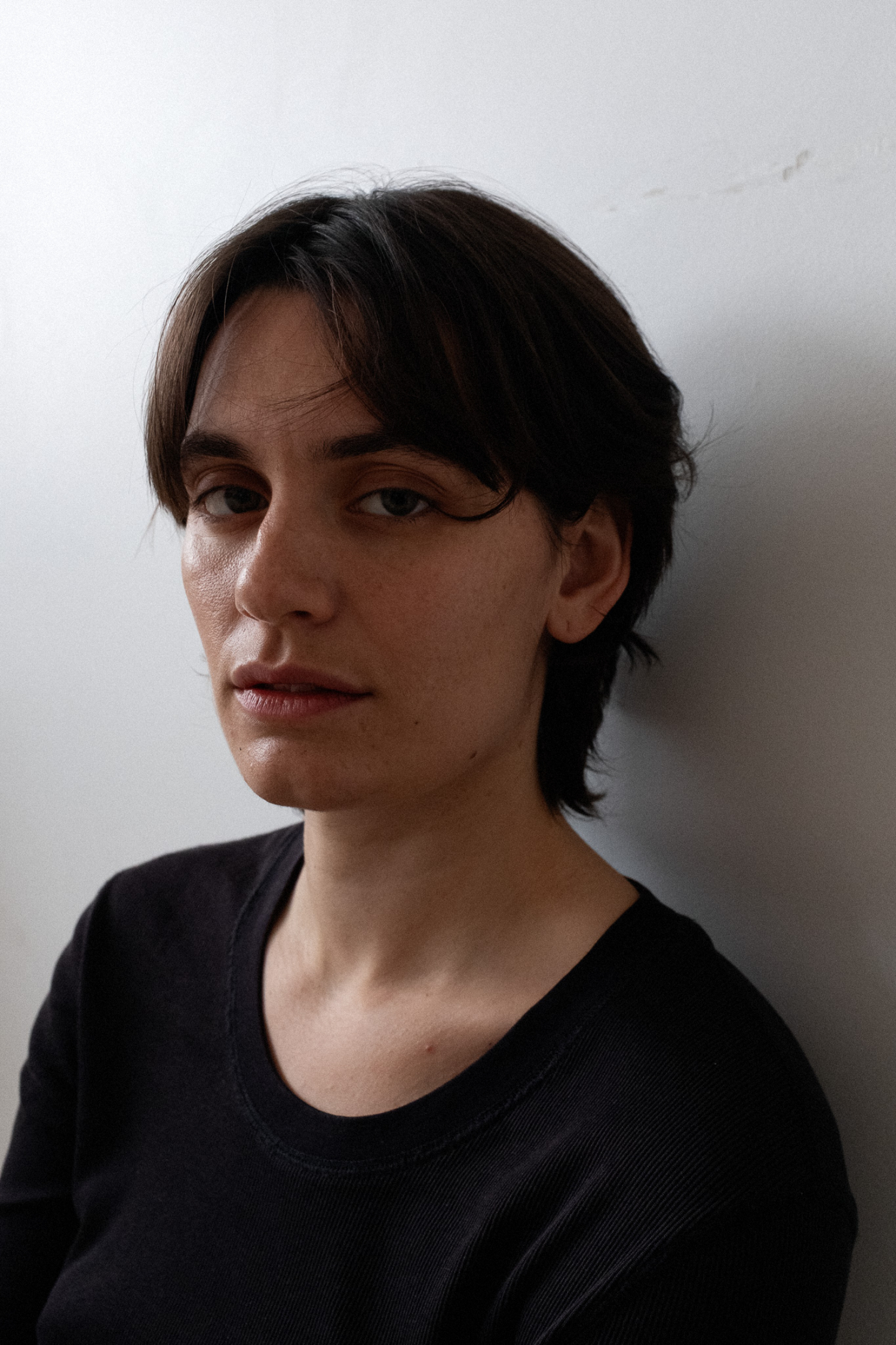
Ella Rumpf photographed by Andreas Lumineau, 2026.
|
|
|
|
|
|
|