|
This summer, I took a two-day class to become certified in “First Aid for Mental Health”. In my course, I learned, among other things, that anxiety episodes eventually pass after a certain amount of time. This is because the amygdala, which is responsible for releasing the chemicals that make you feel anxious needs a break after about 20 minutes. Even though I’m not under any illusion that I will help people with this information, I find it comforting to know this now. My plan for the events of the Berlin Art Week was to always stay for at least half an hour, until any social anxiety had subsided. That didn’t always work. When Provence asked me if I wanted to continue, I agreed with the stipulation that I wouldn’t go to the art fair in Berlin, and that I maybe wouldn’t be able to stay that long everywhere else either.
The city is big, both in the sense of the actual space it takes up, the time you have to spend to get from one venue to the next, as well as in the sense of its art scene. Maybe something has changed because of politics, or because of social media. It feels like people don’t know the people personally anymore whose work they hate. Or they only feel so-so about the work, but the artist is really nice in person.
|
|
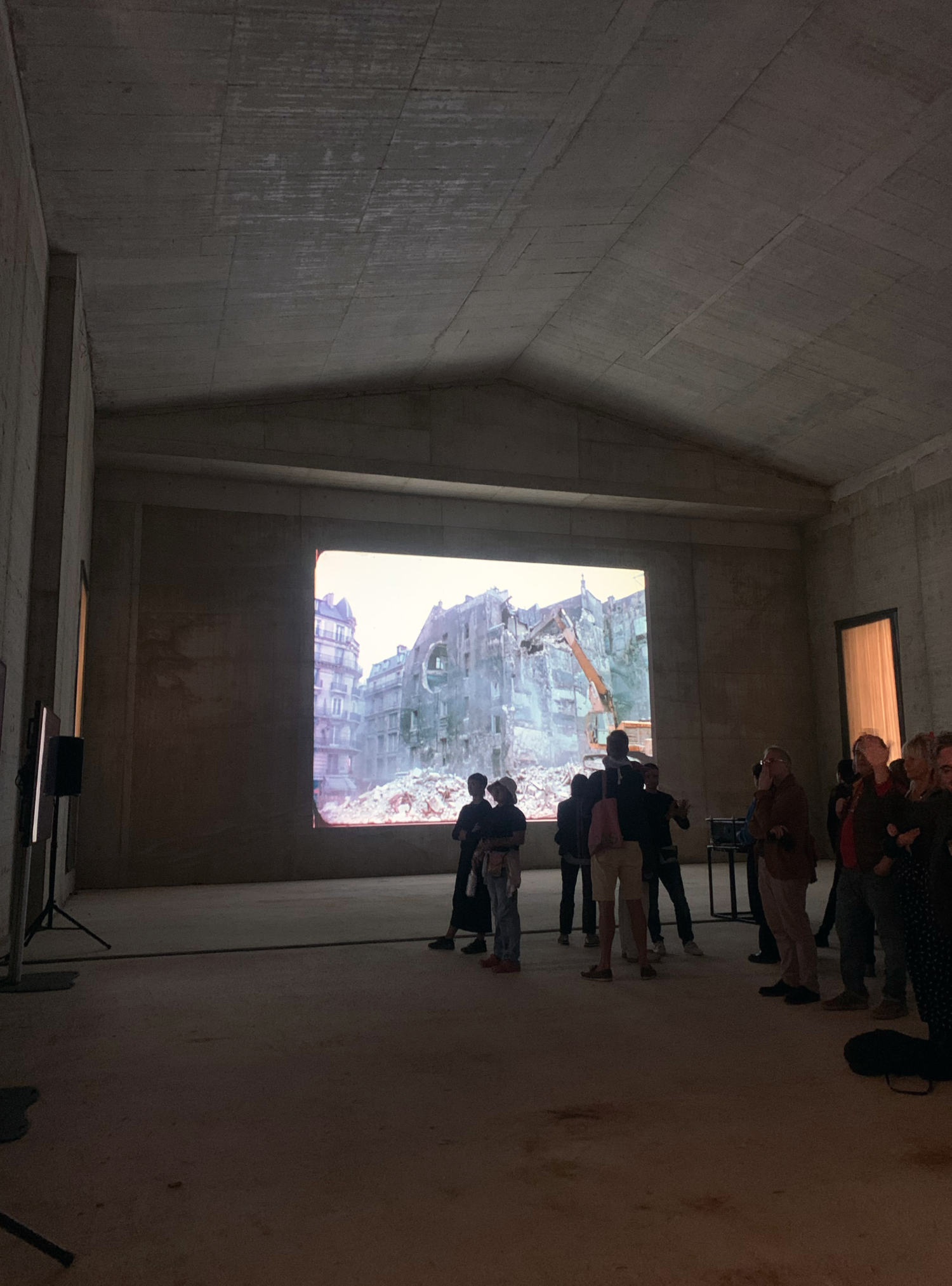
Gordon Matta-Clark, On Site, berlin modern, 2026. Photo: Anke Dyes.
|
|
|
On Thursday, I go to the exhibition of several Gordon Matta-Clark films in the new museum to be called “berlin modern,” that is yet under construction. The unpopularity of the building’s architecture, also known as the “barn,” is sparking all the expected jokes (Why only show the films? Why no reenactment?). But I enjoy this foray into the construction site, and the correspondences and contrasts between the films and the art institution to be. In one of the films Matta-Clark cut up buildings that were going to be demolished to make way for the Centre Pompidou. Within the building’s grey mass, Matta-Clark’s interventions into the city seem less about the living space, at least not directly. His interest rather lies in built, three-dimensional objects into which he wants to cut holes (a sphere or a straight cut, for example). It’s about volumina first, and perhaps later, and in some abstract way also about other ways of living within them. While watching this, you find yourself standing in a concrete coffin with no gaps that would let light in. And yet, since there are no windows or doors yet, you can hear the outside traffic. The raw spaces fit well but are not an extension of the film images into the room. Instead, they contrast constructing and deconstructing, creating and destroying as processes of working in three dimensions, removing, stabilizing, and letting go.
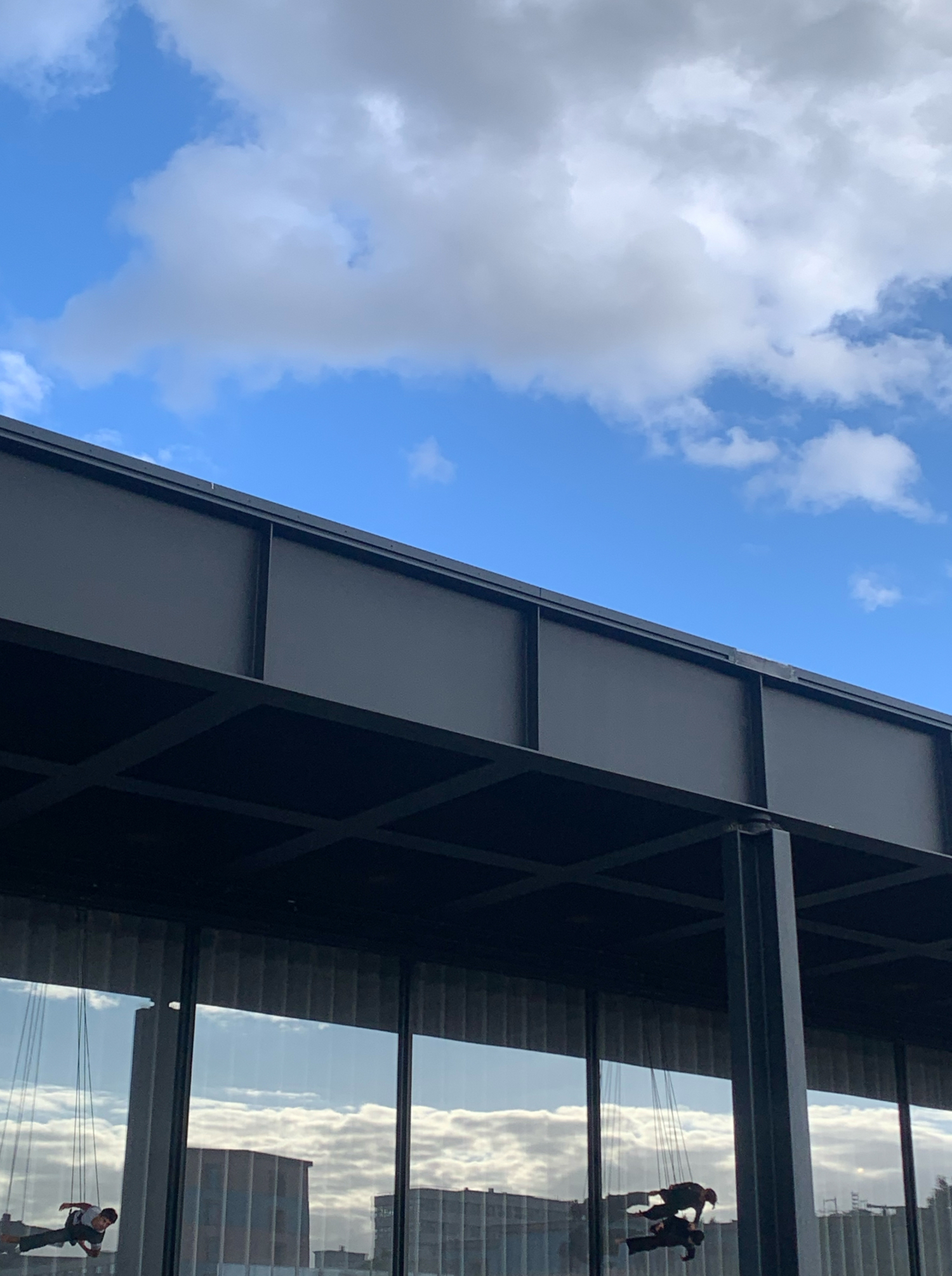
Next door, the second event is a restaging of Trisha Brown’s performance “Walking on the Wall”, in which the performers walk, stroll, and stumble not along the walls of the Whitney Museum (as they did in 1971) but along the glass walls of the Neue Nationalgalerie. I had somehow misremembered this work and thought it had been performed and rehearsed against walls that had nothing to do with art. But “Walking on the Wall” was never about residential buildings, and how to use them. It was always about institutions; not a critique of infrastructure yet, except perhaps that of gravity. It’s very crowded at the Neue Nationalgalerie. The current program seems very popular, and the merchandise is often good since the current direction took over. The performers are wandering among the clouds reflected in the windows, and I’m briefly reminded that “Der Himmel über Berlin” is also very popular in the U.S.—even though it’s called “Wings of Desire” there.
|
|
Trisha Brown, Walking on the Wall, Neue Nationalgalerie, 2026. Photo: Anke Dyes.
|
|
|
Intensity feels somewhat alienating when it doesn’t affect you, and can remain foreign even when it does. I’m watching excerpts from Wu Tsang’s two 40-minute-long films, which are on view at Isabella Bortolozzi Gallery. I’m reminded of yet another film, “Tardes de Soledad,” by Albert Serra, which was one of the most intense viewing experiences recently, showing beautiful imagery of brutal Spanish traditions. Flamenco, a central element of the second film on show, strikes me as an ideal subject for the artist, who seems interested in grand and strictly staged intensity. I stay for a while and watch the singing and dancing set in a Lynchean red room. The exhibition’s title refers to “resident strangers,” a theme that runs through the week and the things I see—though less often as grand emotions that remain alien than as managed “others”, as statistics of people who need papers to stay or to move somewhere. Meanwhile, I’m an art tourist in the city I live in, and every now and then I run into people who owe me emails or money—or to whom I owe emails or money.
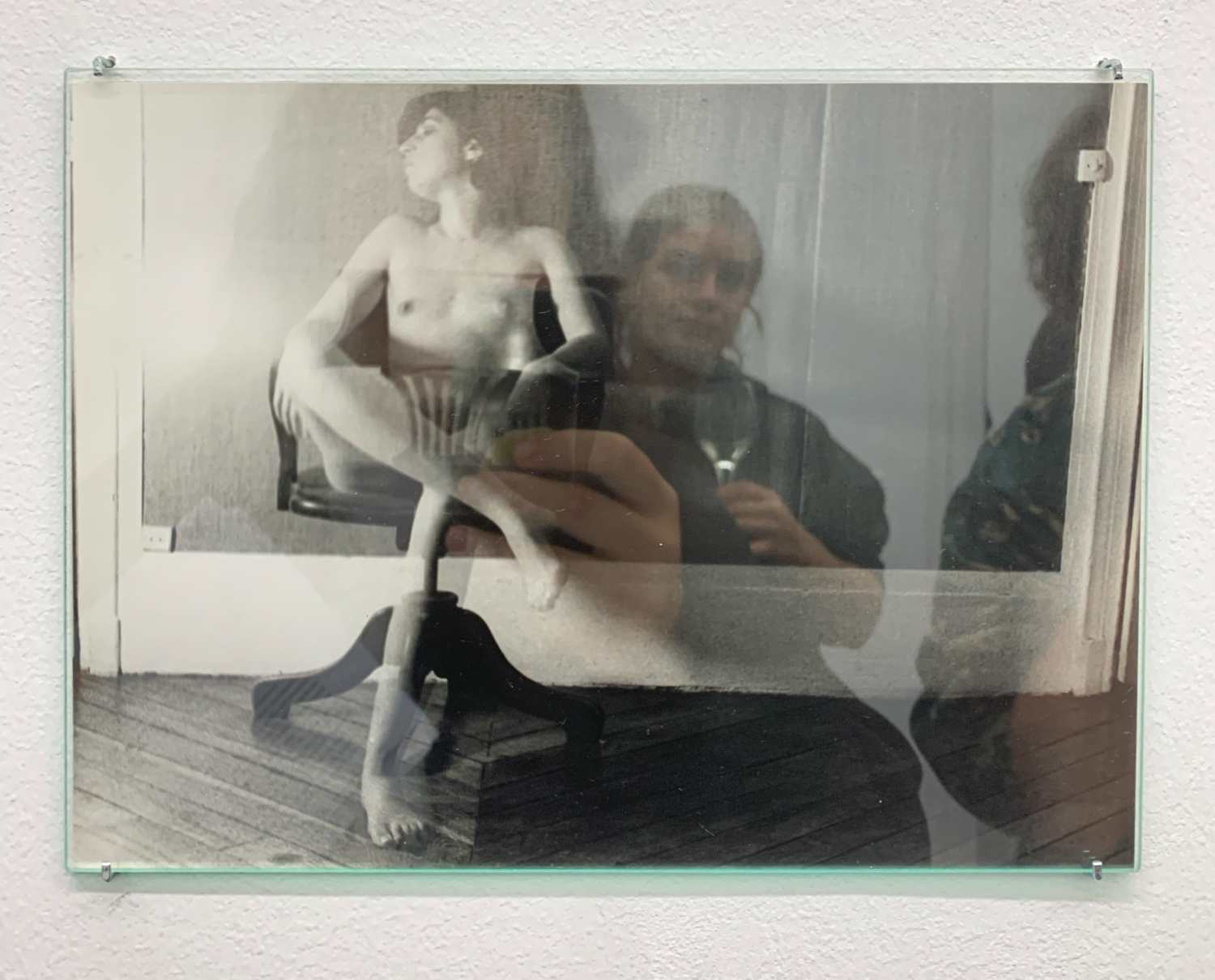
Alix Cléo Roubaud’s exhibition at Galerie Buchholz, for all the preciousness of the photographs, also has humorous moments. For instance, when the artist merges with the chair she’s sitting on in a double exposure, so that entirely new categories of attribution would have to be invented to capture this gender designation. Her work is also about the photographic process and, thus, always about somewhat esoteric ideas of something becoming visible, recognizable, or no longer able to be concealed. I like it, even if it seems like an example of a genre and of its time. In the street-level exhibition space of the gallery you can see sculptures by the artist Matt Browning, who is also exhibiting at the Mies van der Rohe House; whether this is meant as a teaser for the institutional exhibition or, as an acquaintance suspects, to spare visitors the long trip out to Alt-Hohenschönhausen, I don’t know.
|
|
“Meanwhile, I’m an art tourist in the city I live in, and every now and then I run into people who owe me emails or money—or to whom I owe emails or money. ”
|
|
Alix Cléo Roubaud, Si quelque chose noir, Galerie Buchholz, 2026. Photo: Anke Dyes.
|
|
|
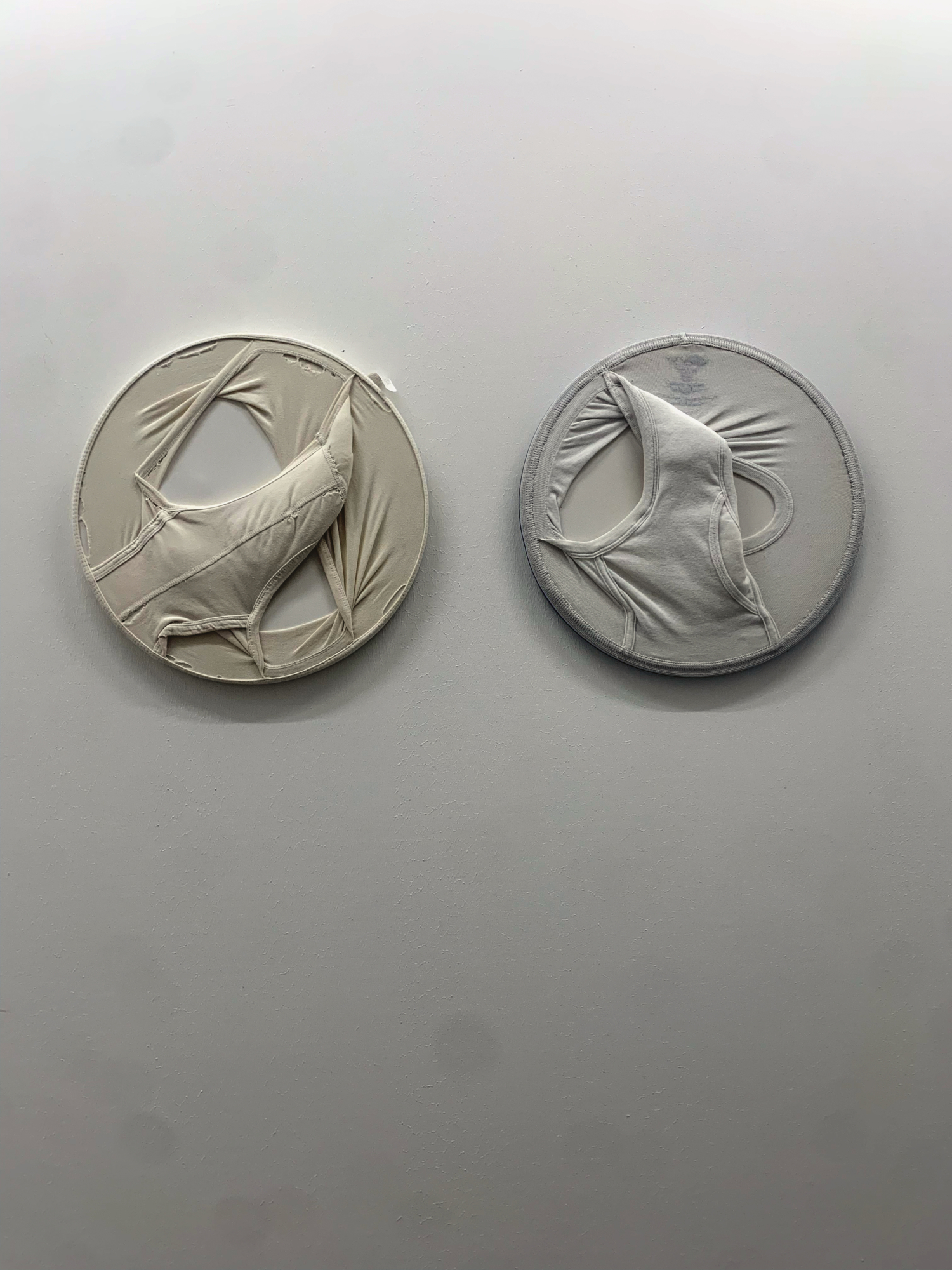
Lone Haugard Madsen’s press release celebrates her as a true artist in times of declining critical thinking. I don’t think I agree with the second part. Her “room 428” at Galerie Nagel Draxler’s Kabinett is completely divorced from any current discourse. She does what she did 15–20 years ago: working with found objects and debris, combining it with abstract paintings. This is both serious and effortless, in a way that was sometimes called “precarious sculpture” in the aughts. Which is probably what the text is referring to: art like it used to be. But she is also really good at it, probably because she has been at it for so long. Something similar can be said about Martin Margiela’s exhibition at Konrad Fischer, that is, that his work is good at inhabiting the space: plastic and swaths of fabric take control of the exhibition rooms in a large-scale installation that guides the viewer’s gaze and movement without overwhelming or obstructing. It’s not about fashion, even if elements of it are present.
Folsom, the yearly kink street fair, runs parallel to the Berlin Art Week, and I see perverts that belong to the art world and ones that do not as they parade through the neighborhood where I live. At cana teker’s performance at the Between Bridges Residency Space, I see an audience that would be welcome at both events, at least in terms of style. It’s a sympathetic crowd, but one that gives up on the durational performance before the performers do and steps out in front of the small shop in Schöneberg to smoke, while inside—perhaps for the camera or the one person who remains engaged and keeps the tension going—gestures big and small are repeated, examined, and discarded by various performers that embody the piece, one after the other.
I’m not going to the art fair, but I’m at least trying to see a few more institutional exhibitions, maybe even an off-space or two. The distances are long. I miss a magazine presentation at Cittipunkt that I would have liked to attend (for the publication “Common Pink”). But I miss a lot. At the same time, a slight disappointment comes through in the conversations between the exhibition venues about this year’s art week. Instead, more news of more galleries closing. Is the art world shrinking, or just the part I’m involved with? Only once, when I go to the Stoschek Collection, does it get really crowded. But I hardly know anyone there, and feel like I only get past the bouncers at the entrance because my friends are so good-looking. After five minutes—and before I can really say anything about the texts presented by “Adult Entertainment”—I have to leave again. I can’t stand spaces as packed as this unless at least the sound is really good. “You love the brutality,” someone says, and the microphone is too loud, and I think: no, not really.
|
|
Martin Margiela, Tondo (III and IV), 2019. Photo: Anke Dyes.
|
|
|
With a friend who isn’t in the mood for art, I go to see the movie “Staatsschutz” at an old and pretty cinema in Neukölln. The term Staatsschutz could mean the protection the state offers, as well as the protection it needs itself, even though in its official use Staatsschutz refers to the protection of the state by its citizens, and not the other way around. In the movie “Staatsschutz,” a Korean-German prosecutor is the victim of a far-right attack. She realizes that her colleagues aren’t really helping her in the trial against the attackers, so she takes the investigation into her own hands. The film is a strange mix of images that seem to want to tell a tighter, cleaner story, and a plot that has ambivalent, lonely, strange, unsettling, and desperate moments. In contrast to the images, it remains ambiguous, has dead-ends, and lets the viewer understand the characters only gradually. But these contrasting elements—on the one hand, images of the prosecutor in a loud muscle car as an avenger for those who are ignored and not taken seriously, simple, pop and attractive, and on the other, a plot that meanders, where allies aren’t immediately clear and say the wrong thing while trying to help, –are not a problem of a disparate film. The screenplay and the images run counter to one another, as if to illustrate the problem of a legal system that must always reduce matters to the unambiguous and exclude doubt, always failing to deliver the justice the protagonist seeks. This tension is also reflected in the performance of the lead, Chen Emilie Yan, who repeatedly gasps for air, twitches, convulses, and pulls herself together again, as if to rein herself and her emotions in, to become the functioning, efficient professional she represents as at the beginning of her story. The film shows her as both empowered as well as desperate and stuck in the role of an administrated other. I’m watching a version with English subtitles, and I’m briefly reminded of a video work at the Neuer Berliner Kunstverein by Mikhail Tomachev, that I saw earlier that day (“Exploit”, 2021). (NBK is showing a group exhibition titled “Projections onto the East” that also extends to Schinkelpavillon; I didn’t make it there in time for this text). Even though it doesn’t entirely make sense to me that it’s a two-channel installation, the dubbing technique sticks in my mind. It reminds me of Polish television, and might be the same in other ex-Soviet states as well: A single voice narrates everything, drowning out all the other voices—a distancing effect that nevertheless never pulls you out of a story about stories and false reasons and justifications for maneuvers and sacrifices.
|
|
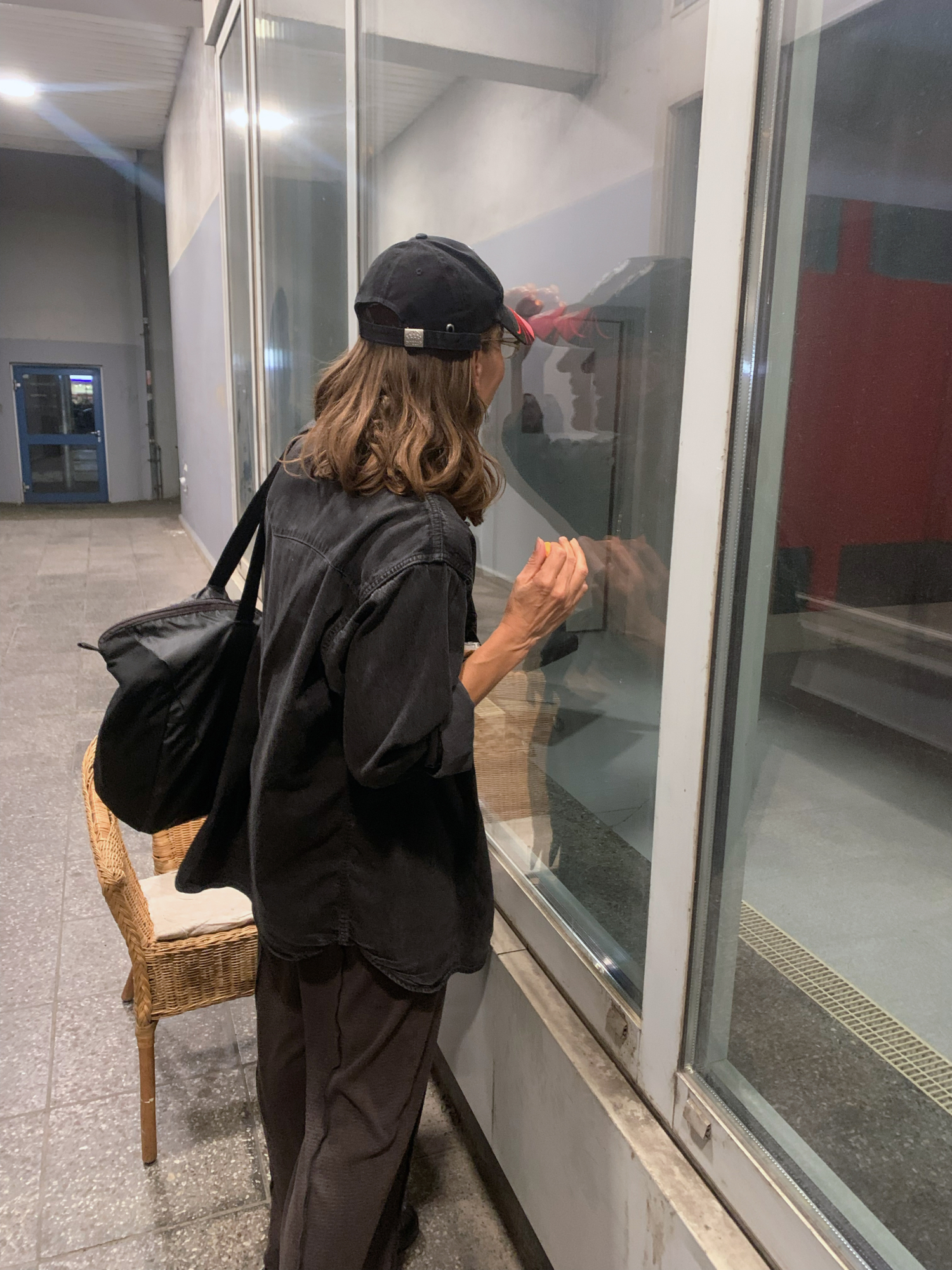
Scherben from outside. Photo: Anke Dyes.
|
|
|
Like the film “Staatsschutz,” the Kreuzberg Exhibition at Gropius Bau seems timely in an era when support for far-right parties and their politics is at its highest in a couple of decades. Some of the artists featured in the substantive exhibition were invited by the DAAD (academic exchange program) back in the 1970s and 80s and captured the mood in what was then West Berlin, making art about the working conditions of people without citizen status, and reflecting on how unwelcoming the city actually was, even if it did invite both workers and artists. It almost makes sense that Berlin is defunding cultural programs these days, so as not to invite this type of criticism. Harun Farocki’s silent film (“In-Formation”, 2006) shows infographics about migration, money and a German sense of self, and tells a story of mediation and an administration, that displays casual racism and cute simplifications, without (audio) comment.
“Didn’t I entertain you brilliantly?” repeats the final film from the penultimate exhibition I visit. Gabriele Stötzer, also at Gropius Bau, seems to have been so very much a part of her city (Erfurt) and of an interconnected group of women who did art, fashion, politics—all together and all at once, in a way that seems impossible in Berlin and now. For them, the personal really was political, an often misunderstood equation that makes sense here. Even if it probably was hell at times to live and work like that. Because you knew everyone else personally.
I briefly, and finally, stop by Grotto in the Hansaviertel; in the space now reduced to a single storefront window, Megan Francis Sullivan shows an older painting in which she observes architects on a rooftop terrace in São Paulo. The theme of how to inhabit this city, of macro and micro perspectives, comes up again, as "The Architects" (2014) seem surprised that the city doesn't look the way they had planned it. The social space they design is the distance between their bodies and the directions of their gazes as much as it is the city they look down on. You would only have to stand up there long enough to no longer feel the vertigo.
|
|
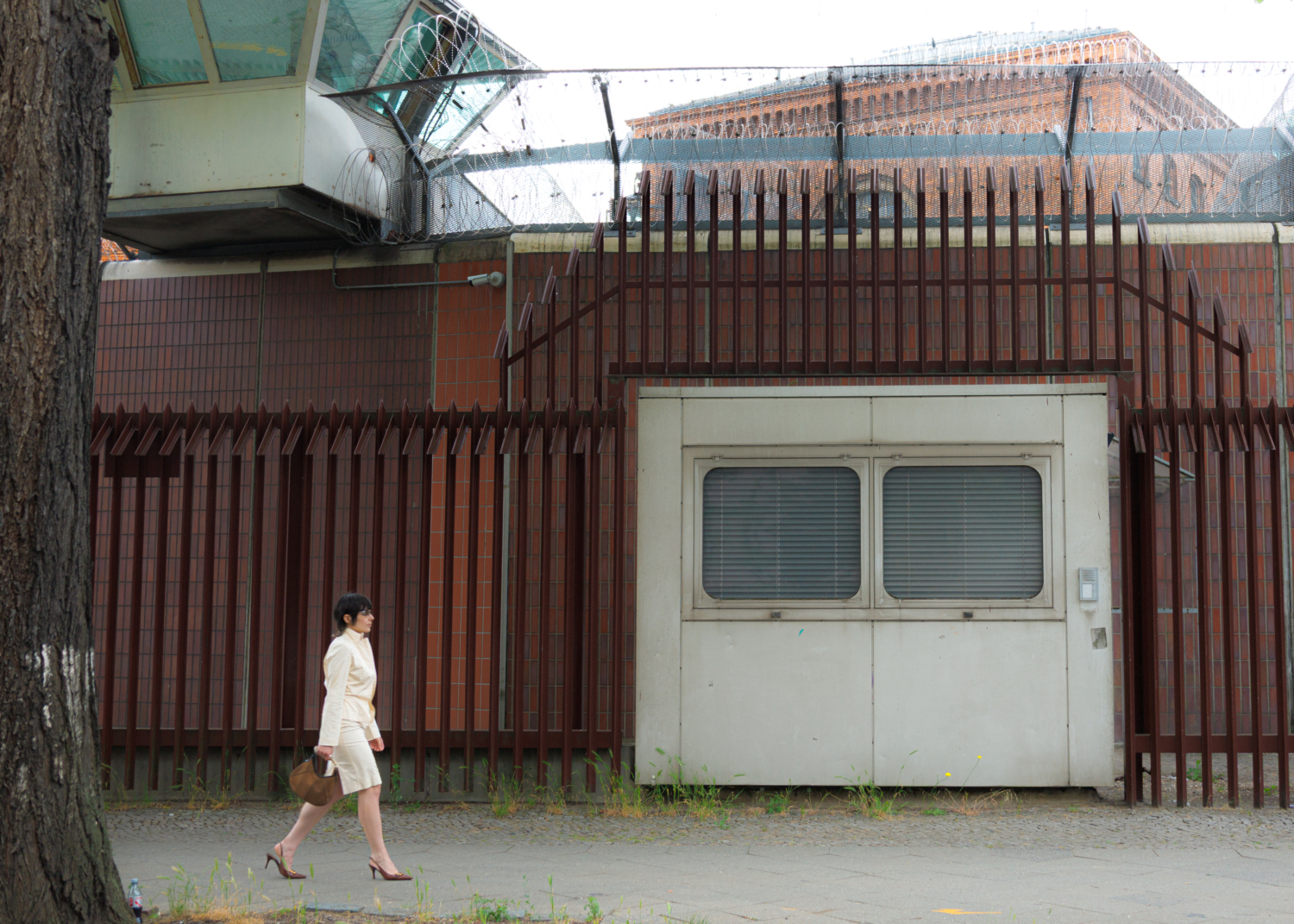
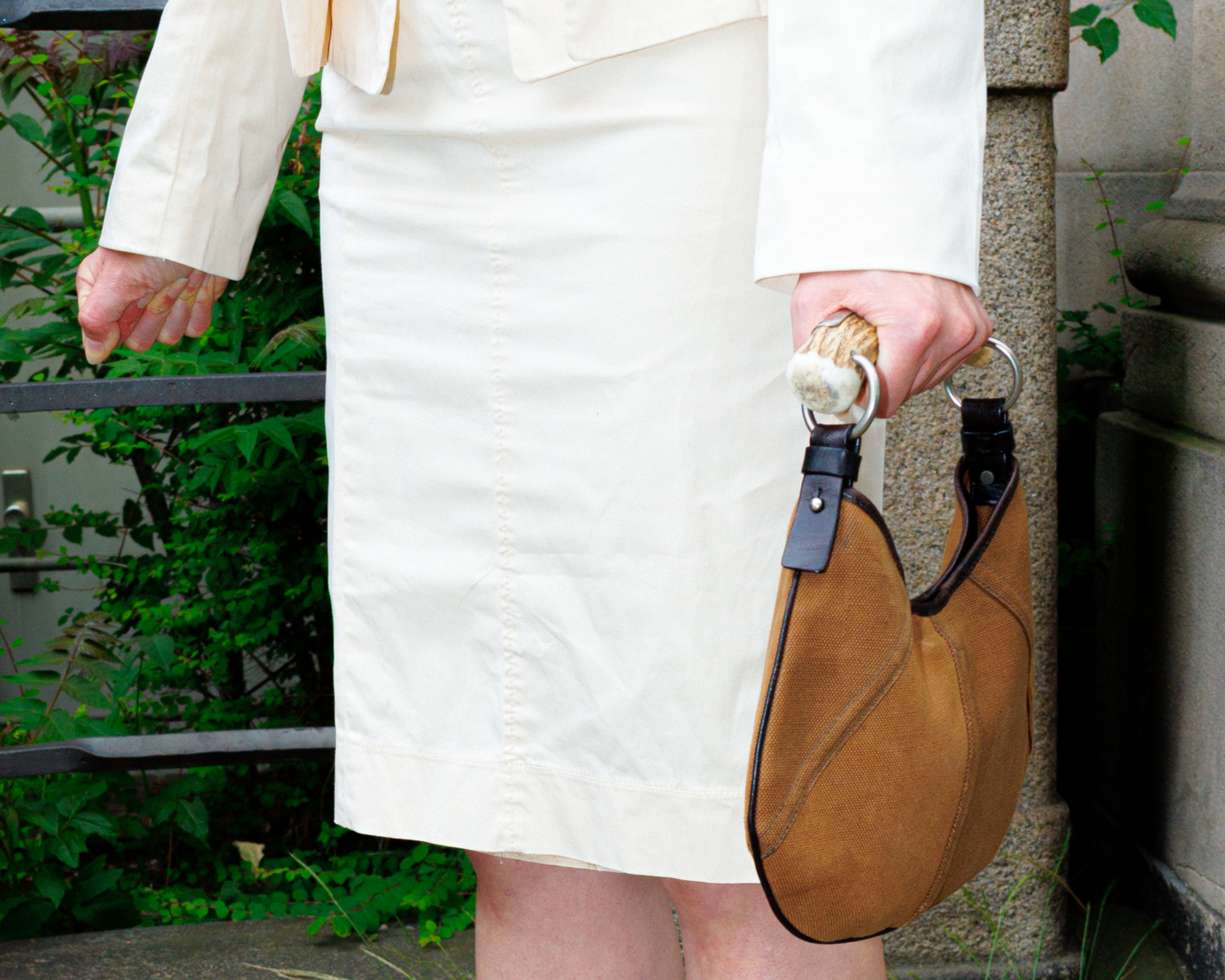
Marc Cain skirt suit, YSL by Tom Ford handbag, Dolce & Gabbana heeled sandals.
|
|
|
I have been living in Berlin for 20 years, and while my time here has been nothing short of turbulent, my encounters with law enforcement have been fairly limited: a phone call here, a conversation with a police officer there. I have never been to a courtroom. Until… For the first time in my life, I have been invited to a court hearing to testify as a witness. Needless to say, it was as exciting as it was intimidating. A few high-caliber celebrity court cases came to mind immediately, which were discussed in the tabloid press at length. More often than not, the focus wasn’t the case itself, but what celebrities wore in court. Appearance matters, and it seems to matter even more when the stakes are high.
|
|
“Appearance matters and it seems to matter even more when the stakes are high.”
|
|
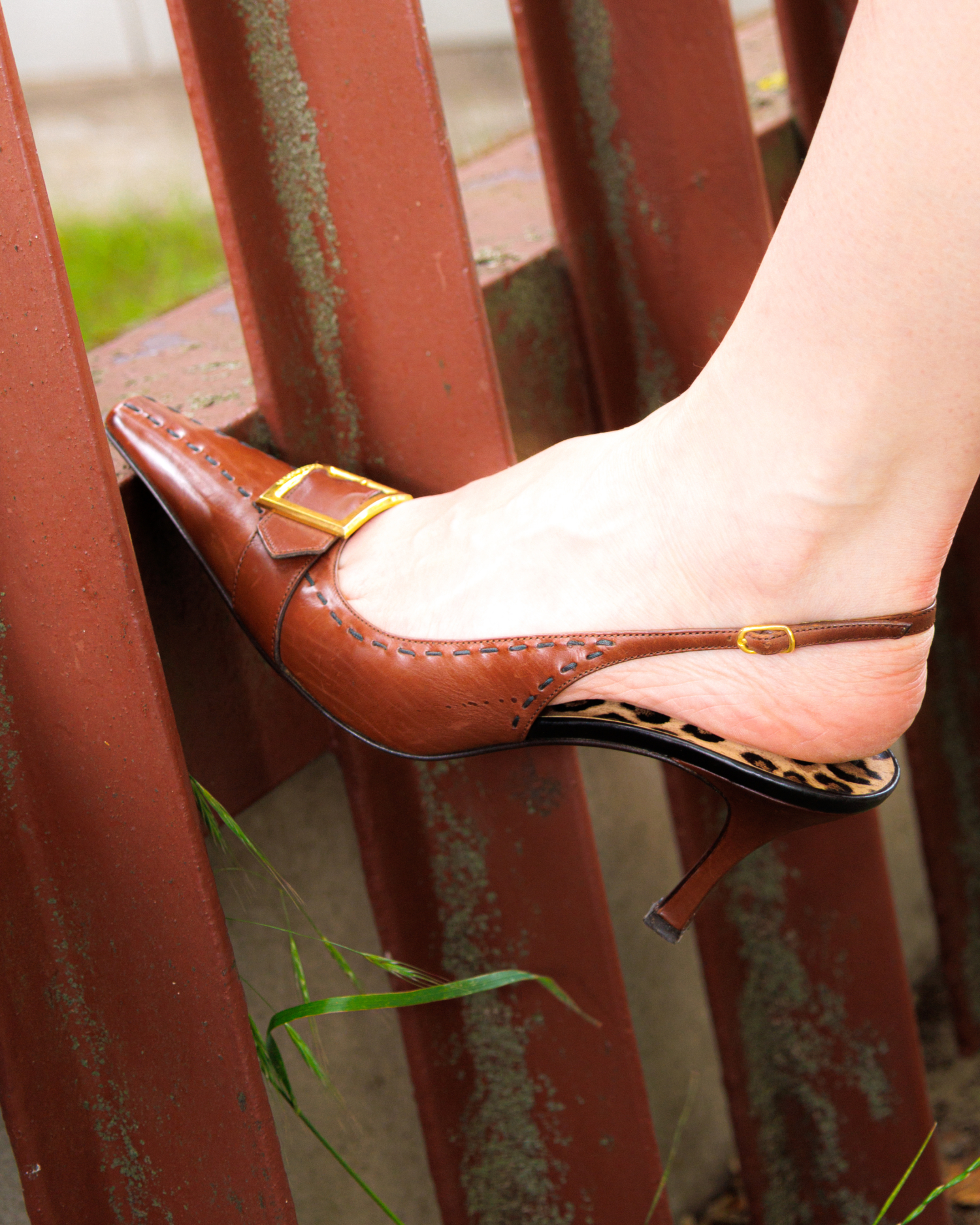
Dolce & Gabbana heeled sandals.
|
|
|
Strategic dressing was used to communicate innocence (think Anna Delvey’s short white dress paired with a thin black choker), power and authority (Asap Rocky’s YSL suits), or even barely concealed disobedience (think: Lindsay Lohan’s microscopic Fuck You message painted on her fingernails). Lindsay claimed that the manicure was, of course, not intentional. Paris Hilton swapped her hot pink Juicy Couture outfits for what could be described as her “serious girl” look. In January 2007 she appeared in court wearing a black headband, a grey striped jacket, white shirt, black waistcoat and trousers, Louboutins and a Chanel purse - after being accused of driving at excessive speed with a suspended license that had been revoked for reckless driving under the influence just about a month earlier. A $3 million diamond necklace did the talking when Kim Kardashian took the stand in a vintage Galliano suit at a trial over a jewelry heist that happened in her hotel room in Paris back in October 2016. Naomi Campbell looked chic in the cream Azzedine Alaïa knit dress with matching cardigan testifying at the 2010 war crimes trial against former Liberian President Charles Taylor. Amy Winehouse brought a rebellious spirit and a touch of sexiness to the courtroom, showing up in a Vivienne Westwood Anglomania suit and blazer on two separate occasions. And what if a courtroom look becomes a twisted plot point in a relationship drama, a subtle way of playing mind games with your ex? That seemed to be the case with Amber Heard, who allegedly intentionally mirrored Johnny Depp's courtroom looks, as spectators and fans pointed out multiple similarities in their outfits and even hairstyles. And perhaps my favorite court case of them all is Winona Ryder’s theft trial for stealing luxury clothing worth thousands of dollars, including a 760$ Marc Jacobs cashmere jumper. Winona’s outfit choice for the court date was brilliant, as it was risky. She wore a Marc Jacobs sweater dress with a trompe l’oeil collar. It might have been perplexing for some people - why would you wear a brand you have been accused of stealing from? This is precisely why it was such a brilliant choice. You would only do it if you claimed to be innocent. What followed could only be described as a lucky, unexpected plot twist - just two years later, Marc Jacobs personally tapped Winona to star in his newest beauty campaign. ‘’I asked Winona because I thought she looked beautiful in all those pictures we've seen recently, regardless of the fact that they were taken during a trial,” said Marc Jacobs, receiving a bouquet of flowers and a card that read, ‘I'm so happy you asked me. It is a great honor’ in response.
|
|
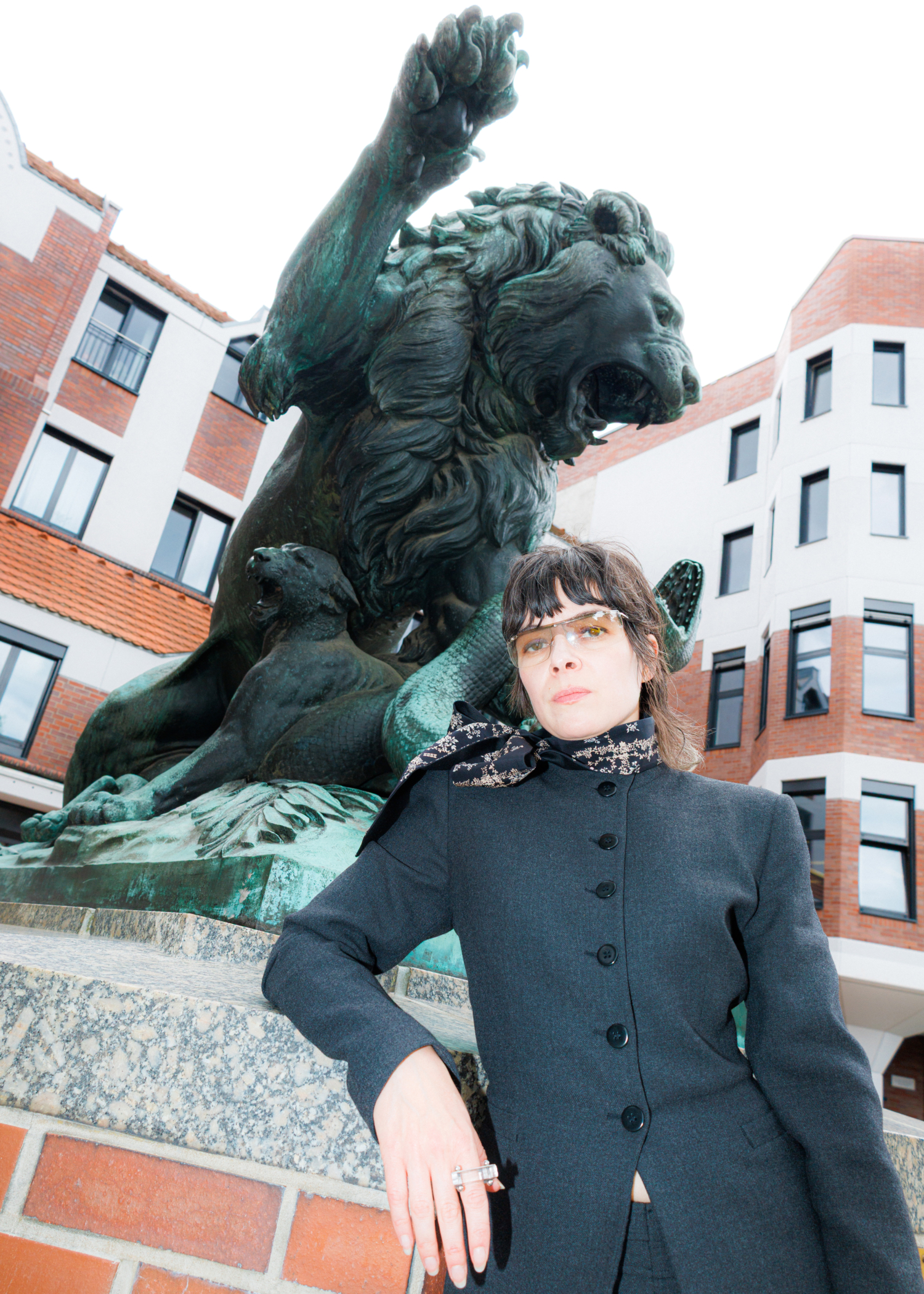
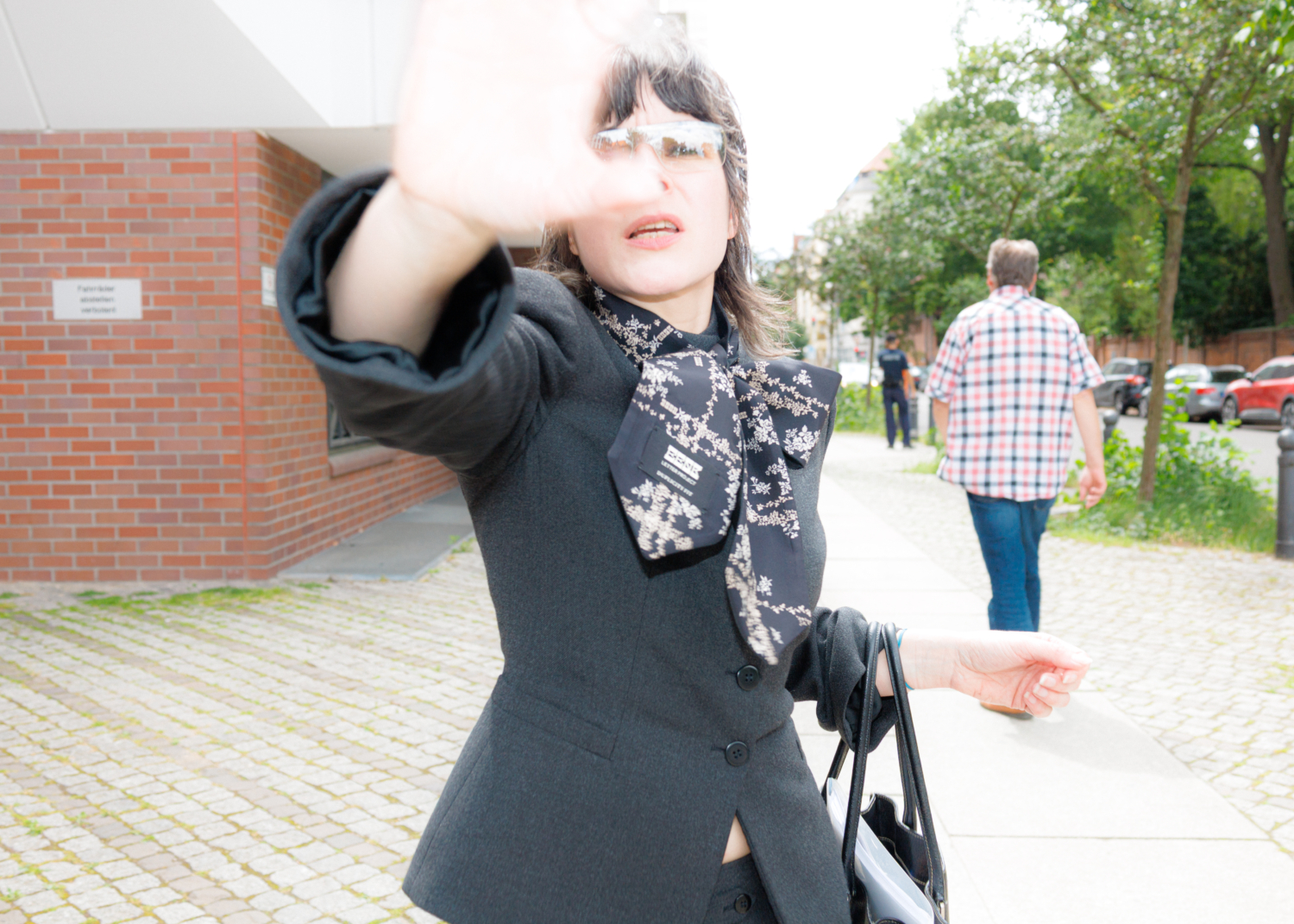
Armani Collezioni suit, EENK tie-scarf, EsTemporary by Silvia Piantini ring, Gucci sunglasses.
|
|
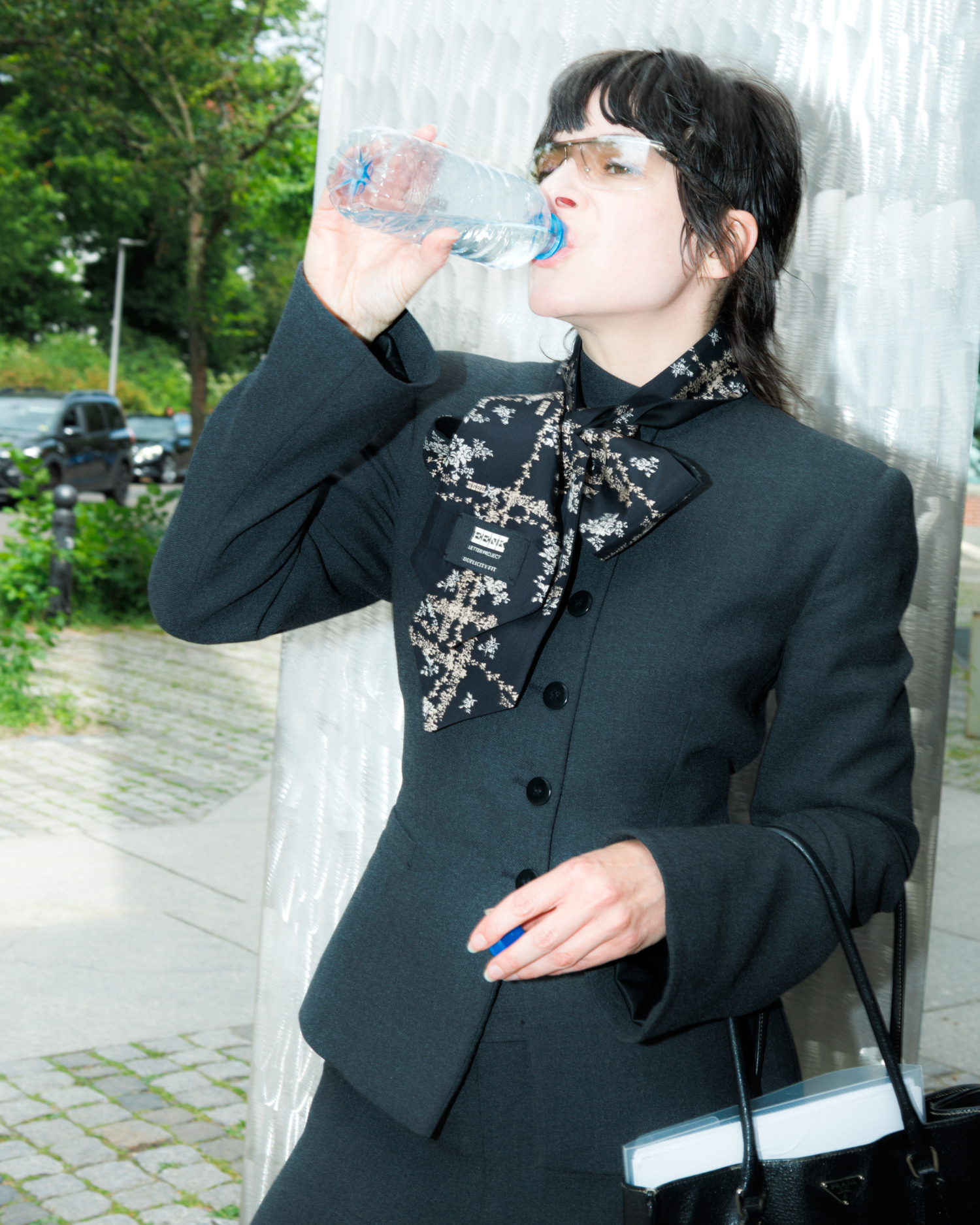
Armani Collezioni suit, EENK tie-scarf, EsTemporary by Silvia Piantini ring, Gucci sunglasses, Prada bag.
|
|
|
My court case didn’t require me to prove my innocence. I was on the receiving end of another woman’s aggression and rage – a tale of its own – and was invited to court to testify as a witness. Nevertheless, I took my court appearance very seriously. I wanted to have fun with it and turn it into a small public spectacle for myself and for the court attendees – just like the celebrity court cases – an exercise in dressing up, even under dire circumstances, and a celebration of life and art.
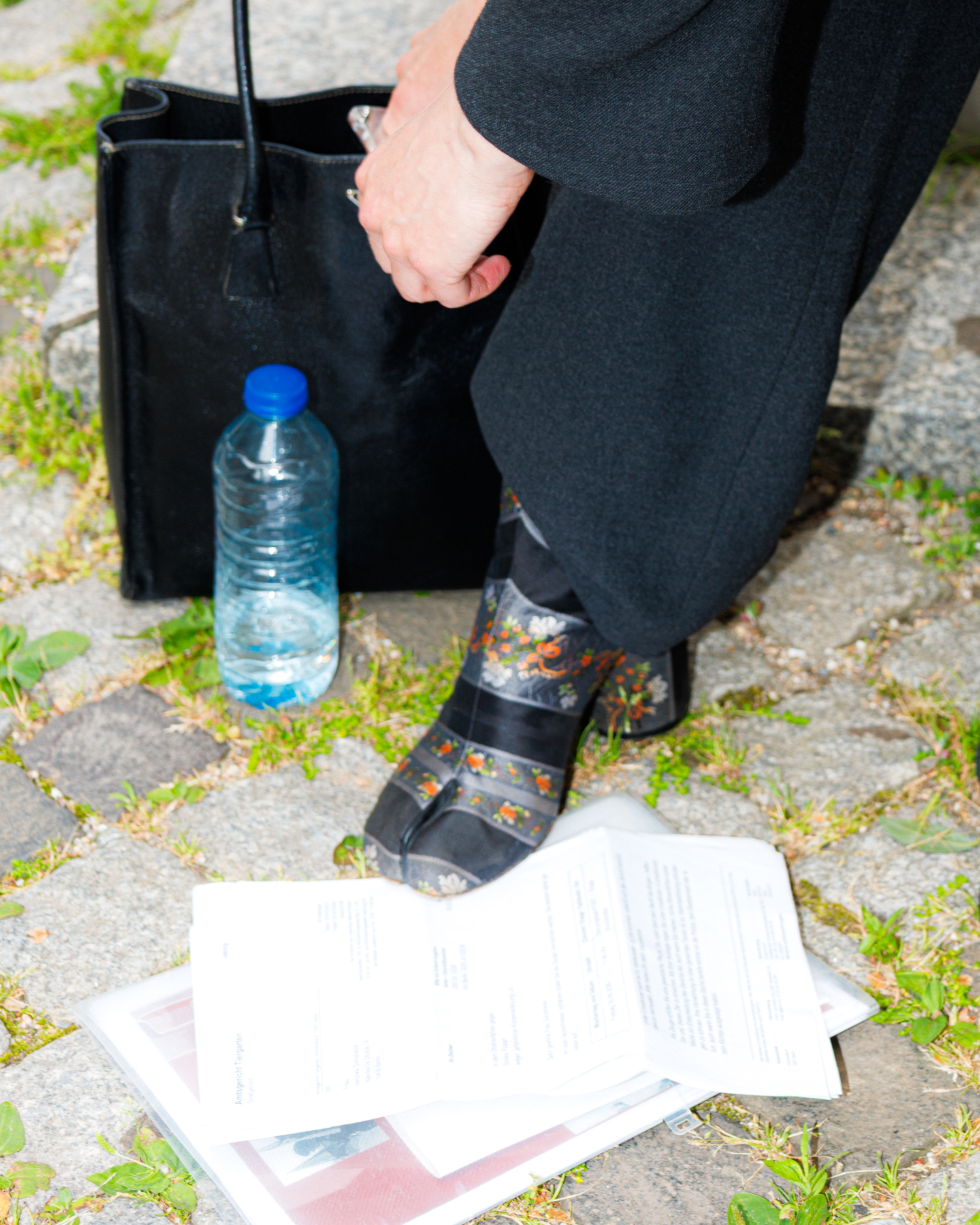
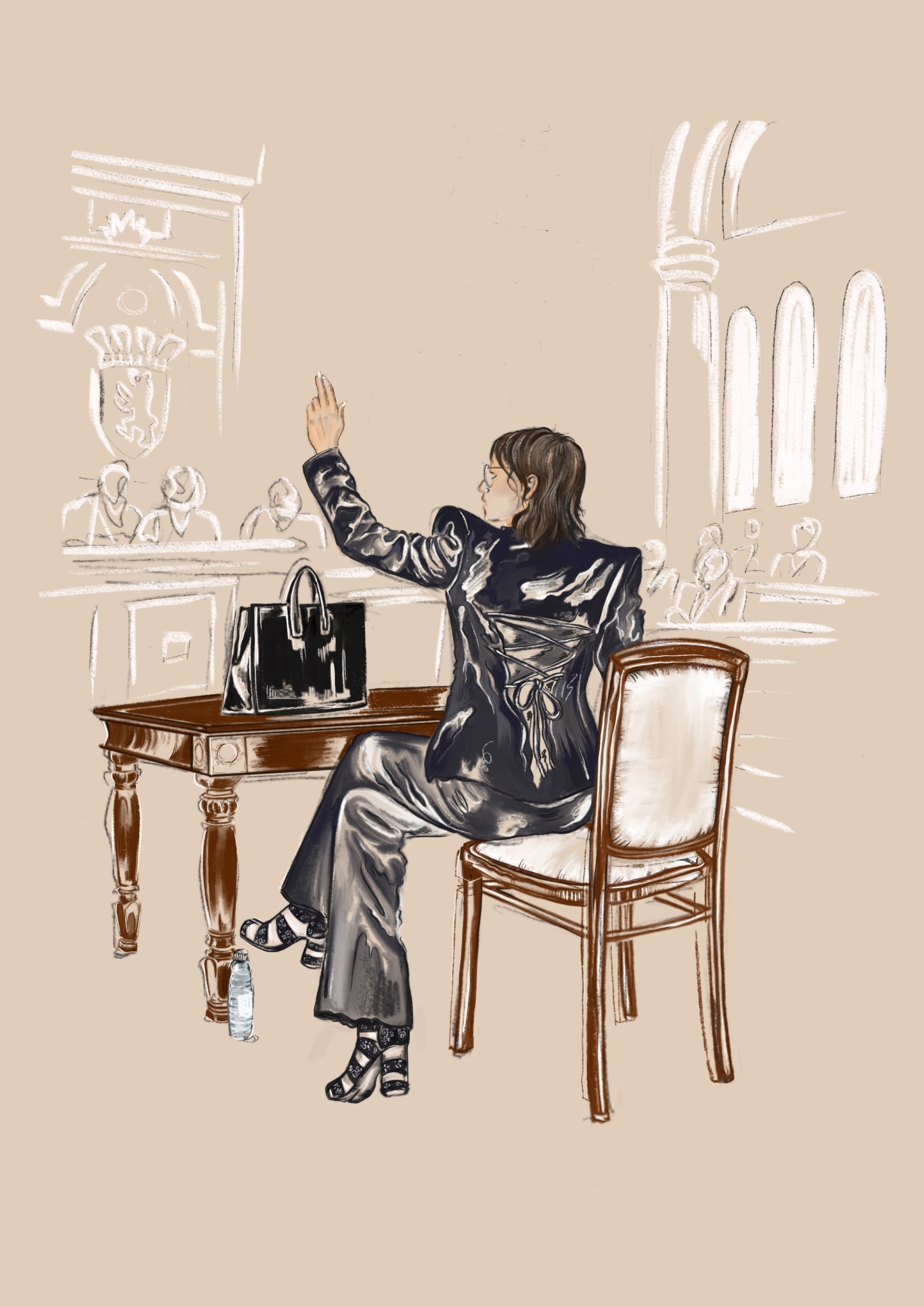
I have selected three outfit options – a grey Armani trouser suit, a beige and a butter yellow skirt suit – to be my official courtroom attire, exuding composure and elegance with a certain playful twist. My objective was to make each outfit look subversive yet still court-appropriate: my vintage Armani Collezioni suit had an unconventional corset-like lacing detail at the back. I paired it with a large EENK tie-scarf, tied into a bow, Margiela Tabi boots – to push just a little further into unconventional, and tinted Gucci glasses for a serious flair. A large vintage Prada bag rounded out the look and offered just enough space to store my courtroom paperwork and a plastic water bottle. I was advised to carry water in a plastic bottle to get past the court’s security guards.
|
|
Armani Collezioni suit, EENK tie-scarf, EsTemporary by Silvia Piantini ring, Gucci sunglasses, Prada bag.
|
|
Armani Collezioni suit, Maison Margiela Tabi boots, EsTemporary by Silvia Piantini ring, Prada bag.
|
|
|
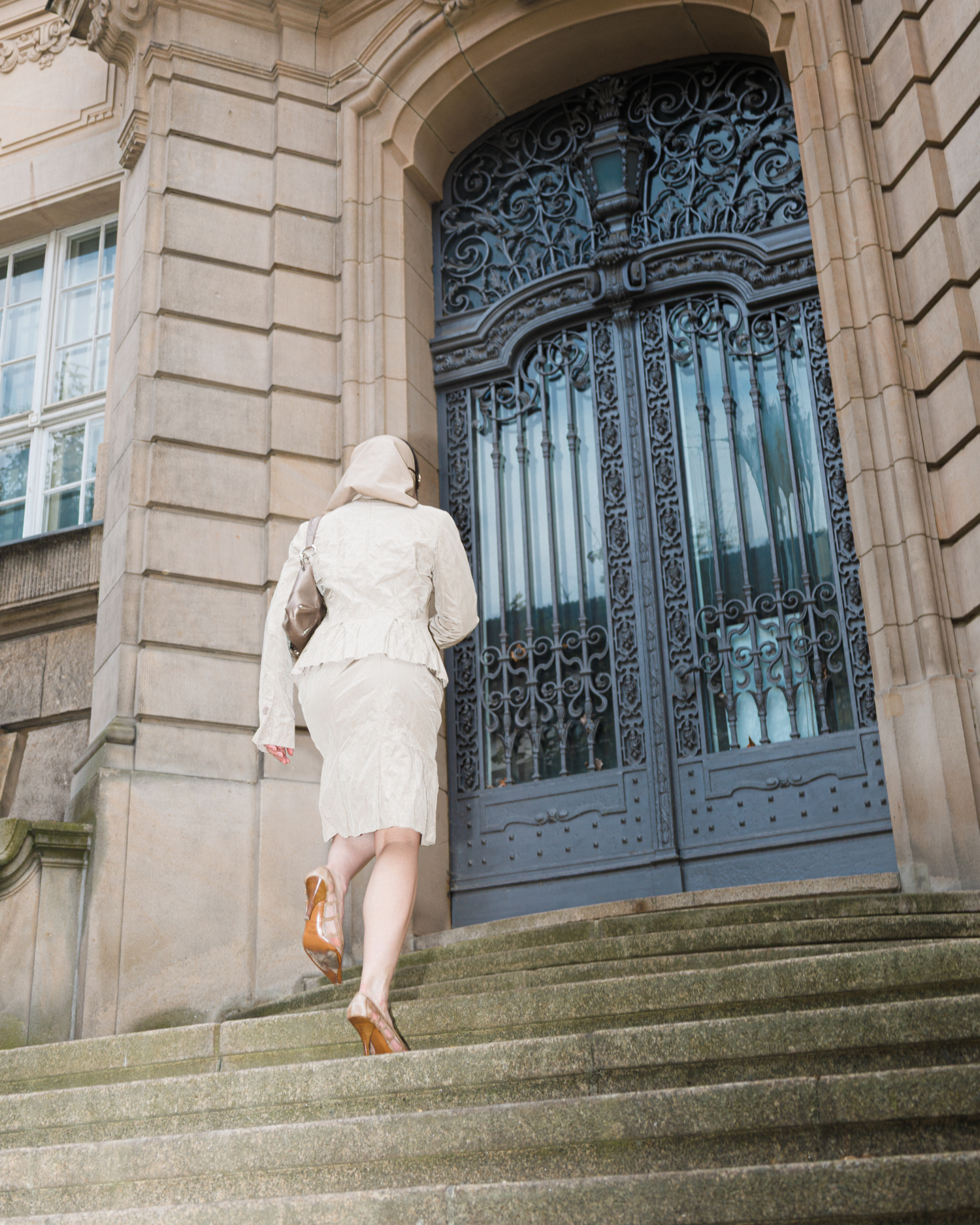
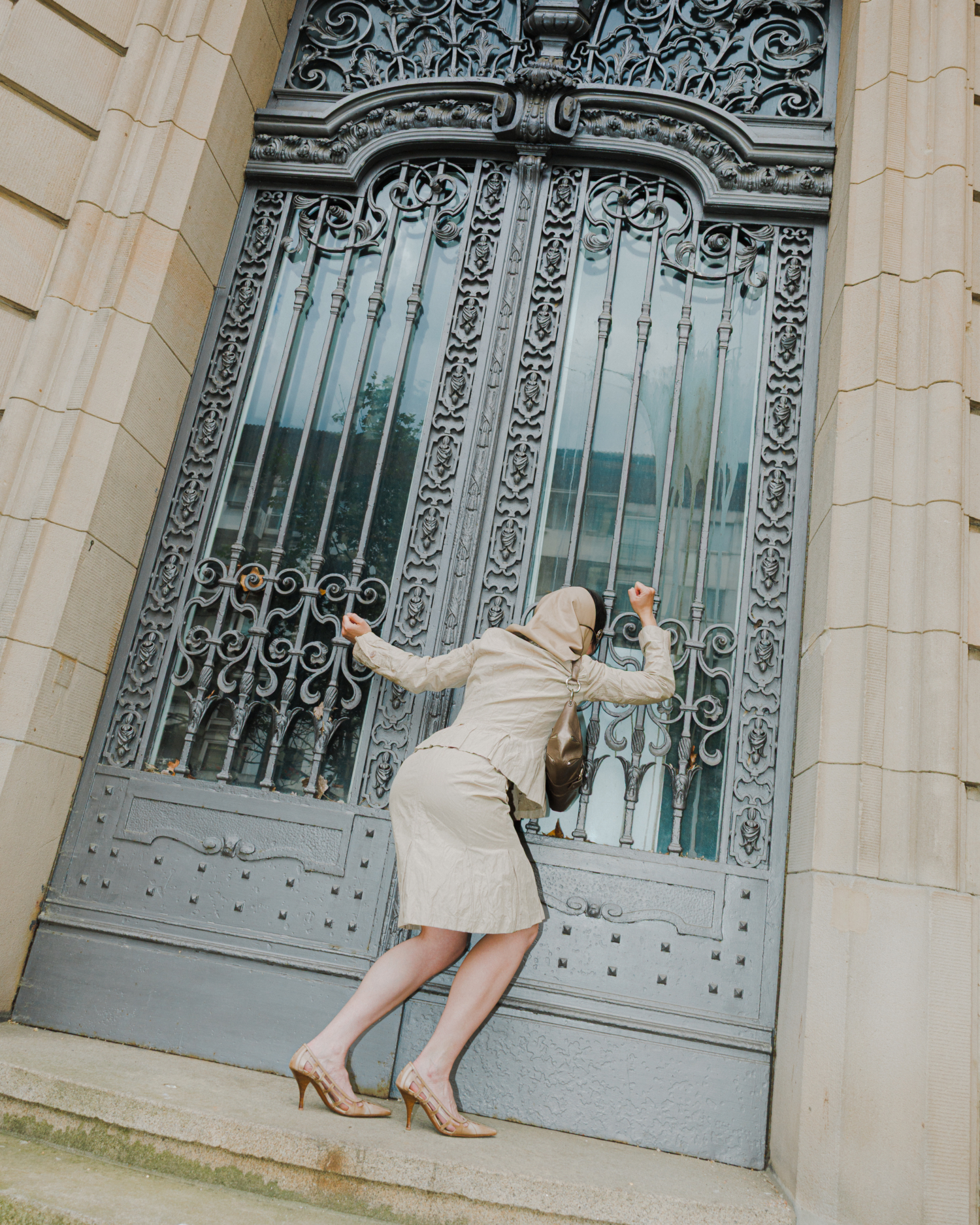
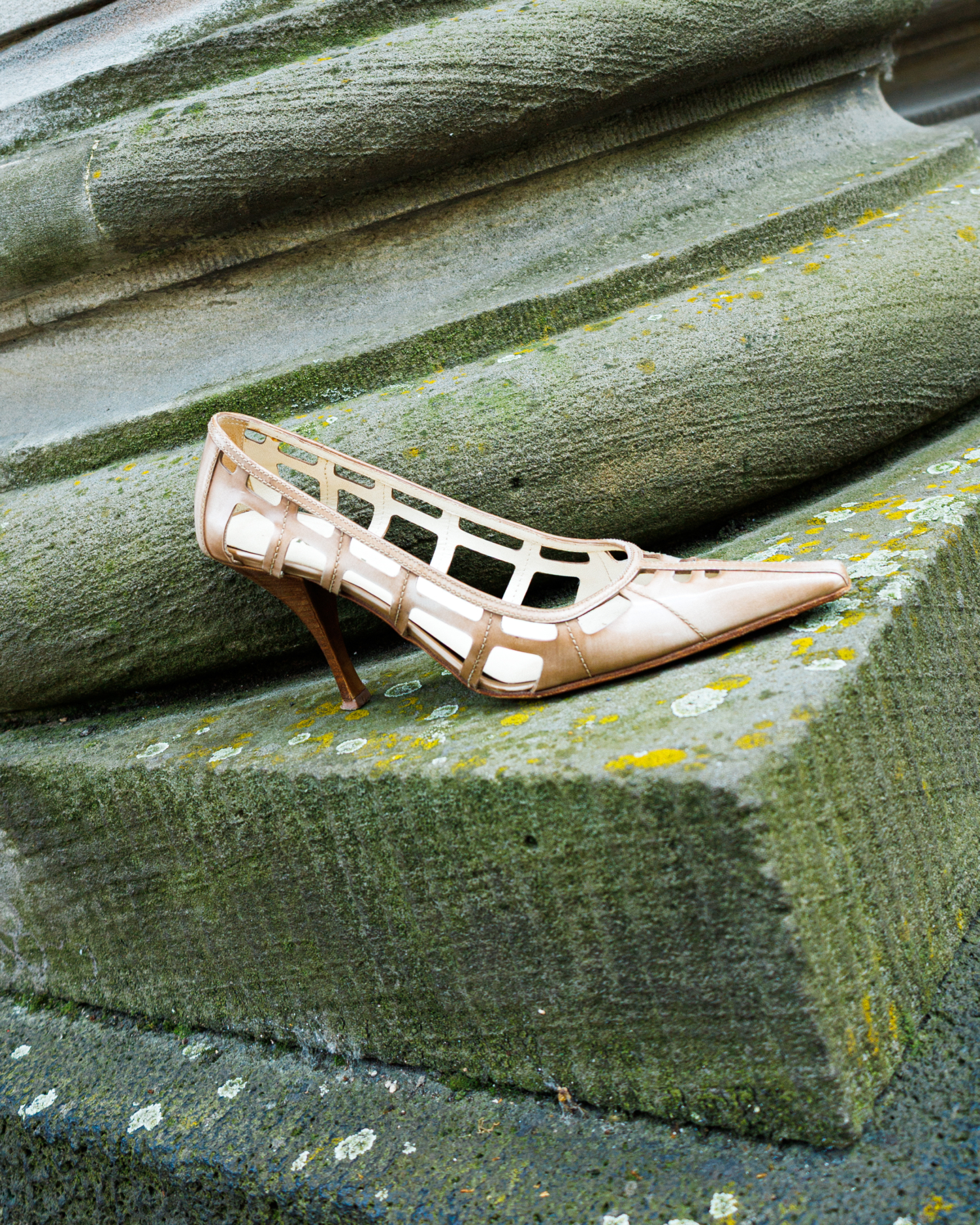
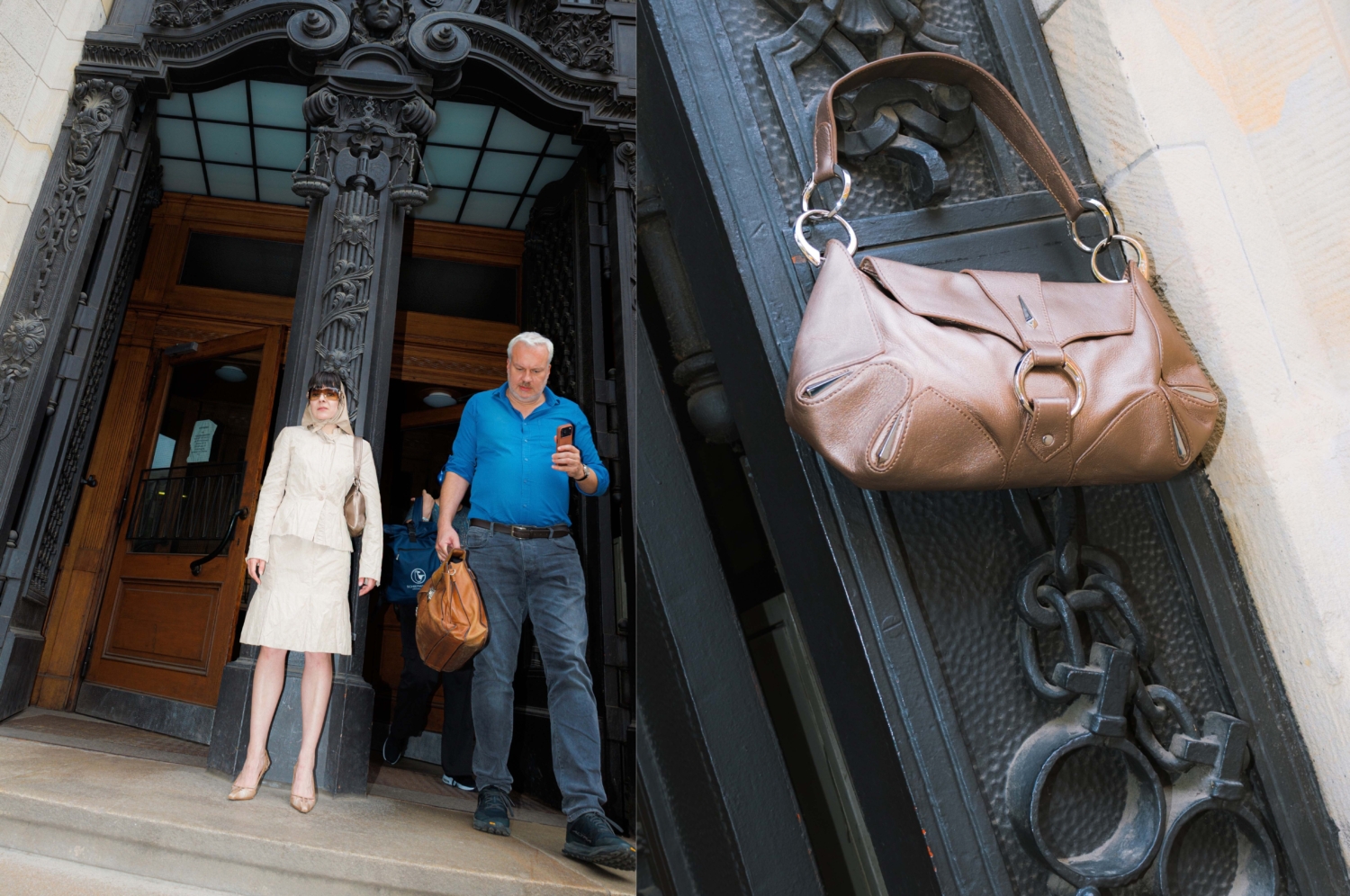
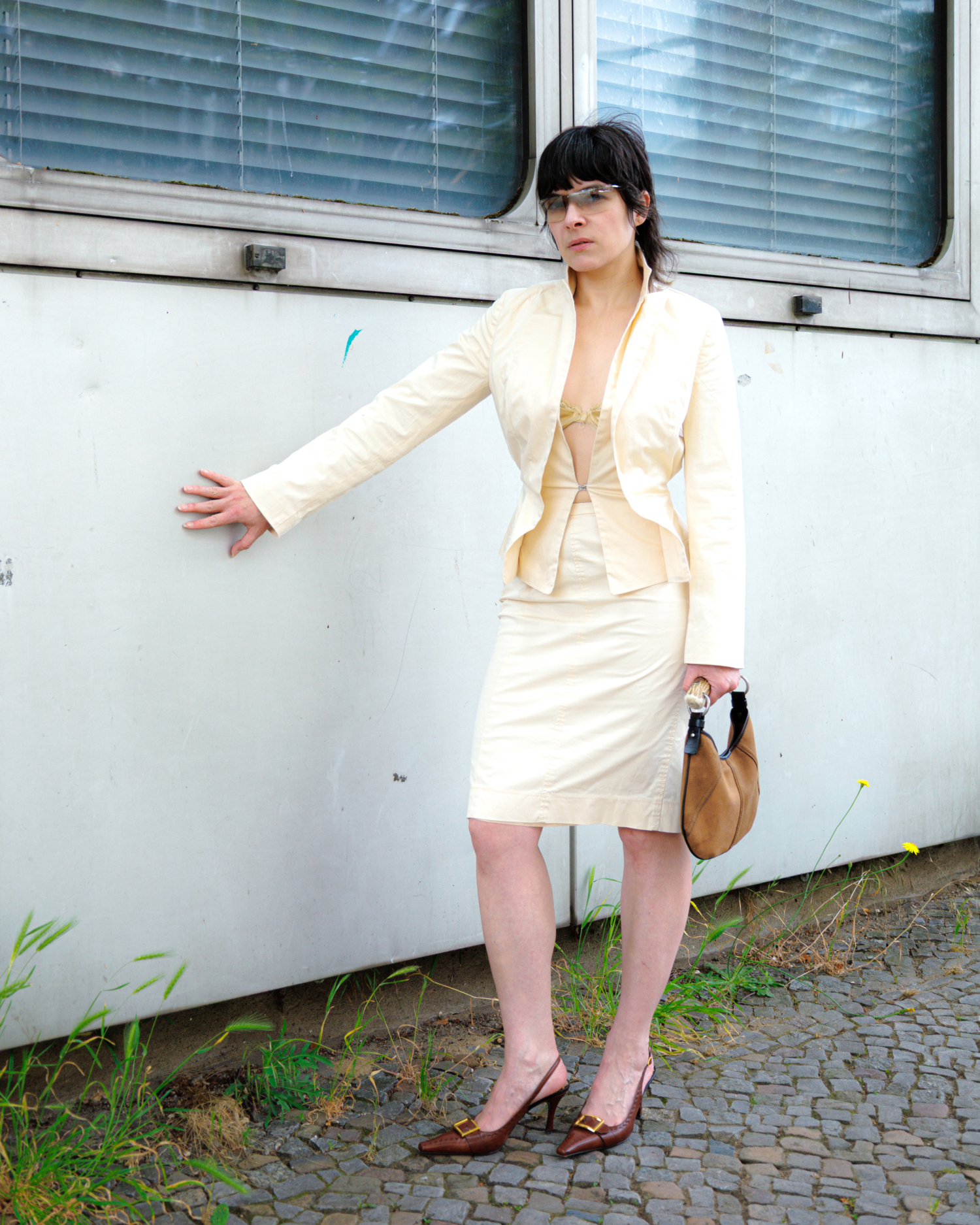
The second option was the beige skirt suit. It looked sober at first glance, but the reflective fabric gave it an edge. I wore it with a vintage Mugler handbag in a beige-gold tone, vintage Cavalli sunglasses in the same tone, a nude faux-leather scarf and beige Prada pumps. I looked almost like Queen Elizabeth II in her signature headscarf style. The third outfit option was the most daring of them all. I imagine the judge would have raised an eyebrow had I entered the courtroom wearing this look, so I saved it for my going-to-and-around-the-court-walk. The suit had a beautiful soft butter shade that echoed the horn handle color of that iconic vintage Tom Ford-era YSL handbag I paired it with, as well as the chocolate brown vintage D&G mules that matched the color of the jail fence adjacent to the main court building. Plus the tinted Gucci glasses to look serious.
|
|
Vintage skirt suit, Thierry Mugler handbag, Prada pumps, stylist’s own faux leather scarf.
|
|
Vintage skirt suit, Thierry Mugler handbag, Prada pumps, stylist’s own faux leather scarf.
|
|
Vintage skirt suit, Thierry Mugler handbag, Prada pumps, Roberto Cavalli sunglasses, stylist’s own faux leather scarf.
|
|
|
I entered the court room wearing the sharply tailored, grey power-shouldered Armani suit, with a thin, cinched waist. The Tabi boots clacked on the floor. The Prada bag on my shoulder. The tinted Gucci glasses on my head. I looked at the judge and glanced over the room. Only women. The woman I had to testify against was there, seated at a distance to my right in her usual blue jeans and white sneaker combo - the same outfit I'd seen her wear countless times. She looked down and played with her long fake nails. Her female lawyer looked elegant and smirked at me when I entered. Was it a smirk of recognition, an outfit check, or did she know something I didn’t? The female judge, the prosecutor, and the court clerk all wore robes. The judge stood out with her grey bob and clear glasses. She looked strict and somber.
|
|
Marc Cain skirt suit, YSL by Tom Ford handbag, Dolce & Gabbana heeled sandals.
|
|
Marc Cain skirt suit, YSL by Tom Ford handbag.
|
|
|
The young woman from the victim support team entered with me and sat close beside me. I could feel her presence and her unconditional emotional support. While my power-shouldered Armani suit gave me a sense of confidence and composure, with a dash of rebellious cheekiness, this supportive woman beside me made me feel like I had a team – like I wasn’t alone. The judge and the prosecutor asked me questions, and I testified under oath. The defense lawyer's question, though, revealed an uncomfortable truth. I realized that the woman who assaulted me lied in court. I felt anger, but also hope that the judge would see through her lies and that justice would be restored.
Two weeks after the court date, I finally received the ruling – and I was disappointed. The woman was acquitted of attempted assault. Perfect proof, I thought, that the system is skewed and that people can get away with lies and unjustified aggression. Is there justice in our unjust world? Sometimes it seems there is none. Sometimes it seems that the villains of this world always win. And yet, personal agency begins here: in finding your voice, standing up for yourself, and allowing yourself to look your best simply because you care. Even though the outcome of the trial was far from what I had hoped for, what mattered most was that I stood up for myself and looked sharp in that power-shouldered Armani suit and Tabi boots. And perhaps, just maybe, that one day in court wasn’t all that ordinary. Maybe the judge, or that woman, will remember the sound of Tabi boots on the courtroom floor.
|
|
Photography: Lucie Mink
Art Direction, Styling, Text: Veronika Dorosheva
Talent: Veronika Dorosheva
Illustration: Maren Busch
|
|
|
|
|
|
|