Belgrade: Marianne Mueller and Ivana Kojić at Autokomanda
|
|
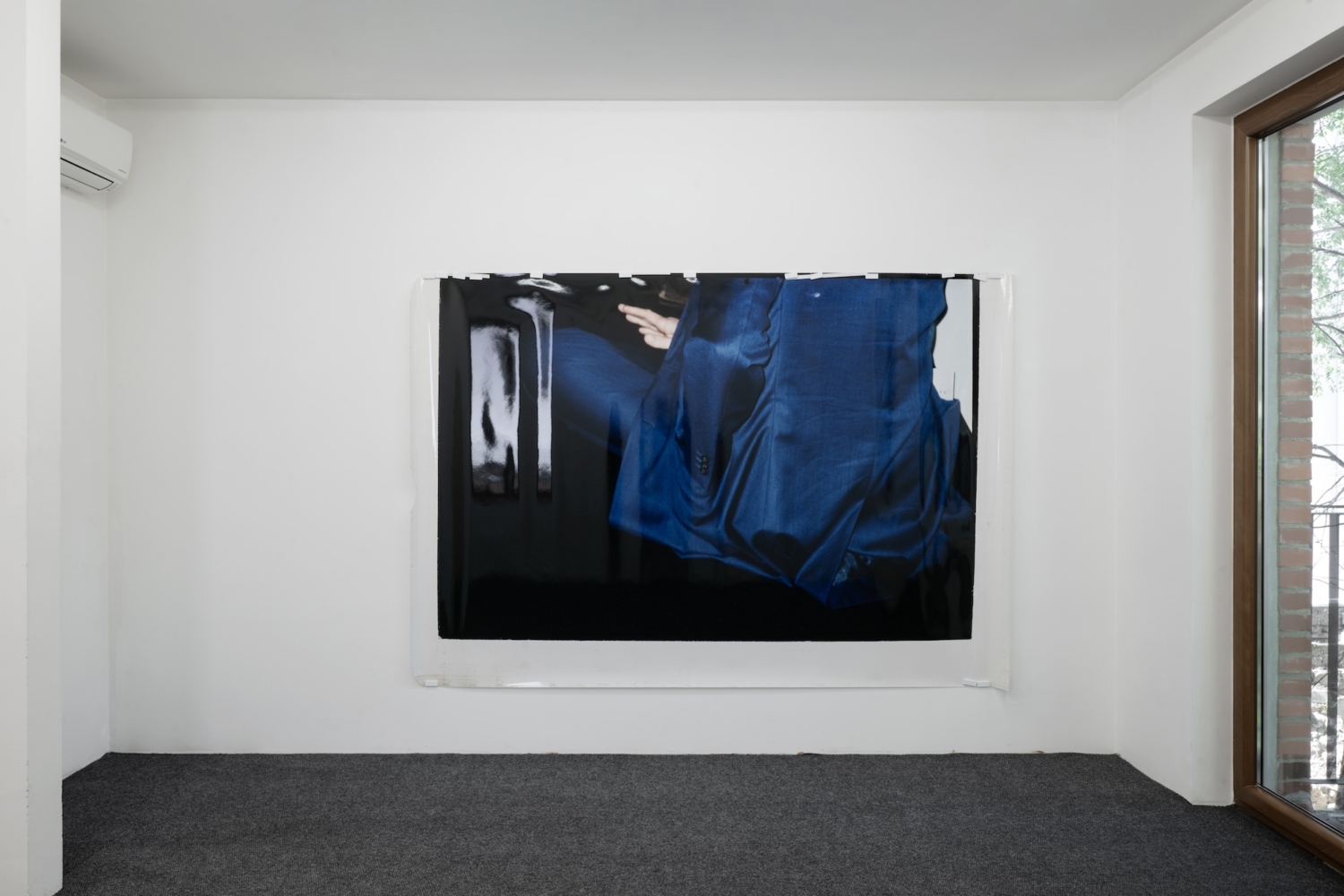
Marianne Mueller: UNTITLED (BLUE SUIT), installation view Autokomanda, 2016/2016. All photos courtesy of Autokomanda. Photography: Bojana Janjić.
|
|
|
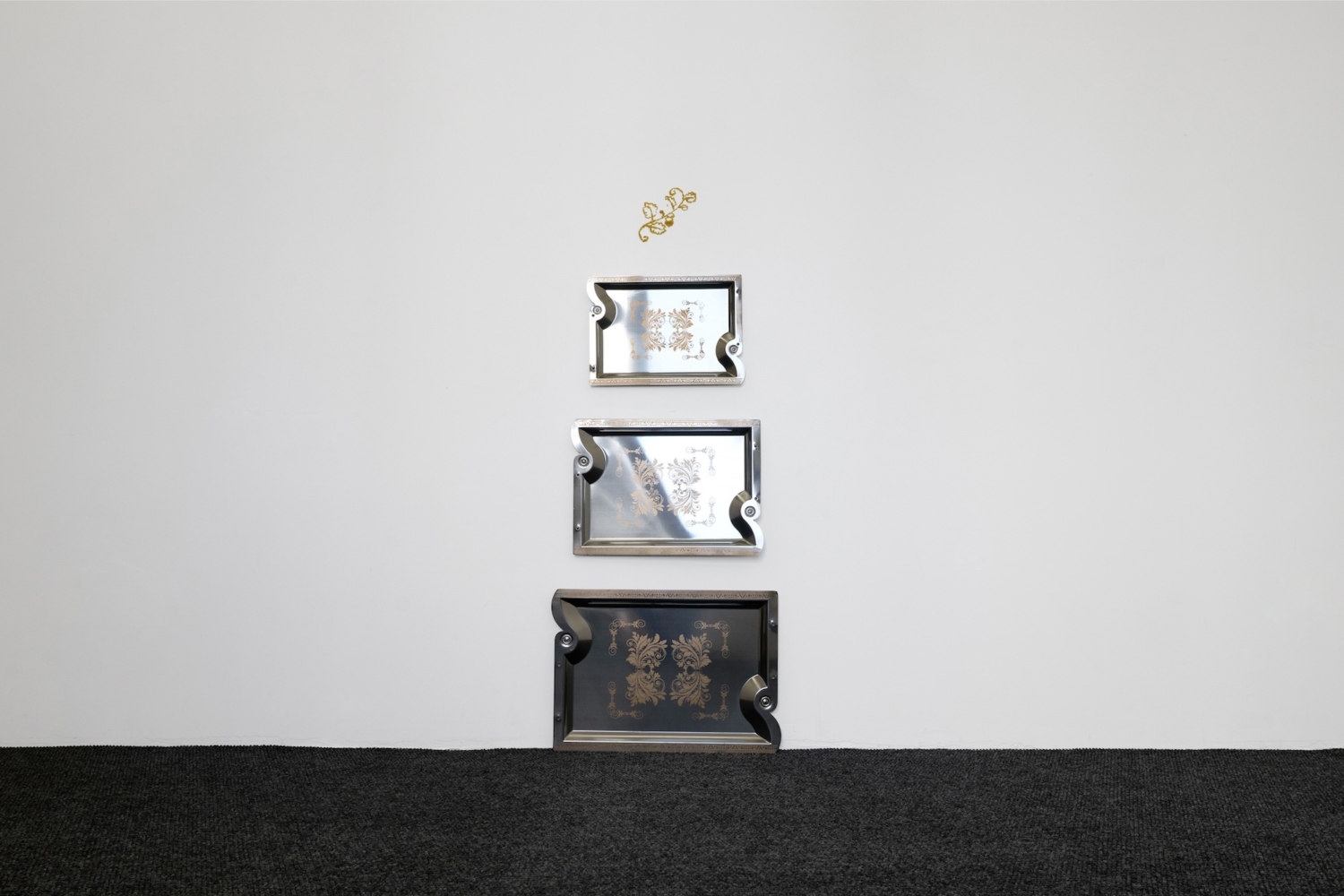
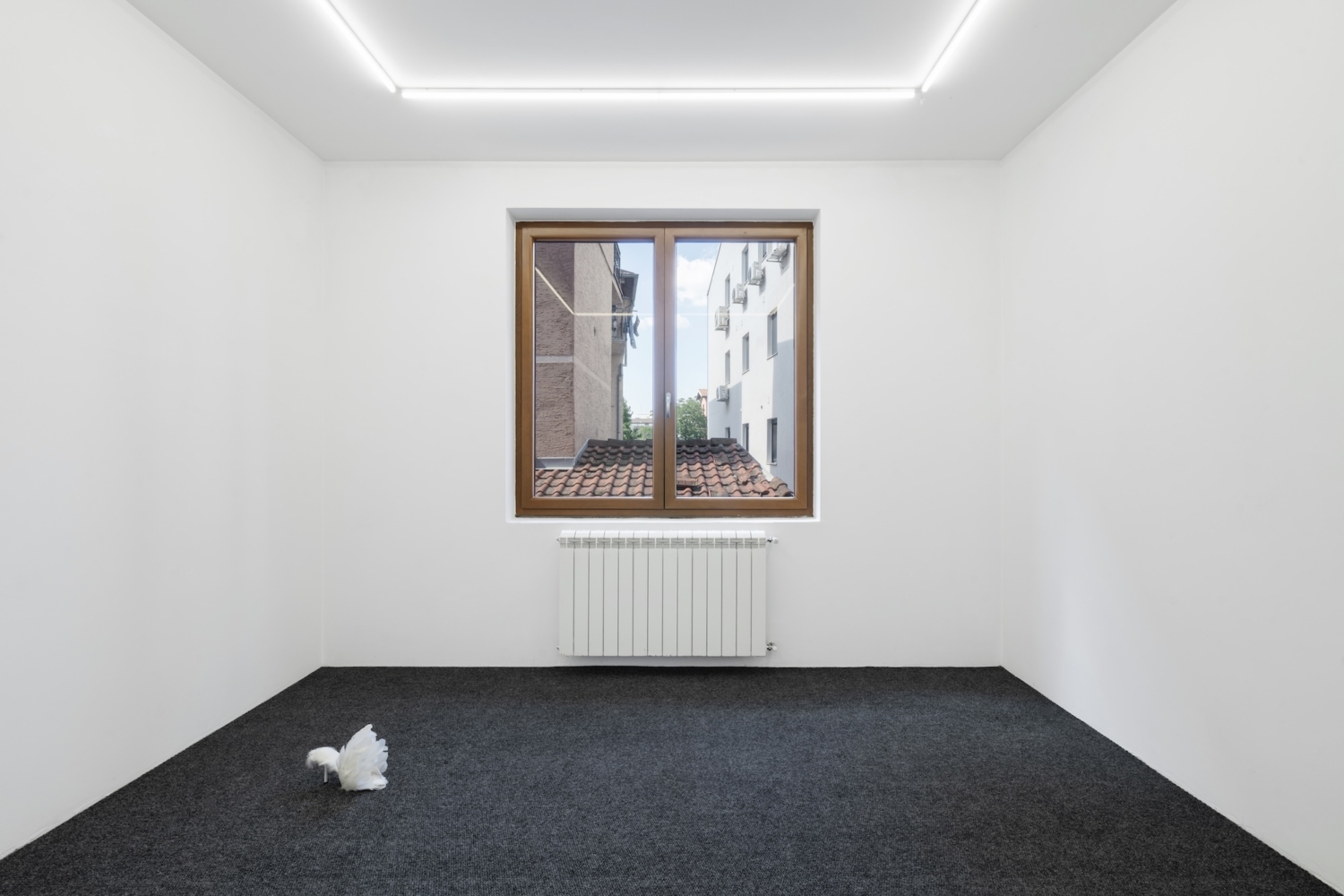
Belgrade, as an exhibition and as a portrait of its host city, is constructed across several scales: in the making of objects, in the systems used to present them, and in the broader structures through which place, identity, and culture are formed. Ivana Kojic’s wall-mounted tower of orientalized trays stacks reference and material in a vertical logic carrying geopolitical overtones. The cheap metal trays were produced in China, sold in Germany, produced for a diasporic Balkan market. They are objects shaped by circulation and reuse, where tradition is already mediated. Atop the work, a beeswax religious ornament adds a devotional register that, like all customs, hovers between the iconic and decorative. Nearby, a single high-heeled shoe covered in white feathers, like a pristine swan, is both an absent figure and desirable object. Its ornamentation is a transformation, away from being an item with potential use towards something inflexibly beautiful. It echoes some conservative visions of womanhood.
|
|
Ivana Kojić: Hive (Košnica), installation view Autokomanda, 2026. All photos courtesy of Autokomanda. Photography: Bojana Janjić.
|
|
Ivana Kojić: Anđelija, installation view Autokomanda, 2026. All photos courtesy of Autokomanda. Photography: Bojana Janjić.
|
|
|
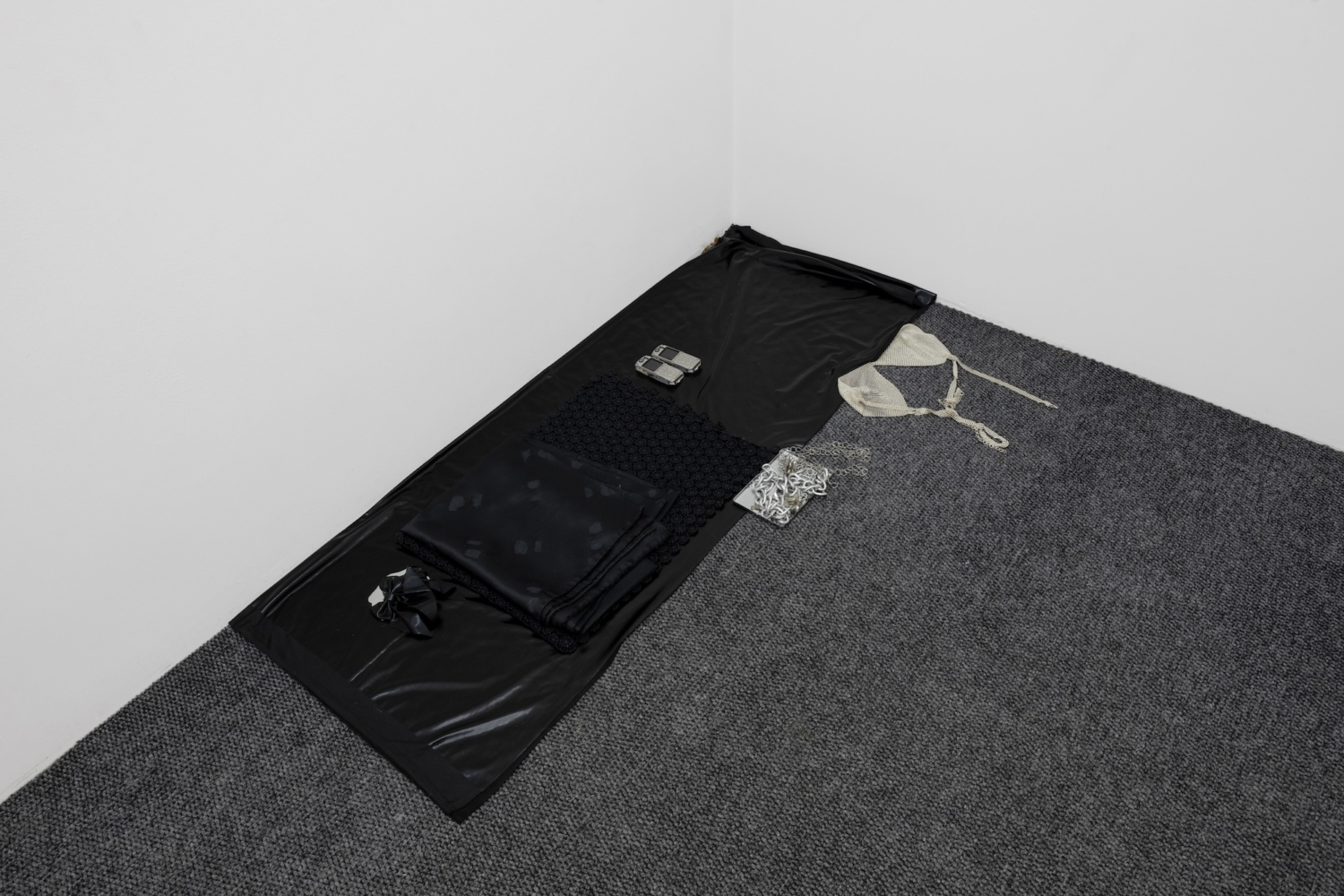
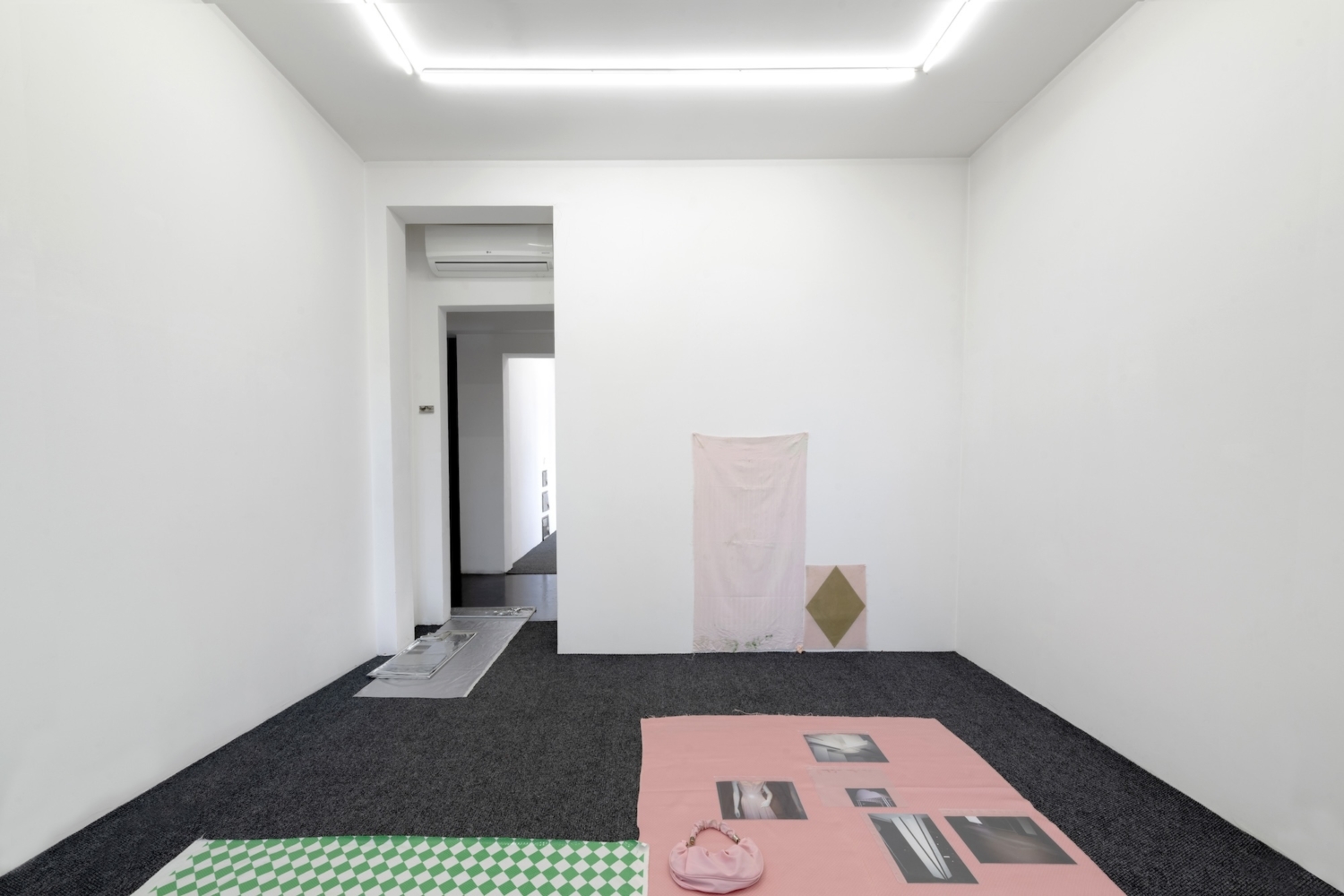
Marianne Mueller’s floor pieces, some extending onto the wall, reference the displays of street vendors while also acting as radical passepartouts for photographs laid down on them. They mark a clear and compelling development in her practice, bringing together the photographic strand that has run through her work for three decades with the installation and sculptural experiments of the past ten years. The result is a system in which images are not simply presented but actively constructed through their display. The photographs, taken in Belgrade on an earlier trip, function as an outsider’s document of a changing city, engaging local ideas of cultural norms and registering urban instability. A bar captured earlier this year is already gone. These works complicate the boundary between display and circulation. Mueller’s floor pieces combine different fabrics (some local, some global, patterned or monochrome) and incorporate objects. The result unsettles, or reveals, the line between artwork and sales display, where value and presentation overlap. Silver-dipped eyelashes placed at doorways extend this attention to thresholds, where the architecture itself becomes a form of framing, structurally and cosmetologically.
Across the exhibition, composition and construction converge as material processes that shape how things appear and persist. Objects, images, and bodies are built through layering, support and positioning. It all revolves around how things are made in ways visually, materially and socially. A portrait very specific and totally universal.
|
|
Marianne Mueller: STREET VENDORS (BLACK), installation view Autokomanda, 2026. All photos courtesy of Autokomanda. Photography: Bojana Janjić.
|
|
Marianne Mueller: STREET VENDORS, installation view Autokomanda, 2026. All photos courtesy of Autokomanda. Photography: Bojana Janjić.
|
|
Gardening Is the New Chess: Notes on Biennale Gherdëina
|
|
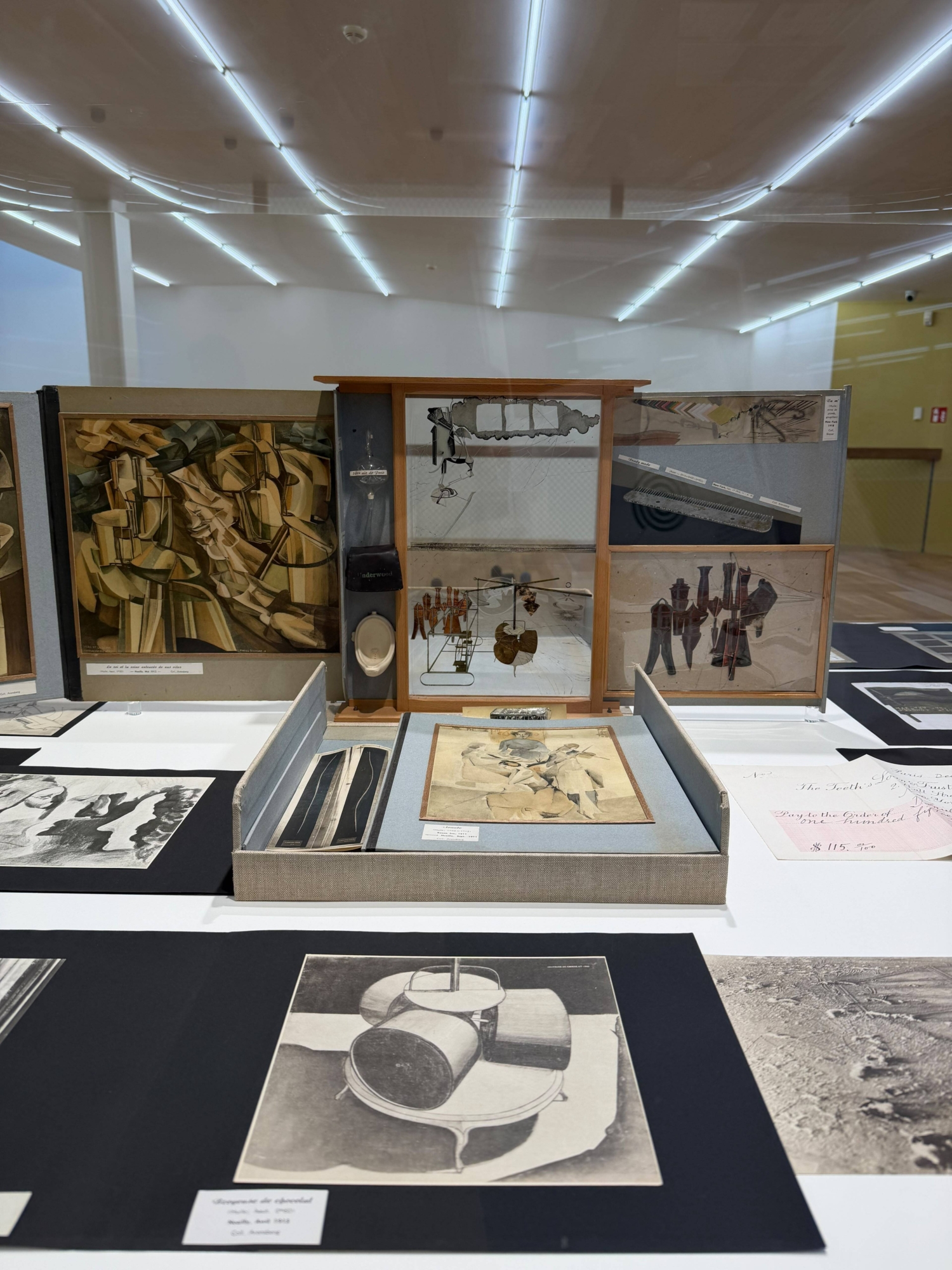
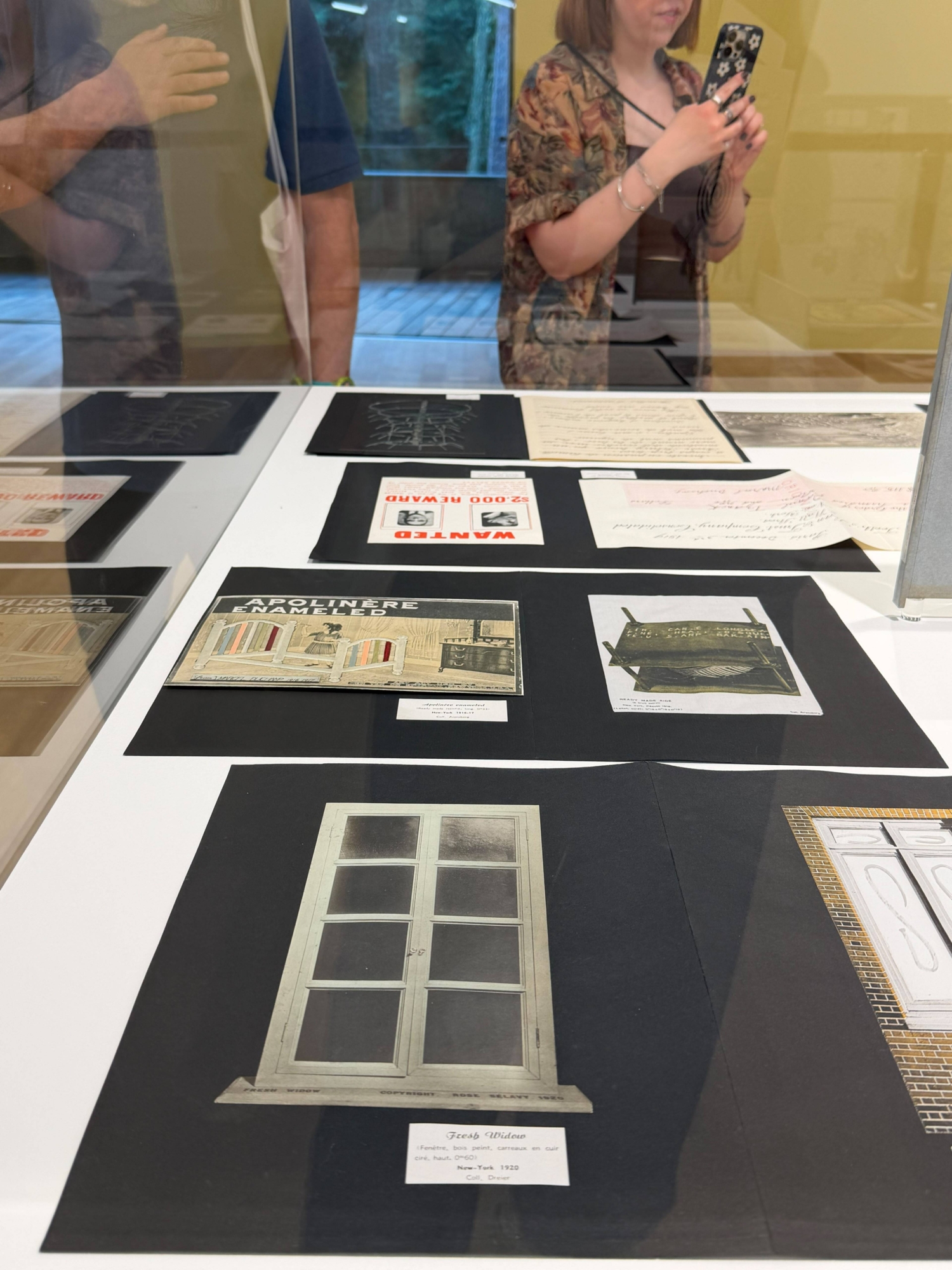
Marcel Duchamp: Boîte-en-valise (Museum in a box). Photo by Claire Shiying Li.
|
|
|
The tenth edition of Biennale Gherdëina is curated by Swiss curator Samuel Leuenberger, who previously curated Art Basel's Parcours and runs the independent space SALTS outside Basel. The biennial takes gardening not simply as a form of mediation with nature, but as an emblem of social and ecological justice. One question Samuel posed during the press conference stayed with me: how much care is enough to cultivate a garden when both neglect and overattention can cause an ecosystem to fail?
The question feels strangely appropriate for our current moment. If gardening is less about knowledge production than about exercising care among people and species unknown, then care itself becomes a risky proposition. Efforts may be excessive, misguided, or futile; outcomes remain uncertain. This makes gardening seem perhaps one degree closer to chess than art.
Duchamp famously positioned chess above art for its intellectual superiority, a realm less vulnerable to markets and economies of attention. Yet it seems to me that gardening may be the new chess. Unlike chess, gardening is played on a board that already exists. There are no equal pieces and no fixed rules. The game unfolds within a living environment inhabited by countless human and non-human actors. It is not about winning or losing, but about finding balance within a pre-existing ecology of coexistence.
Landing in the Dolomites through Bolzano from London, I felt my body already warming up, leaving the dampness of the Thames behind for a kind of highland cleansing retreat. If you look up Biennale Gherdëina online, it is not immediately obvious that it takes place within a long-standing resort town. The landscape is predictably beautiful, and the architecture is less spectacular than the new design landmarks emerging in ski resorts elsewhere. At first glance, it offers exactly what one expects from the Alps.
|
|
Lydia Ourahmane. Photo by Claire Shiying Li.
|
|
|
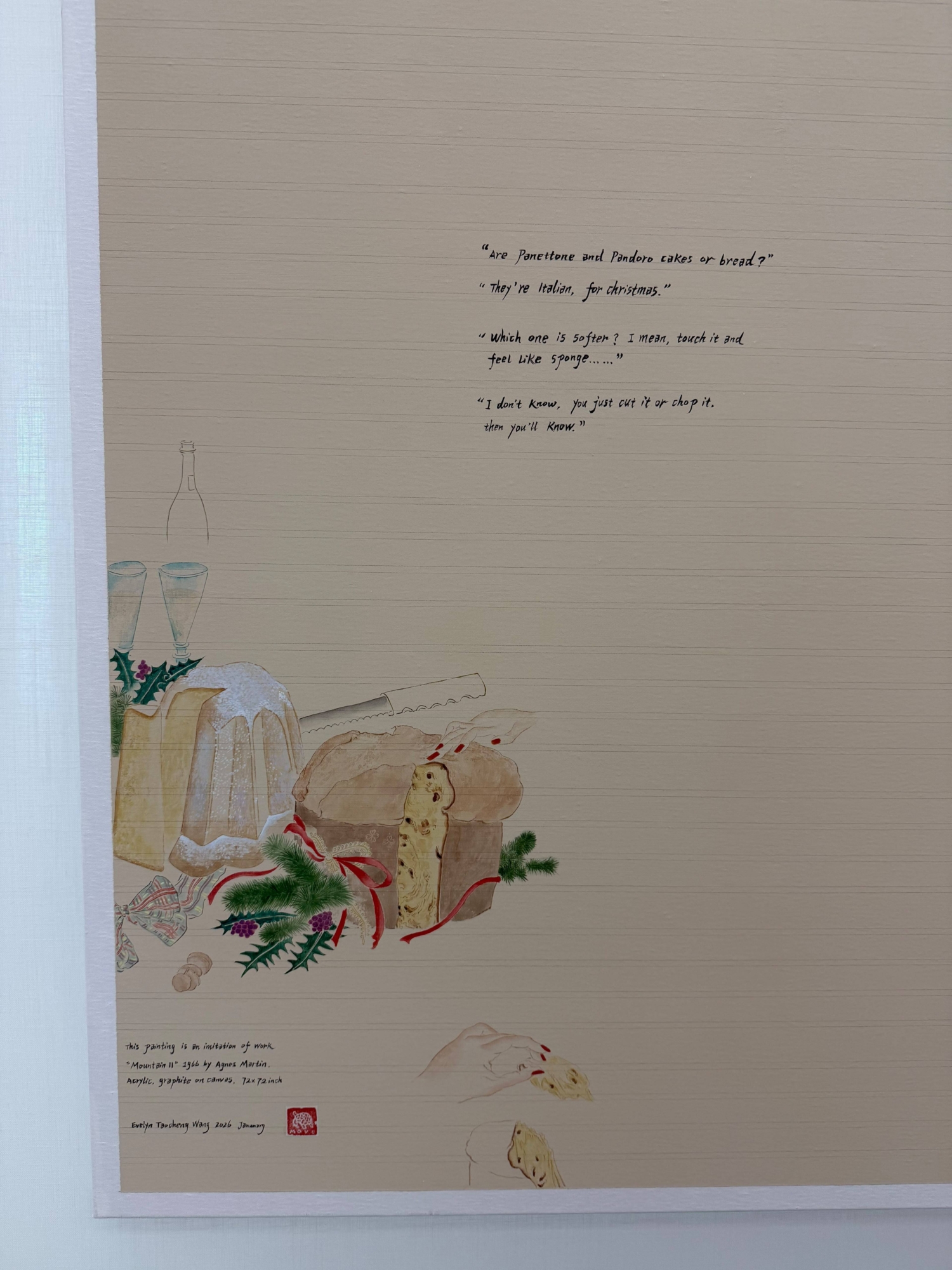
Before arriving at the biennial, we stopped by Museion to see Evelyn Taocheng Wang's exhibition “Sweet Landscape”. Curated by Leonie Radine, who told me Evelyn immediately resonated with Bolzano's layered identity upon her first visit, the exhibition unfolds with remarkable sensitivity. Natural light diffuses across custom silk panels, inviting an appreciation for the sweetness embedded in the work. Japanese eyeshadow palettes displayed in vitrines evoke traditional silk painting.
I often see the word "makeup" used to describe Evelyn's practice, but her work is not about concealment. Rather, she amplifies what might otherwise remain subtle. Through humor, color, and a deeply personal visual language, she teaches audiences multiple ways of seeing across East and West. The Chinese tendency to understand calligraphy as an image rather than symbol, the preference for warmer pink tones, the admiration and envy surrounding Giuseppe Castiglione's synthesis of Chinese and Italian painting traditions—all accumulate into a portrait of cultural translation. Evelyn does not reconcile contradictions. She exclaims them.
|
|
Evelyn Taocheng Wang. Photo by Claire Shiying Li.
|
|
|
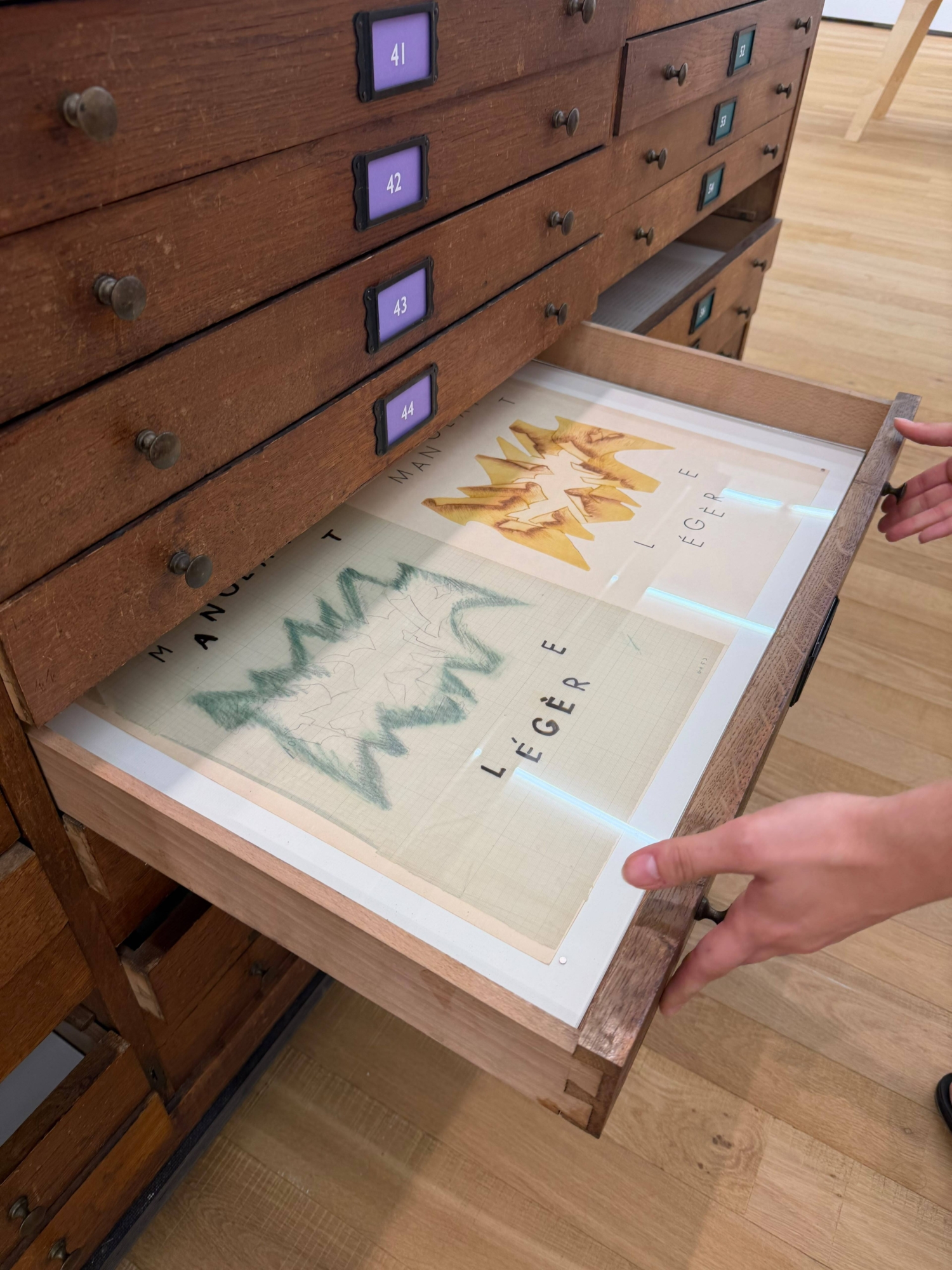
The second stop was Fondazione Antonio Dalle Nogare, presenting “TOUTITÉ – ILIAZD: The Study of Form”, dedicated to the radical Georgian publisher ILIAZD and his collaborations with Duchamp and other artists. If graphic design can be understood as a form of abstract painting, ILIAZD used it as a vehicle to discover and support the great artists of his generation. His experiments with typography, geometry, and composition moved between two and three dimensions freely. His artist books reveal not only the artistic movements of the twentieth century but also his awareness of the limitations of artistic recognition itself. Books became both a playground and a weapon. Perhaps that is why Duchamp chose to make “La Boîte-en-valise” with him.
|
|
ILIAZD. Photo by Claire Shiying Li.
|
|
|
We arrived at the biennial the following day. Two days of walking through the mountains and encountering site-specific works in loose succession felt like an extended version of Parcours, albeit with more thematic coherence. Rather than foregrounding display, the biennial foregrounds process—whether embedded in the making of a work or in the reconfiguration of a site. Here are a few highlights.
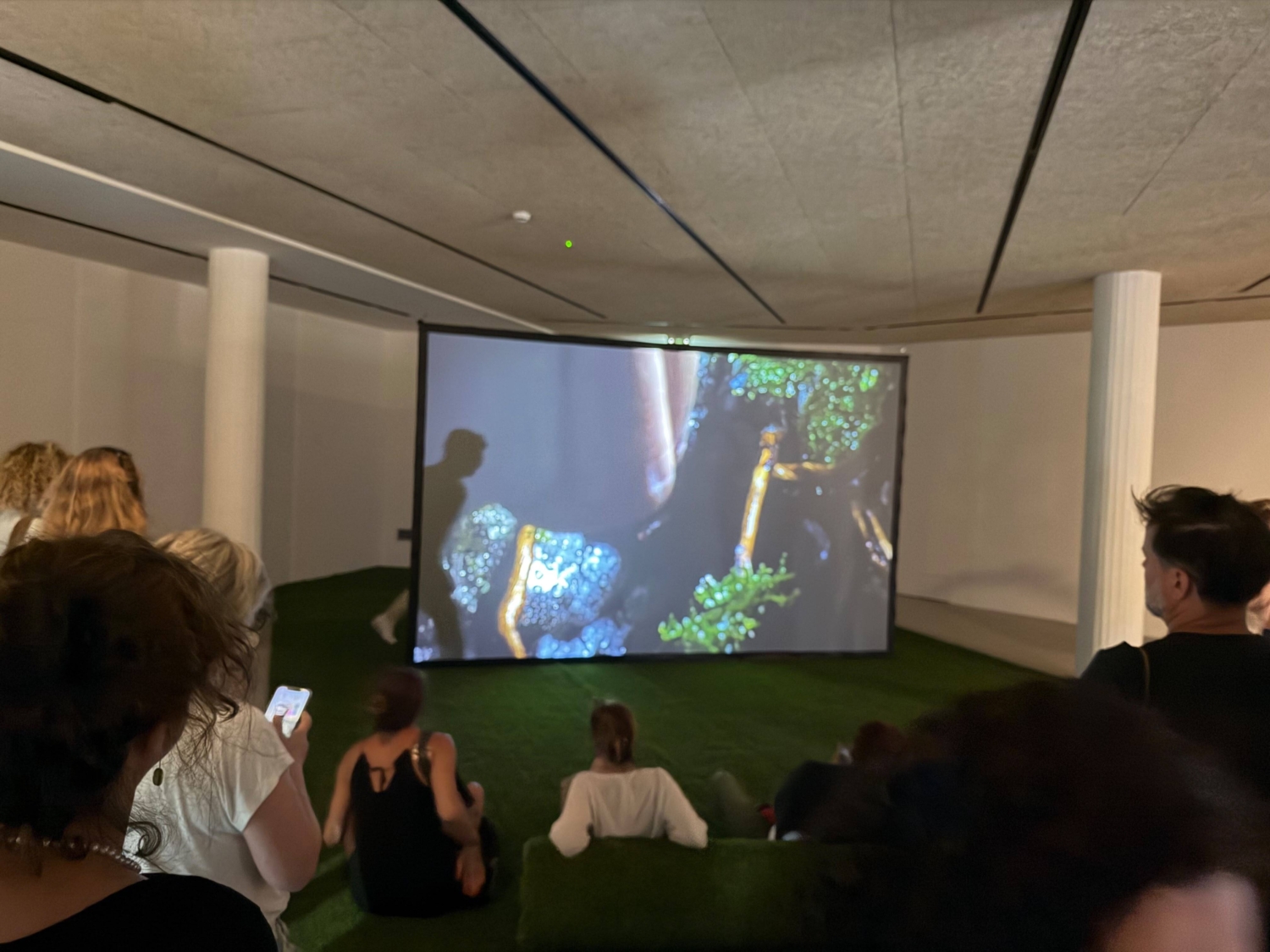
Wang Yuyan, the Paris-based Chinese artist who recently debuted a new film at Fondazione In Between Art Film in Venice, presents a work from 2024 in her signature style. Accompanied by the Owner of a Lonely Heart, the video is hypnotic and deeply unsettling. Through oddly satisfying close-ups of model-making processes, she simulates the transformation of landscapes through compulsive cycles of petroleum production. The work elicits a troublesome pleasure in witnessing the artificial intervention of nature while probing image circulation, extractive capitalism, and a distinctly human attraction toward destruction. Like gardening turned pathological, cultivation becomes a compulsion.
|
|
Wang Yuyan. Photo by Claire Shiying Li.
|
|
|
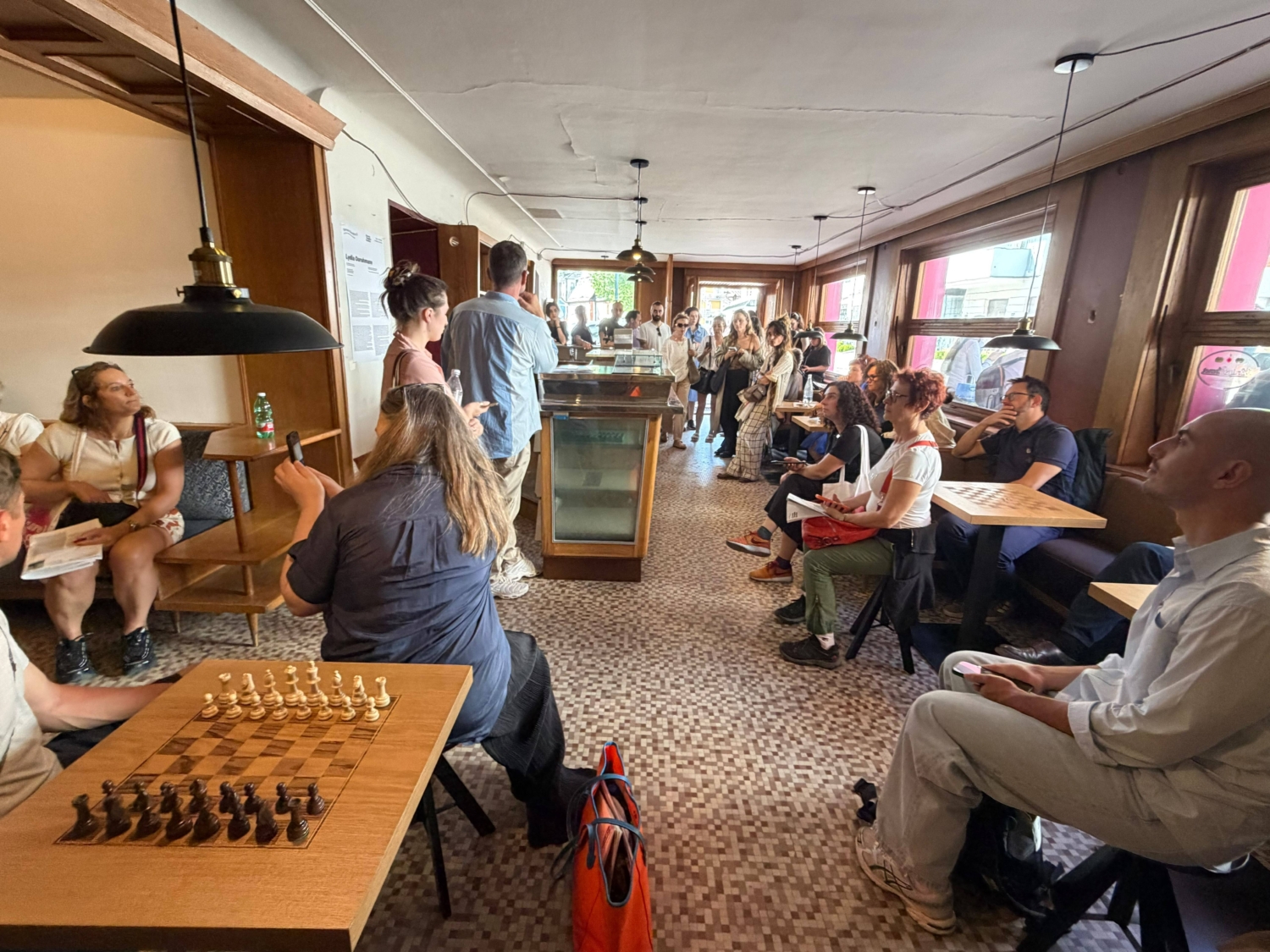
Barcelona-based Algerian artist Lydia Ourahmane, who recently opened a solo exhibition at Nicoletta Fiorucci Foundation in Venice, reactivated a former bar and lounge inside the abandoned Hotel Ladinia. Often constructing surreal situations from artistic research, Lydia treats social dynamics as malleable material, creating encounters between objects, structures, and built environments that shift one's perspective on an existing site. The intervention is minimal: chess tables populate the room, a Duchampian gesture hidden in plain sight. The nostalgic atmosphere of a former social nucleus is recovered and reframed as art. Intervention becomes less a critique of systems than an initiation into renewed social relations. The move feels strategic, almost chess-like, yet the outcome remains open, dependent on the participation of others.
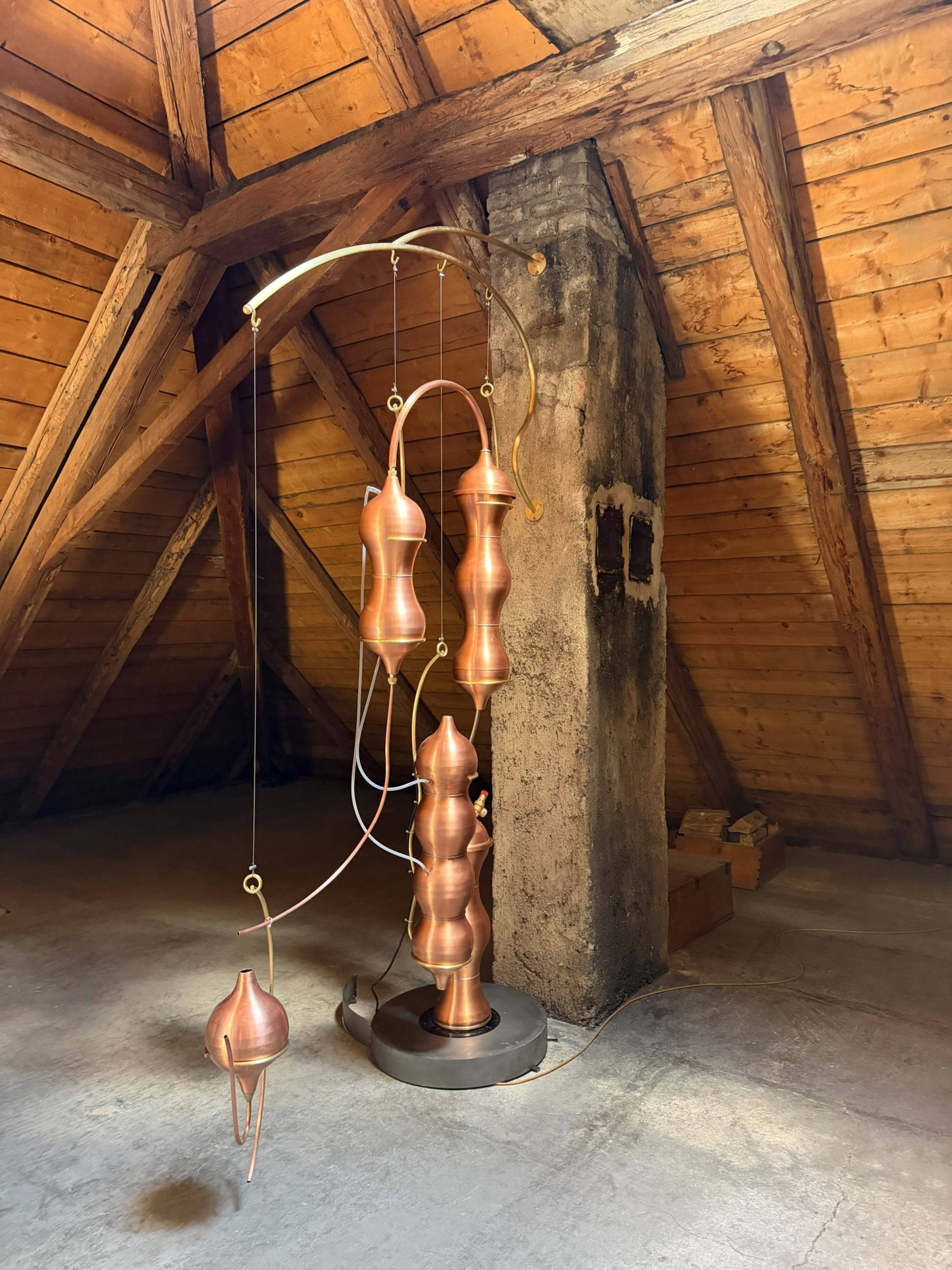
In an old attic in St. Cristina, Jacopo Belloni's “Dormancy” creates a dialogue between preservation and transformation, the ephemeral and the permanent, the animate and the inanimate. Dormant seeds from Val Gardena are sealed inside glass handbags like fragile time capsules. Alpine needles are distilled into fragrant droplets through custom-made copper apparatuses. As the biennial journey nears its end, the installation offers an unexpected aromatherapy. Sleeping seeds, evaporating scents, and preserved memories intertwine. The work carries a fairytale-like quality as beauty, memory, and death converge into a collective wish for dormancy.
|
|
Jacopo Belloni. Photo by Claire Shiying Li.
|
|
|
What stayed with me after Biennale Gherdëina was not any singular image, but the proposition that gardening might indeed be the new chess. Not because it is more natural or morally virtuous, but because it offers a more complex model for thinking. Chess remains a game of mastery. Gardening begins with surrender. One enters an environment already occupied by histories, species, desires, and forces beyond one's control. Every intervention alters the conditions of the game itself.
If Duchamp believed chess could elevate art by freeing it from the marketplace, Biennale Gherdëina proposes something perhaps more ambitious. Gardening offers a model of intelligence that does not rely on mastery, speculation, or control. It asks us to care without certainty, to act without guarantees, and to remain attentive to systems larger than ourselves. Here, art becomes less an object to be displayed than a garden to be tended.
|
|
Marcel Duchamp: Boîte-en-valise (Museum in a box). Photo by Claire Shiying Li.
|
|
|
|
|
|
|