|
Tomi Laja and J. Mayer H.
|
|
A South Arrow, Public Art, & Beige Obsession
|
|
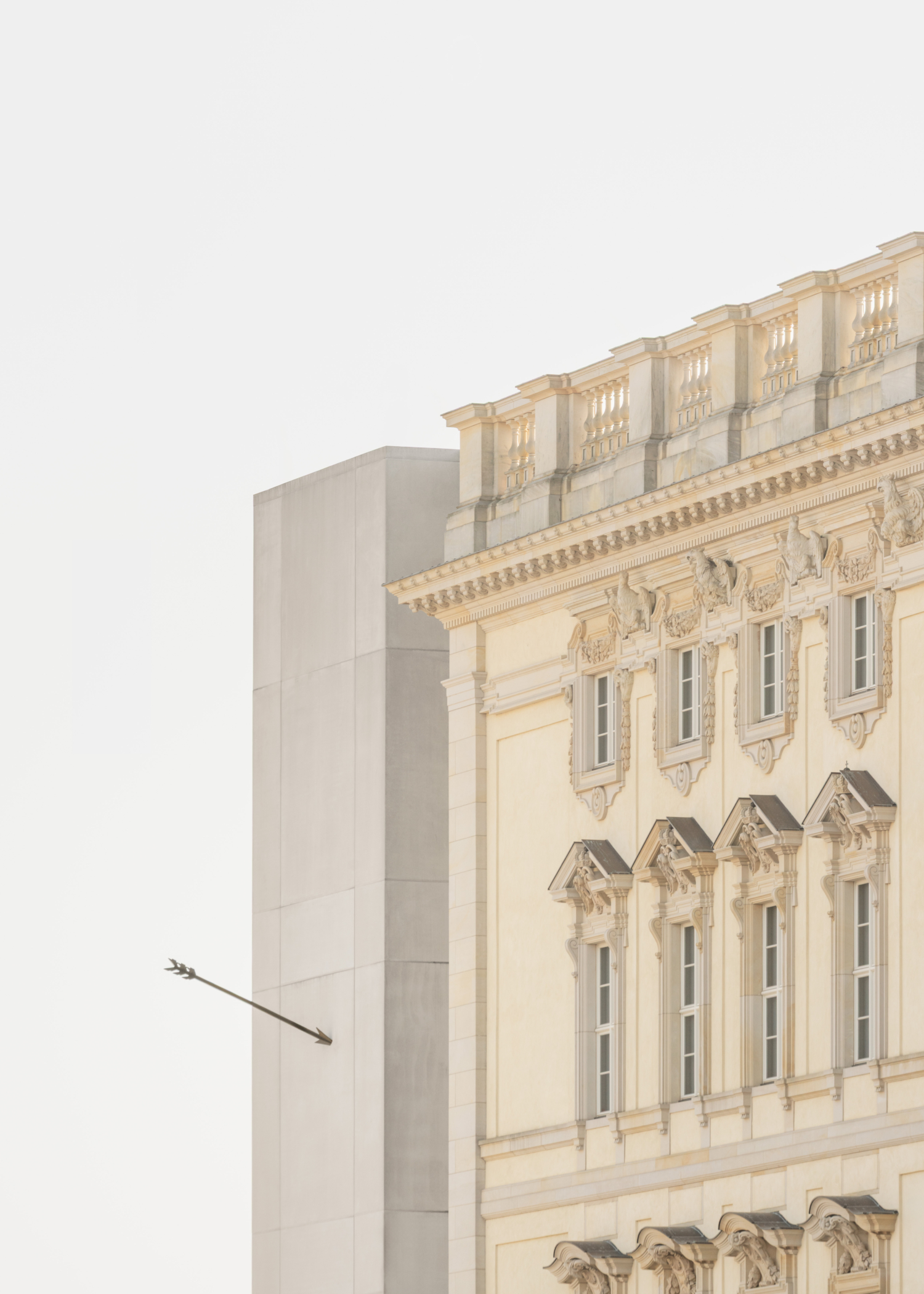
Südpfeil by J. Mayer H. Photo: Schnepp Renou.
|
|
|
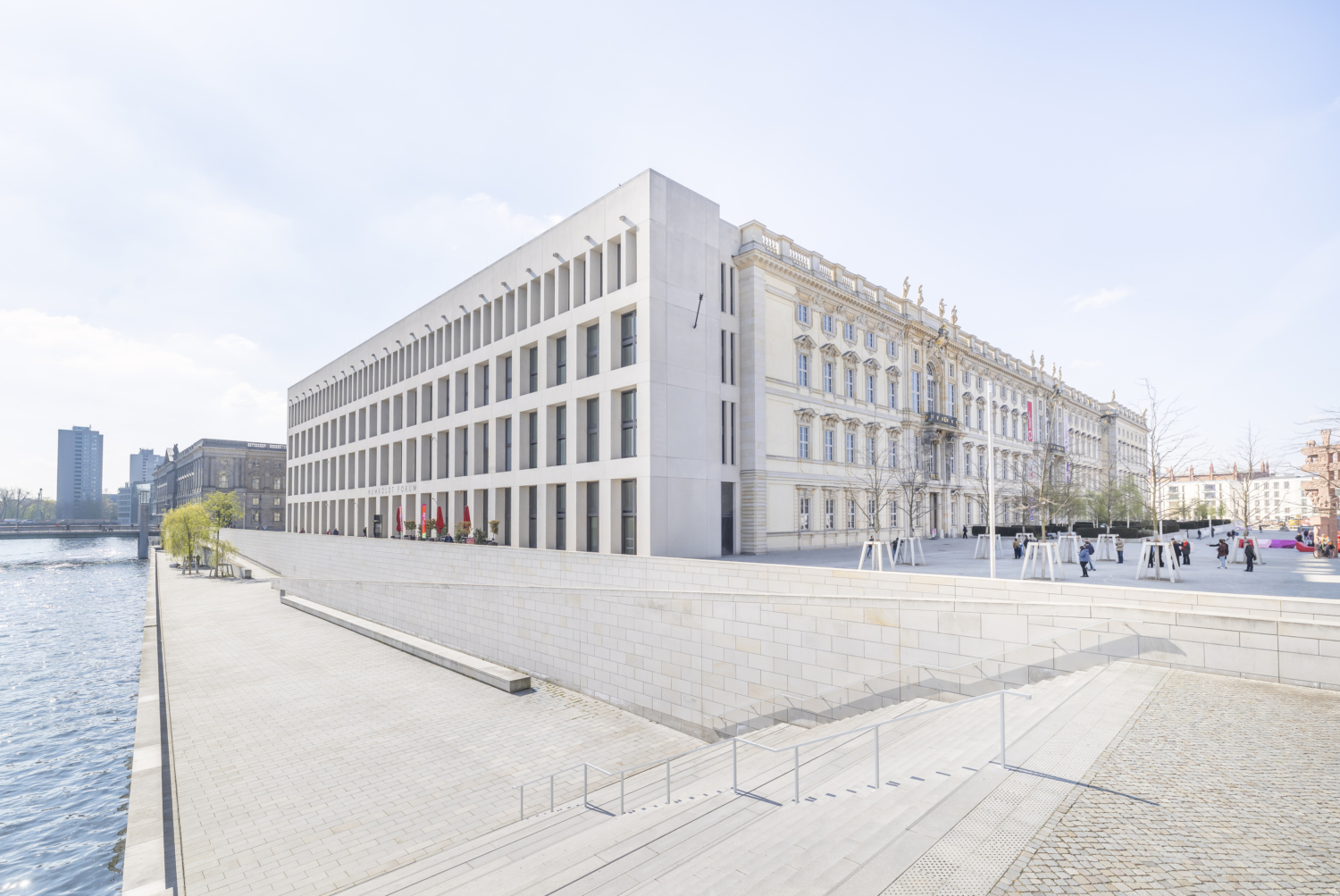
I'm sitting in the studio of J. Mayer H., walls clad in A4 printouts of research — sketches, images, diagrams, renders from floor to ceiling. Together we discuss the recently unveiled public artwork at the north facade of the controversial Humboldt Forum, Südpfeil. At almost four metres long, the sculpture reads as a light, lean gesture — almost easy to miss against the mass of the institutional building it encounters. Falling downward, the arrow appears to almost accidentally puncture the facade, rather than making a straight-on, deep incision, adding to the subtlety of its presence. The softness of the arrow against the weight of the institution feels deliberately contradictory, purposefully unresolved. Perhaps a quiet diagram of power: the institution and the voice of the marginalized global south, from where many of the artifacts now held in its interior were taken. When the sun hits the north-facing facade, this south arrow casts a shadow which changes perspective and position during early mornings and sunset. And as I learn and witness, when the water of the Spree is still, there is even another mirroring: a reflection.
|
|
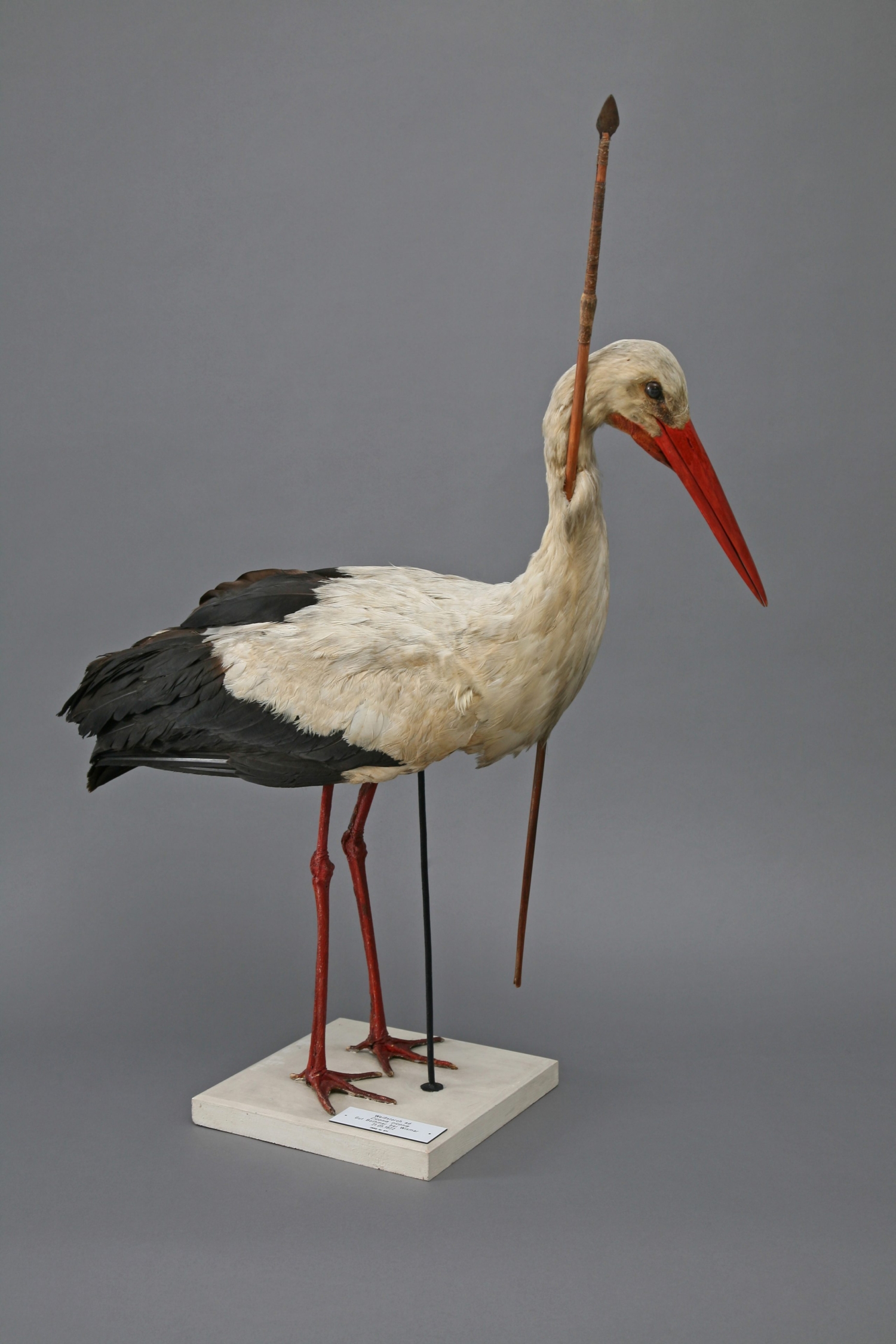
Photo: University of Rostock.
|
|
|
Tomi Laja: At first, the story of the Arrow Stork – a white stork which arrived in northern Germany in 1822 with a Central African iron-tipped spear through its neck – felt quite uncanny, almost like a myth. J. Mayer H.: Like a fairytale. TL: So it's disturbingly surprising to find that it is indeed recorded and true. At a time when European scientists assumed these birds hibernated, transformed, or simply vanished, the stork shifted how people thought about migration, showing that global networks predate modernity. It’s said that the actual object piercing the stork was a spear or lance — spears are used in close combat, while arrows fly at a distance. The arrow against the Humboldt Forum feels to become a striking diagram of movement. How did you come across this finding? JMH: We found it through research. It's not a secret story, but it's one which not many people know. We looked into migration and cultural exchange, and migration patterns for different species came up — mostly birds, of course. Eventually we came across the most puzzling finding: the Arrow Stork. And its history speaks closely to the Humboldt Forum, although the stork findings are not solely a German phenomenon. In German, there is also a rhetorical saying: mit rhetorischen Pfeilen auf jemanden schießen — to shoot arrows at someone during a verbal dispute. But the work holds the idea of discourse and cultural exchange too. The whole problematic question about the collections inside is already compressed in this story. TL: How integral is it to your larger practice? JMH: Are we always doing research? Of course. Sometimes it's more architectural, sometimes more conceptual or related to cultural issues. I have a huge research obsession with beige—as it relates to culture, from the military to coastal lifestyle beach culture to fashion to interior design. If you call somebody beige, it's not usually a compliment. But on the other hand, it's what many people code and feel as comfortable—suggesting and feeling like a given rather than a choice. This kind of power of beige is something that really interests me.
|
|
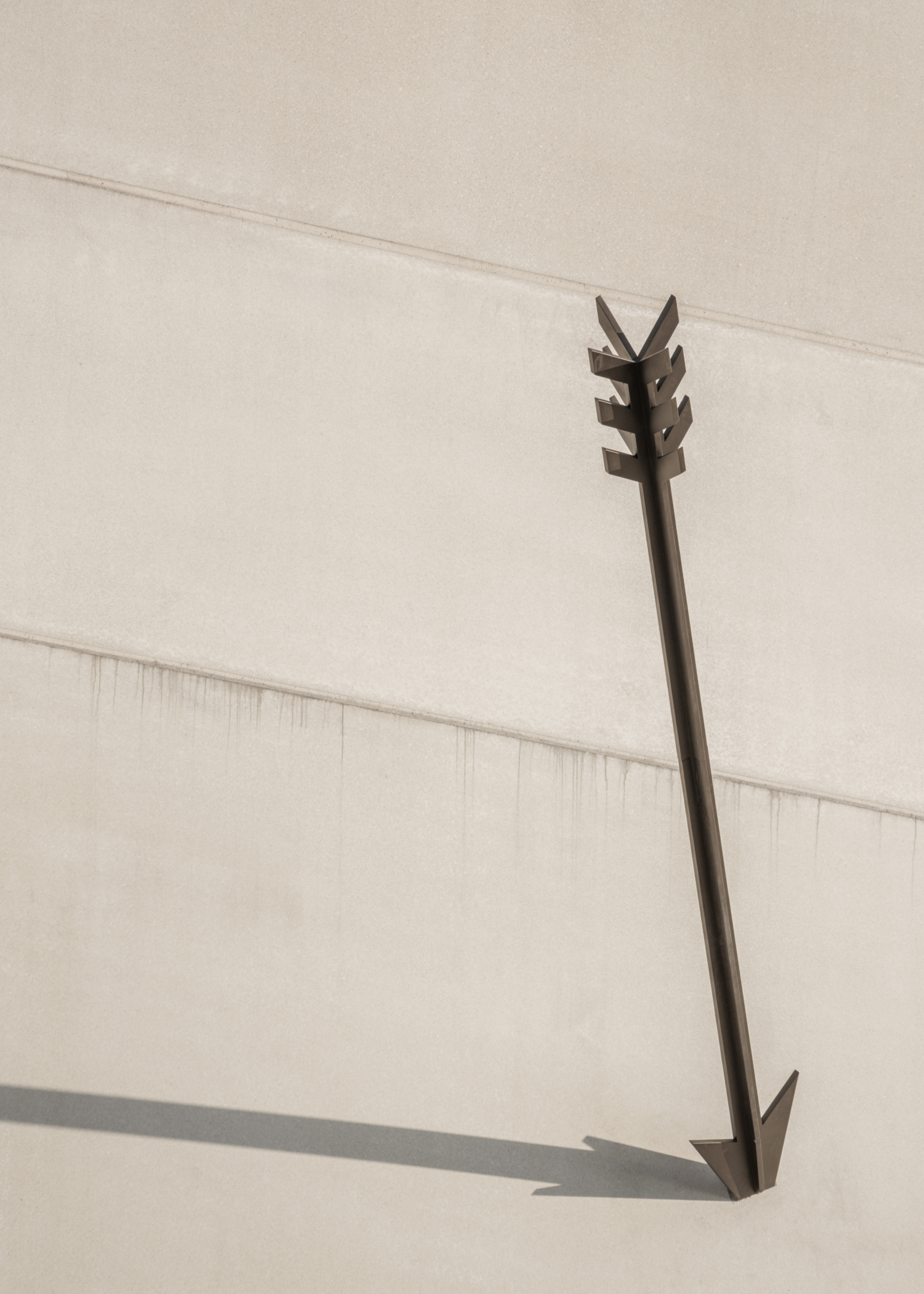
Südpfeil by J. Mayer H. Photo: Schnepp Renou.
|
|
|
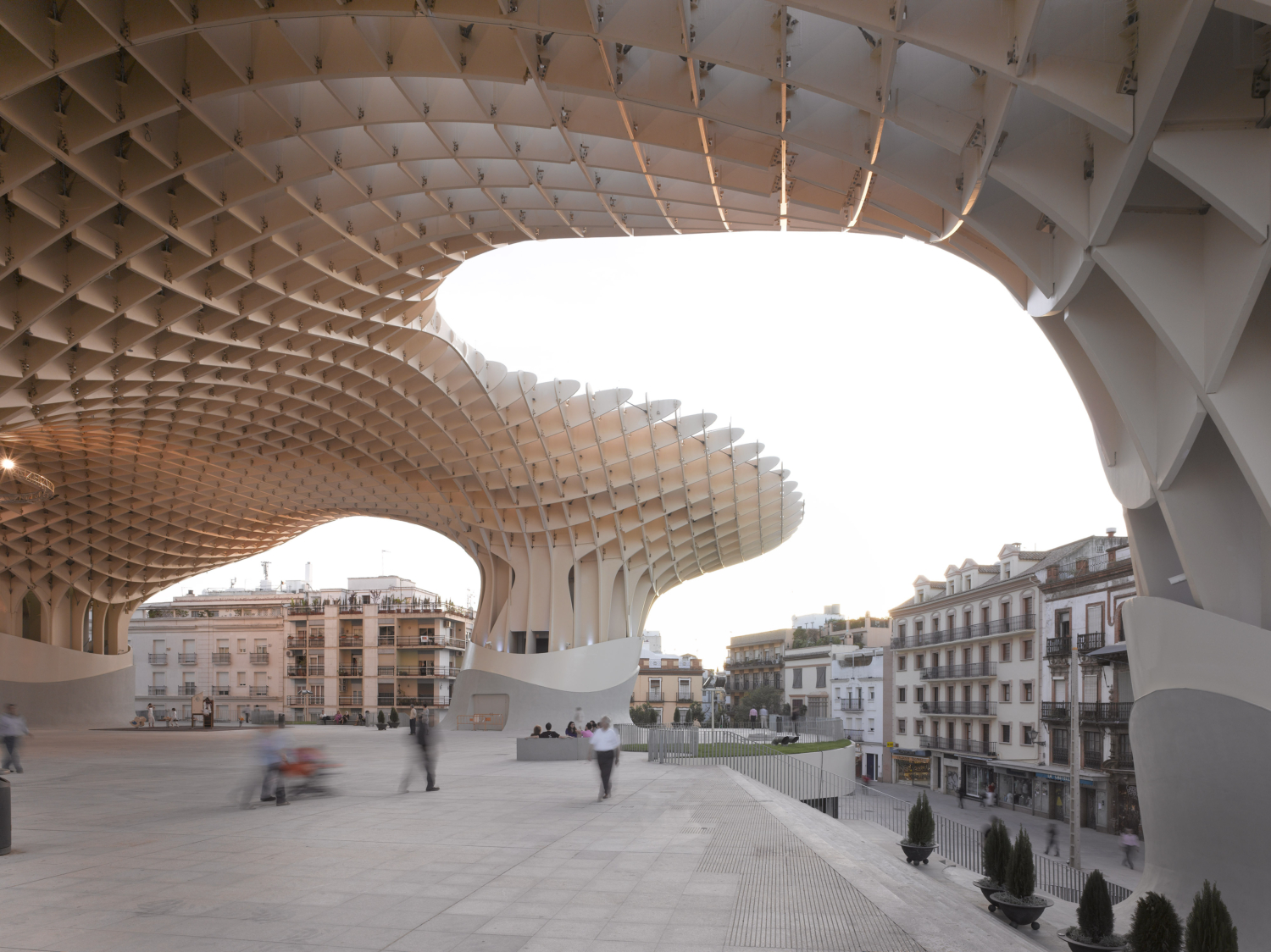
TL: These are the everyday situations that may be overlooked, not fully seen. Thinking of your well-known work in Seville, the Metropol Parasol, which performs almost as a climatic and functional public sculpture — shading and guiding space for movement. Now a landmark, the Parasol is exuberant, while Südpfeil is understated, singular, yet holding heavy discourse within the object. JMH: Art was actually at the beginning of the practice. I enjoy shifting between these hybrid disciplines. Depending on whether we are showing art, design, or architecture, the discourse is always completely different. We always look specifically at the context to attempt to provoke a particular activation of that space. It's not so much about the building solely, but the effect it has on the public space and the area around it. This whole conflict of identity is somehow put into action with this arrow. TL: Südpfeil is almost four meters long, yet against the mass of the Humboldt Forum it reads as a light, lean gesture — almost easy to miss. Falling downward, the arrow appears to puncture the facade perhaps accidentally, rather than making a straight-on, deep wound, adding to the subtlety of its presence. JMH: It just touches it, basically.
|
|
Metropol Parasol by J. Mayer H. Photo: David Franck.
|
|
|
TL: And yet the building it pierces holds 500,000 objects, acquired through means the institution itself describes openly: bought, plundered, exchanged, donated, extorted, looted. How do you think about scale and impact here? JMH: The arrow is much bigger than a typical arrow. At four metres, it has already jumped away from the expected object itself and becomes more of a signifier or symbol. Then, in relation to the building, it appears entirely minor. The arrow is exactly in between—too big for an arrow, yet too small to have an immediately visible effect on the building at first glance. Somehow, the real dimension of this piece is its name: Südpfeil (South Arrow). While most maps are oriented via a north arrow to indicate what is up and what is down, Südpfeil turns a lot of things upside down on a global scale. Südpfeil is one of our smallest projects working in dialogue with architecture, and yet it is somehow the gravity point of German discourse right now. The arrow hits and hopes to activate a conversation that always needs to happen—every day, ongoing.
|
|
Südpfeil by J. Mayer H. Photo: David von Becker.
|
|
|
|
|
|
|